
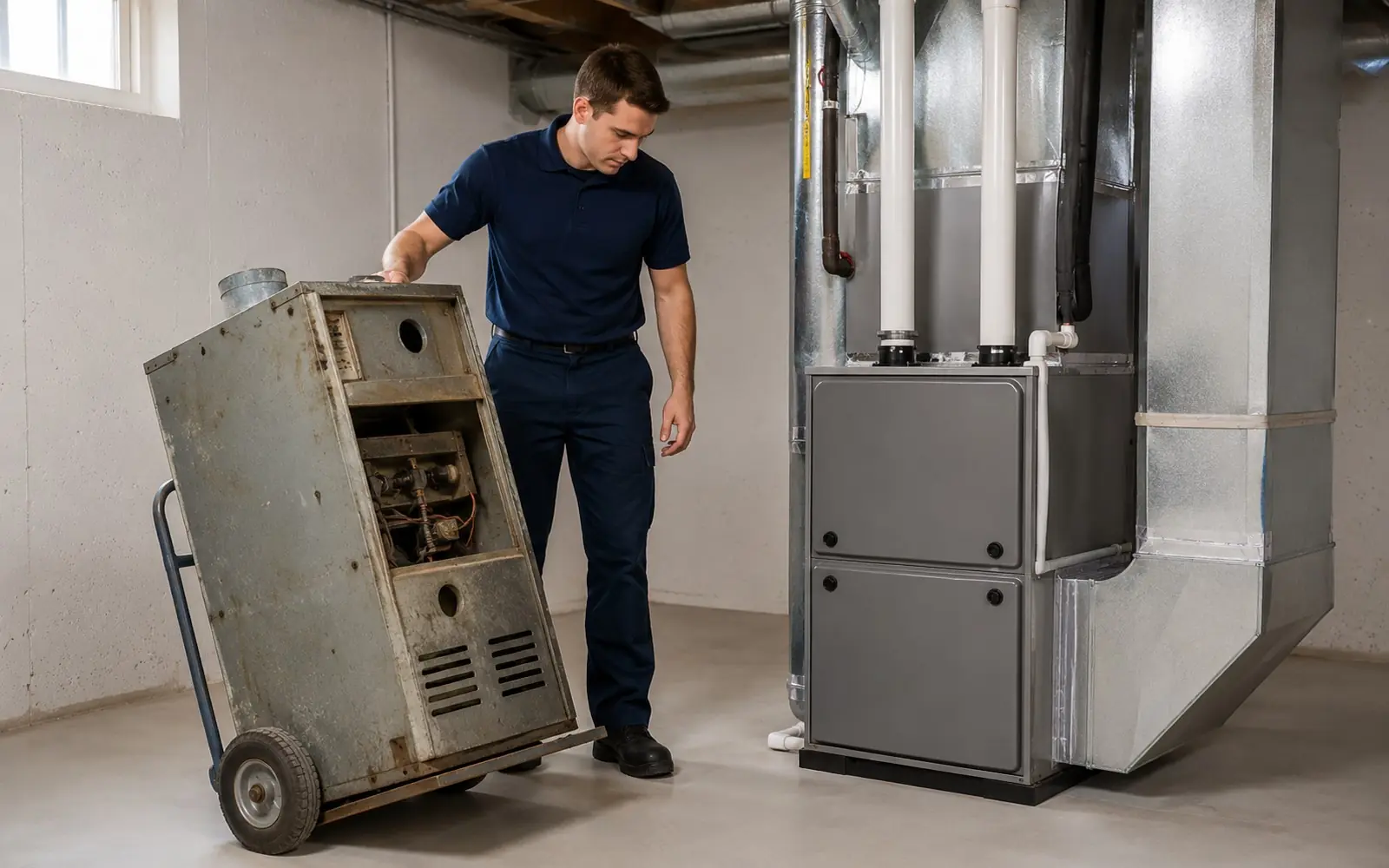
Furnace Replacement
Gas furnaces and home heating systems are the biggest product search in this category. Here is the buyer's version.
Buying heat for the next two decades
Gas furnaces and home heating systems lead the product side of our demand data, ahead of every air conditioning term. A furnace purchase locks in comfort, fuel bills and repair behavior for 15 to 20 years, which makes the hour spent understanding the options one of the better-paid hours in homeownership.
Efficiency is the headline spec. Furnace efficiency is rated in AFUE: standard-efficiency units around 80 percent send a fifth of the fuel up the flue, while high-efficiency condensing furnaces run in the 90s and vent in plastic pipe. The colder the climate and the higher the fuel price, the faster the condensing premium pays back. The other specs that matter daily are staging and blower type: two-stage or modulating burners with variable-speed blowers run longer, quieter and steadier than single-stage units that blast on and off.
Sizing is where good installers separate from parts changers. An oversized furnace short-cycles, wears itself out and leaves rooms uneven; the correct approach is a load calculation (Manual J is the industry name), not matching whatever tonnage was there before. And since the furnace and AC share the blower, replacing both at once, if the AC is also aging, usually beats two separate installs.
Heating system options worth weighing
The furnace tiers first, then the systems bids will offer alongside them.
Standard efficiency gas (80 percent)
The budget install where climate is mild and venting allows. Lowest upfront cost, highest fuel use.
High-efficiency condensing (90+)
Extracts heat until exhaust runs cool. Costs more upfront, pays back fastest in cold climates and pricey gas markets.
Two-stage and modulating
Burners that throttle instead of blasting. Steadier temperatures, quieter operation and better filtration runtimes.
Heat pumps and dual fuel
Electric heat pumps heat and cool in one system; dual-fuel setups pair one with a gas furnace for deep cold. Rebates often favor these.
Boilers and hydronic heat
Radiators and in-floor loops heated by a boiler. Replacement is specialist work priced above furnace swaps.
Oil, propane and conversions
Where gas mains do not reach. Rising delivery costs push many owners toward heat pump conversions at replacement time.
What does it cost?
Commonly published ballparks put standard gas furnace replacement roughly in the $4,000 to $8,000 band installed, high-efficiency and modulating systems in the upper half of that and beyond, and full furnace-plus-AC or heat pump system replacements commonly reaching five figures.
Levers include venting changes for condensing units, ductwork repairs, brand tier and local labor. Utility and government efficiency rebates, especially for heat pumps, meaningfully change net price, so ask every bidder to itemize them.
Ballparks based on commonly published national averages, stated as assumptions, not measured local pricing. Your competing quotes set the real number for your home and ZIP.
How to hire for furnace replacement work
Who does the work
A licensed HVAC contractor who performs a real load calculation and inspects ductwork before quoting. Boiler and oil systems want their own specialists. Gas connections and venting are permit work almost everywhere.
What pros will ask
The current system's age, fuel and model, duct condition and any uneven rooms, your climate and fuel prices, and whether the AC is due too. Expect a home visit; a furnace quoted sight unseen is a guess with a price tag.
What to check before signing
That the bid documents sizing math rather than copying the old unit, itemizes equipment model numbers, venting, permits and rebates, includes commissioning (measured airflow and combustion), and states both manufacturer and labor warranty terms.
Related searches homeowners make
Pulled from the same demand data behind our Plumbing, Heating and Air Conditioning category.
Furnace Replacement questions, answered straight
How much does a new furnace cost installed?
As a planning ballpark, standard-efficiency gas replacements commonly land between $4,000 and $8,000, with high-efficiency, modulating and combined furnace-plus-AC projects running higher, often into five figures. Local labor and rebates swing the net number, so collect competing bids.
Is a high-efficiency furnace worth it?
The colder the winters and higher the gas price, the faster the condensing premium repays itself in fuel. In mild climates the payback stretches, and the 80 percent unit is a defensible choice. Ask bidders to show the fuel math for your usage, not a brochure's.
What size furnace do I need?
The size a load calculation says, not the size that is there now. Homes get air-sealed, insulated and re-windowed over decades, and the old furnace was often oversized on day one. Oversizing causes short cycling, noise and uneven rooms.
Should I replace the AC at the same time?
If the AC is within a few years of its expected end, usually yes: the systems share the blower, combined installs price better than two separate ones, and matched equipment avoids compatibility compromises. If the AC is young, a furnace-only swap is fine.
Furnace or heat pump?
Modern cold-climate heat pumps heat efficiently well below freezing and often carry strong rebates, making them the default question at replacement time. In severe winters, dual-fuel pairing keeps gas for the deepest cold. Get bids on both and compare net cost and fuel math.
Get quotes for your furnace replacement project
Free for homeowners. No obligation. Up to four local HVAC pros compete.
Keep planning your systems
More guides from the Plumbing, Heating and Air Conditioning hub.