
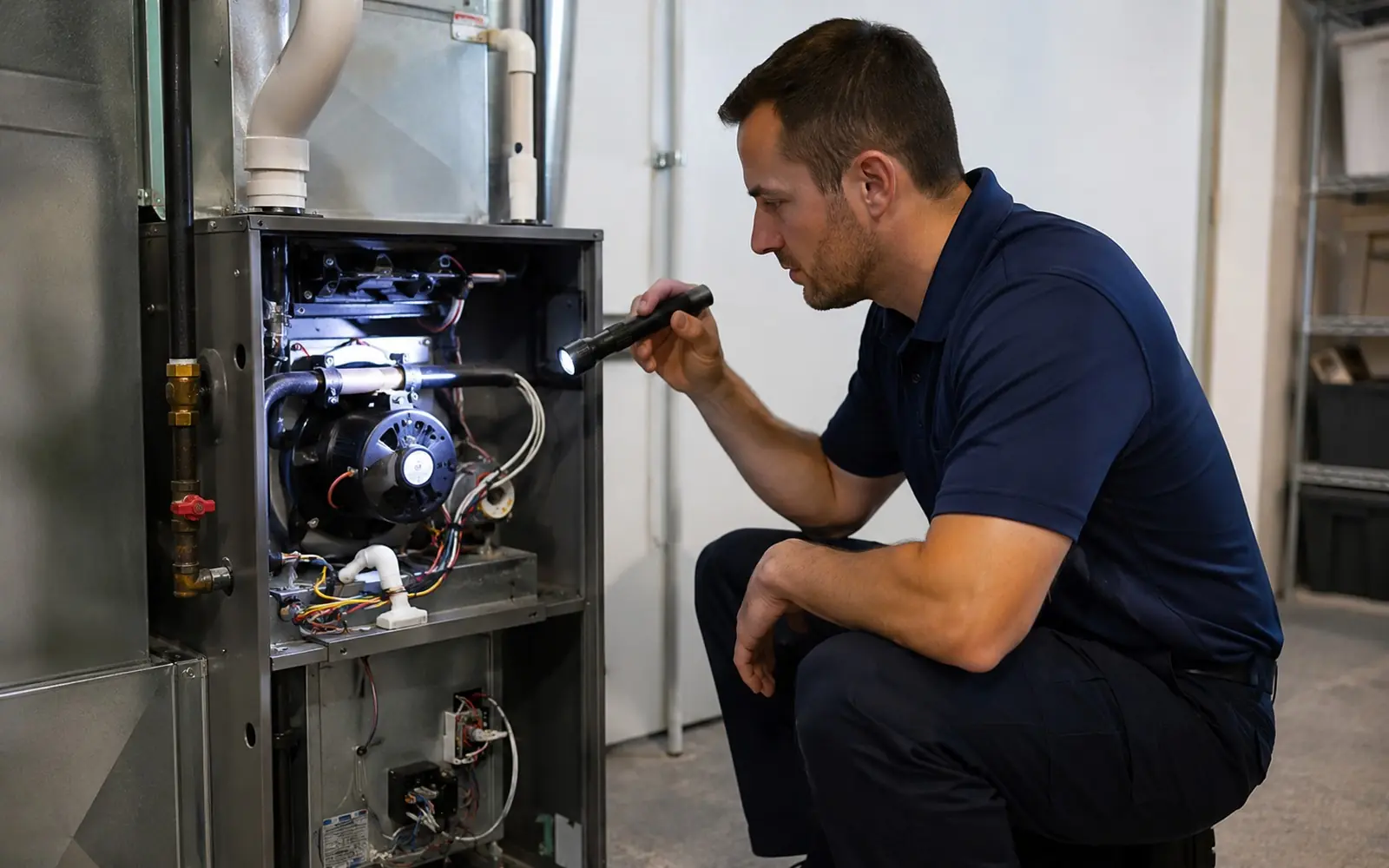
Furnace and Heating Repair
Heating and furnace repair contractors top the service searches in this category. Winter explains the rest.
No heat is a today problem, and mostly a solvable one
Heating and furnace repair is tied for the largest contractor search in our plumbing and HVAC demand data, with furnace terms alone pulling enormous volume. The pattern is seasonal and urgent: heat fails on the coldest week, and everyone searches at once.
Before calling, run the five-minute checklist that answers a surprising share of no-heat calls: thermostat set to heat and above room temperature, fresh thermostat batteries, furnace switch (it looks like a light switch) on, breaker not tripped, filter not suffocated, and the condensate drain on high-efficiency units not blocked. A furnace that short-cycles or blows cold after a filter change is a different story than one that is simply off.
When the pro comes, the common culprits are known: ignitors and flame sensors, capacitors and blower motors, pressure switches, control boards, and on older units, the heat exchanger, which is the diagnosis that changes everything. A cracked heat exchanger can leak combustion gases and is the classic tipping point from repair to replacement.
Common heating failures and fixes
Roughly ordered from cheap and frequent to the verdicts that end a furnace's career.
Ignitors and flame sensors
The most frequent no-heat parts: cheap components that fail with age. Quick swaps on a standard service visit.
Capacitors and blower motors
Humming, clicking or a blower that will not spin. Capacitors are inexpensive; full motor replacements cost real money on older units.
Thermostats and controls
Failed stats, loose low-voltage wiring and control boards. Smart thermostat upgrades often ride along on these visits.
Short cycling and airflow
Choked filters, blocked returns and oversized equipment turn furnaces on and off constantly, wearing parts and comfort alike.
Heat exchanger verdicts
Cracks mean potential combustion gas leaks and usually retirement for the furnace. Demand to see camera evidence; it is also an upsell classic.
Boilers and radiator systems
Hot-water heat has its own failure list: circulator pumps, expansion tanks, air in loops and radiator valves. Hire boiler-experienced techs.
What does it cost?
Commonly published ballparks put typical furnace repairs, sensors, ignitors, capacitors, thermostats, roughly in the $150 to $700 band including diagnosis. Blower motors, inducer motors and control boards commonly run higher, into four figures on some equipment.
The repair-or-replace math follows age: with furnaces commonly expected to serve 15 to 20 years, a four-figure repair on a unit past its mid-teens usually loses to putting that money toward replacement.
Ballparks based on commonly published national averages, stated as assumptions, not measured local pricing. Your competing quotes set the real number for your home and ZIP.
How to hire for heating repair work
Who does the work
A licensed HVAC contractor for furnaces and heat pumps; boiler systems want techs who work hydronics specifically. Gas work is not a handyman category. For oil heat, look for oil-burner service companies, often the fuel supplier.
What pros will ask
Furnace age and brand from the cabinet label, the symptom in plain words (no heat, blows cold, short cycles, noise), what the thermostat shows, and any error code blinking on the board. Photos of the label and the unit speed up everything.
What to check before signing
Diagnostic fee and whether it credits toward the repair, parts and labor warranty in writing, and on any heat exchanger condemnation or replace recommendation, the evidence. A second opinion on a full-replacement verdict is normal and often profitable.
Related searches homeowners make
Pulled from the same demand data behind our Plumbing, Heating and Air Conditioning category.
Furnace and Heating Repair questions, answered straight
Why is my furnace running but blowing cold air?
Common causes climb from trivial to serious: fan set to on instead of auto, a filter so dirty the burner overheats and locks out, a failed ignitor so only the blower runs, or a tripped limit switch. Check thermostat and filter first, then call.
How much does furnace repair cost?
As a planning ballpark, most common repairs land between $150 and $700 with diagnosis, while motors and boards can push past $1,000. After-hours emergency service adds a premium, so a failing-but-running furnace is worth booking before it quits.
Repair or replace my furnace?
A widely used rule of thumb: if the unit is past roughly three-quarters of its expected 15 to 20 year life and the repair runs into four figures, put the money toward replacement, especially if efficiency is poor. Below that line, repair and run.
How often does a furnace need service?
Annual professional service, ideally before heating season, plus filter changes every one to three months during use. Maintained furnaces fail less on cold nights and keep manufacturer warranties intact, many of which require proof of service.
Is a cracked heat exchanger dangerous?
Potentially yes: it can allow combustion gases including carbon monoxide into house air, which is why techs condemn units over it. Because it is also a known upsell, ask to see the crack on camera and get a second opinion before signing for a new furnace.
Get quotes for your heating repair project
Free for homeowners. No obligation. Up to four local HVAC pros compete.
Keep planning your systems
More guides from the Plumbing, Heating and Air Conditioning hub.