
Radiant Floor Heating
The comfort upgrade people feel once and start budgeting for. Here is where it fits and what it costs.
Heat you stand on instead of listen to
Radiant floor heating pulls a steady block of searches in our demand data, and it earns the interest: warm floors deliver even, silent, dust-free heat with nothing on the walls and no vents blowing. The catch is that it is two very different products wearing one name.
Electric radiant is the remodel-friendly version: heating cable or mats under tile, most often in bathrooms and kitchens. It installs in a day during a flooring project, is controlled by its own thermostat, and running costs limit it to rooms rather than whole homes. If you are retiling a bathroom anyway, adding the mat is one of the cheapest luxuries in construction.
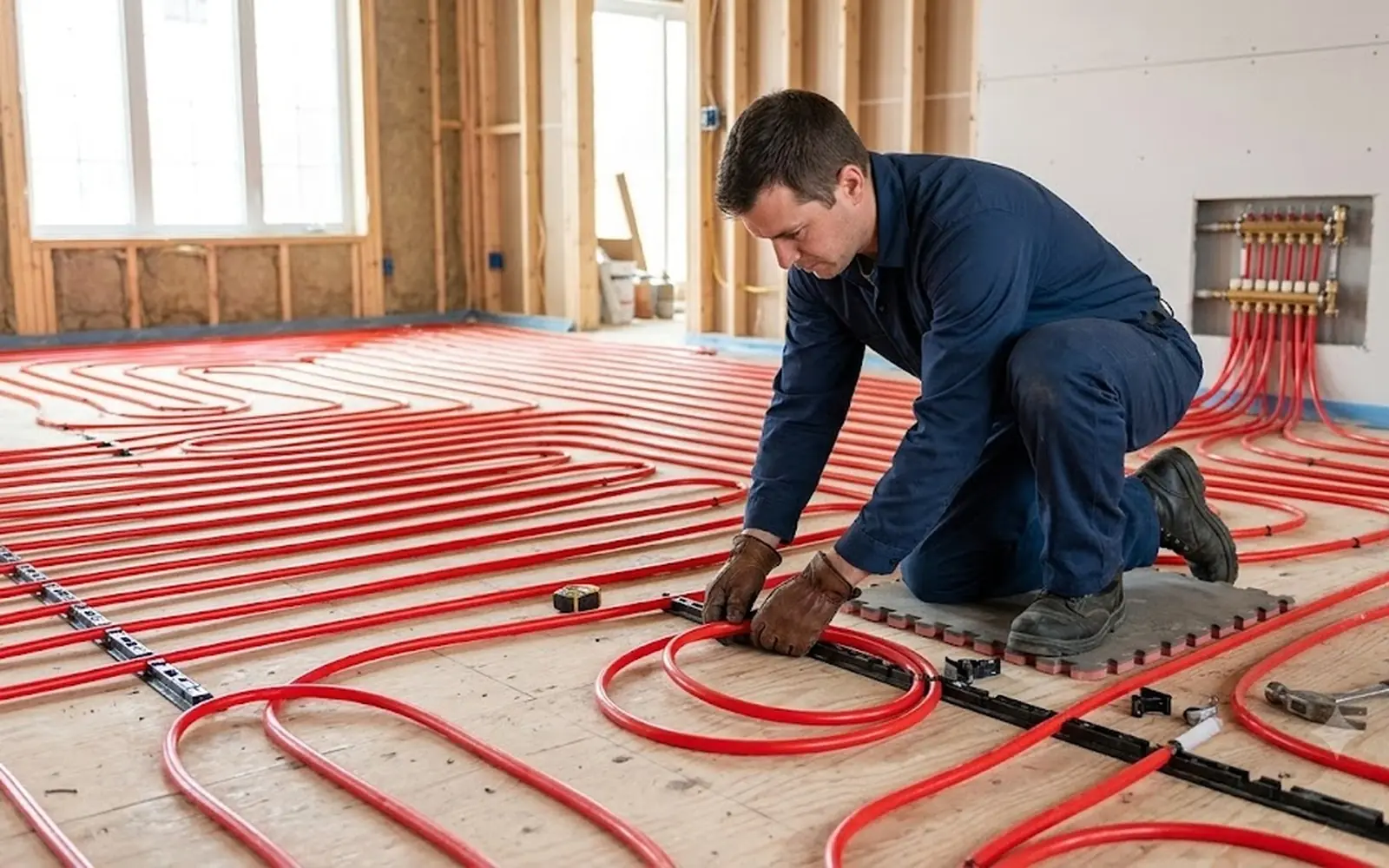
Hydronic radiant circulates warm water through tubing in or under the floor, fed by a boiler or heat pump. It heats whole houses beautifully and efficiently, especially under tile and in slab construction, but it is fundamentally new-construction and major-remodel infrastructure: retrofitting whole-house hydronic into a finished home is invasive and priced like it.
Radiant options worth weighing
Electric for rooms, hydronic for houses, and the details that decide both.
Electric mats under tile
The bathroom classic: mats sized to the room, installed during retiling, on a programmable floor-sensing thermostat.
Electric cable and membranes
Loose cable in uncoupling membranes covers odd layouts and larger rooms. Same idea, more layout freedom.
Hydronic in new slabs
Tubing in concrete makes basements, additions and new builds superbly comfortable, and pairs well with heat pumps.
Hydronic retrofit panels
Underfloor plates or thin overpours bring water-based radiant to remodels, at real cost and floor-height consequences.
Heat sources
Condensing boilers and air-to-water heat pumps both drive hydronic loops; the choice shapes efficiency and rebates.
Flooring compatibility
Tile and stone are ideal above radiant. Engineered wood works within temperature limits; thick carpet blunts the point.
What does it cost?
Commonly published ballparks put electric radiant during a retiling project roughly in the $10 to $25 per square foot band installed, so a typical bathroom adds several hundred to a couple thousand dollars. Hydronic systems are priced as projects, commonly reaching five figures for whole-home installations depending on construction access and heat source.
The lever that matters most is timing: electric radiant added during flooring work costs a fraction of a standalone visit, and hydronic penciled into new construction costs far less than any retrofit.
Ballparks based on commonly published national averages, stated as assumptions, not measured local pricing. Your competing quotes set the real number for your home and ZIP.
How to hire for radiant heating work
Who does the work
For electric mats, a tile contractor comfortable with radiant plus an electrician for the circuit and thermostat. For hydronic, an HVAC or plumbing contractor who designs and installs radiant regularly; loop design, balancing and controls are the craft.
What pros will ask
Room dimensions and flooring plans for electric; house plans, insulation levels and heat source preferences for hydronic. In both cases, when the flooring or construction is happening, since radiant rides on that schedule.
What to check before signing
For electric: that the mat is tested with a meter before, during and after tile, and the thermostat has a floor sensor. For hydronic: documented heat-loss design, manifold and zoning layout, and commissioning. Warranty terms on buried components deserve writing.
Related searches homeowners make
Pulled from the same demand data behind our Plumbing, Heating and Air Conditioning category.
Radiant Floor Heating questions, answered straight
Is radiant floor heating expensive to run?
Electric radiant in one bathroom on a programmed schedule costs little; electric whole rooms all day gets pricey, which is why it stays a room-scale product. Hydronic radiant run from an efficient boiler or heat pump is among the more economical whole-house heating methods.
Can radiant floors be the only heat source?
Hydronic systems, properly designed, heat entire homes as the sole source. Electric mats are supplemental comfort heating; most codes and common sense keep a primary system for the house around them.
Can I add radiant heat under my existing floor?
Electric requires the floor to come up, so it rides on retiling projects. Hydronic can sometimes retrofit from below via underfloor plates in an open basement or crawlspace, which is the least invasive whole-room path in finished homes.
What floors work over radiant heat?
Tile and stone are the ideal conductors. Engineered wood and many laminates and vinyls are rated for radiant within temperature limits; check the manufacturer sheet. Thick pads and carpet insulate the heat away from your feet, defeating the purpose.
How long do radiant systems last?
Modern PEX tubing in hydronic systems is commonly expected to serve for decades, with pumps and boilers replaced on their own cycles. Quality electric mats carry long warranties, and failures are rare when the installer meter-tested during installation.
Get quotes for your radiant heating project
Free for homeowners. No obligation. Up to four local HVAC pros compete.
Keep planning your systems
More guides from the Plumbing, Heating and Air Conditioning hub.