
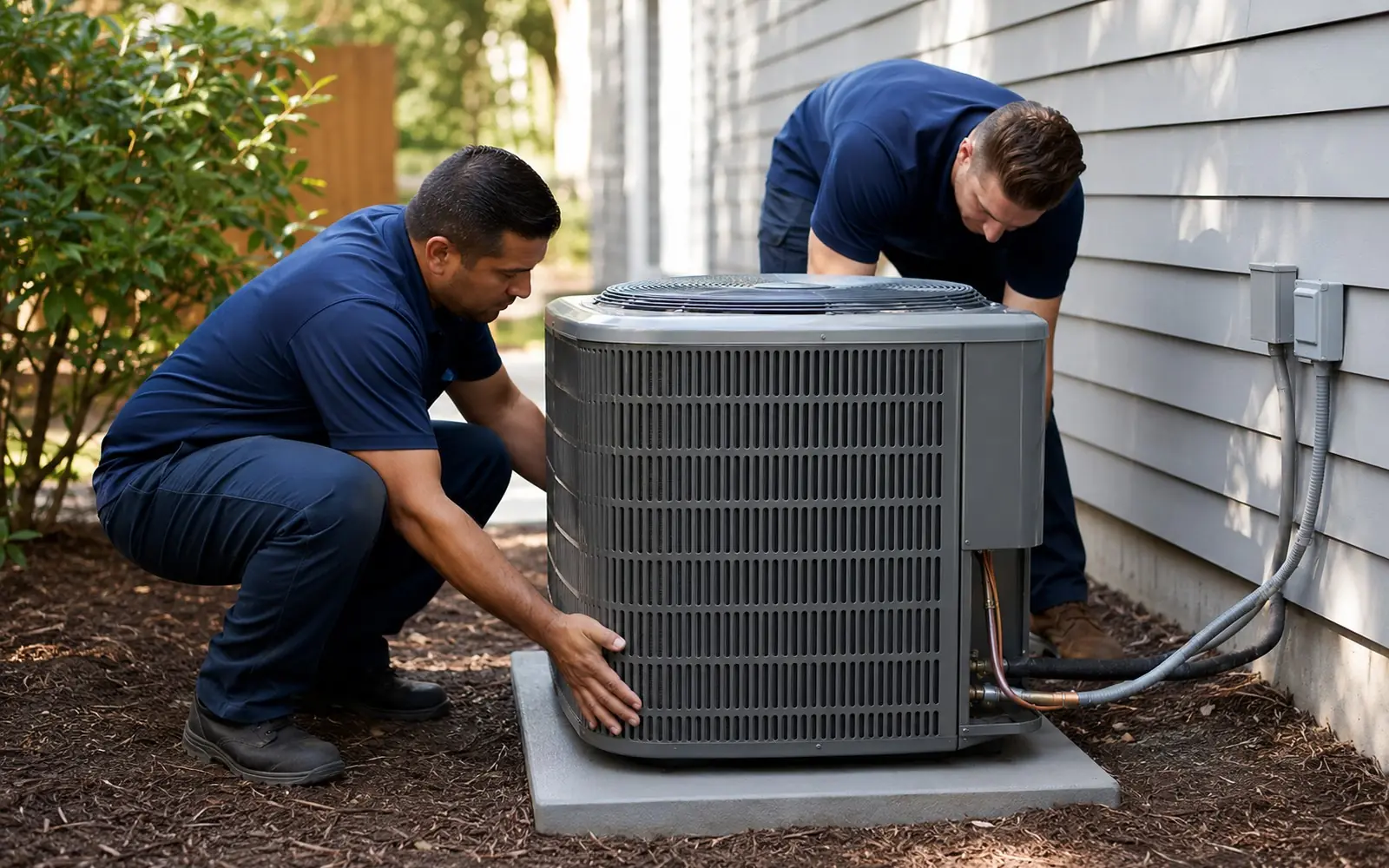
Central Air Installation
New cooling is a system purchase, not an appliance purchase. The installer matters as much as the box.
Buying cooling that fits the house
New air conditioner installation and air conditioning system searches run steadily through our demand data alongside the repair terms, spiking every summer. The buyers split into two groups: replacing a worn-out central system, and adding cooling to a house that never had ducts, which is a different project with a different answer.
For replacements, the specs that matter are size and efficiency. Cooling capacity comes in tons, and correct sizing comes from a load calculation, not from matching the old unit: oversized AC cools fast but short-cycles, leaving air clammy because it never runs long enough to dehumidify. Efficiency is rated in SEER2; minimums vary by region, and higher-efficiency two-stage or variable-speed systems cost more upfront while running quieter and cheaper.
For duct-free homes, ductless mini splits changed the answer. Wall-mounted heads fed by a small outside unit cool (and heat) individual rooms at high efficiency with no duct construction. They also solve additions, garages and that one hot bedroom. Whole-house duct retrofits still make sense in some layouts, but mini splits win a growing share of these projects.
Cooling options worth weighing
Replacement paths first, then the options for homes without ducts.
Like-for-like central AC swap
New condenser and coil on existing ducts. The straightforward replacement when ducts are sound and sized right.
High-efficiency and variable speed
Two-stage and inverter systems run longer and gentler: better humidity control, lower bills, higher sticker.
Heat pump instead of AC
Same box, one more valve: cooling plus efficient heating. Often the smarter buy at replacement time, with rebates to match.
Ductless mini splits
Room-by-room comfort with no ducts. One to multiple heads per outdoor unit; excellent for older homes and additions.
Duct repairs and upgrades
Leaky, undersized ducts waste any new system. Sealing and balancing belong in the bid, not the fine print.
Window and portable stopgaps
Fine for a season or a rental. Their electricity habits and noise are the argument for the permanent options above.
What does it cost?
Commonly published ballparks put central AC replacement roughly in the $5,000 to $12,000 band installed depending on size and efficiency tier, single-zone mini splits in the low-to-mid thousands, and multi-zone ductless or full duct-and-system projects reaching well into five figures.
Levers include tonnage, SEER2 tier, electrical panel capacity, line set and duct condition, and rebates, which currently favor heat pumps in many utility territories. Net-after-rebate is the number to compare across bids.
Ballparks based on commonly published national averages, stated as assumptions, not measured local pricing. Your competing quotes set the real number for your home and ZIP.
How to hire for air conditioning installation work
Who does the work
A licensed HVAC contractor who measures before quoting: load calculation, duct inspection, electrical check. Mini split experience is worth asking about specifically; placement and line-set craft decide how those systems look and last.
What pros will ask
The home's square footage and layout, current system age and ducts if any, hot-spot rooms, electrical panel photos, and whether heating is on the table too, since heat pump math changes the answer.
What to check before signing
That sizing math is documented, model numbers and SEER2 ratings are itemized, permits and electrical work are included, commissioning with measured airflow and charge is promised in writing, and rebates are listed with who files them.
Related searches homeowners make
Pulled from the same demand data behind our Plumbing, Heating and Air Conditioning category.
Central Air Installation questions, answered straight
How much does central air installation cost?
As a planning ballpark, replacing a central system commonly lands between $5,000 and $12,000 installed, with high-efficiency equipment, duct repairs and panel upgrades pushing higher. Ductless single zones run less; whole-home multi-zone systems run more. Competing local bids set your real number.
What size AC does my house need?
The size a Manual J load calculation produces. Square footage rules of thumb ignore insulation, windows and orientation, and oversizing is the classic mistake: fast cooling, poor dehumidification, short equipment life. Insist on documented sizing.
Are ductless mini splits worth it?
For homes without ducts, additions and stubborn hot rooms, they are usually the best answer available: high efficiency, room-level control, no duct construction. Aesthetics of wall heads and per-zone cost are the tradeoffs. Multi-zone pricing approaches central-system money.
What SEER rating should I buy?
Regional minimums set the floor; each efficiency step up costs more and repays through lower bills, faster in hot climates with long cooling seasons. Variable-speed comfort benefits, quieter running and humidity control, are worth weighing beyond pure payback math.
Do I need my ducts checked before a new system?
Yes. Leaky or undersized ducts can waste a meaningful share of a new system's output, and a quality contractor inspects and prices sealing or corrections in the bid. A new condenser on failing ducts is half a project at full price.
Get quotes for your cooling project
Free for homeowners. No obligation. Up to four local HVAC pros compete.
Keep planning your systems
More guides from the Plumbing, Heating and Air Conditioning hub.
Air Conditioning Repair
Cooling failures, honest repair ballparks and refrigerant realities.
Read the guideFurnace Replacement
Efficiency tiers, sizing and honest installed cost ballparks.
Read the guideBoilers and Radiator Heat
Hydronic systems, replacement timing and specialist hiring.
Read the guide