
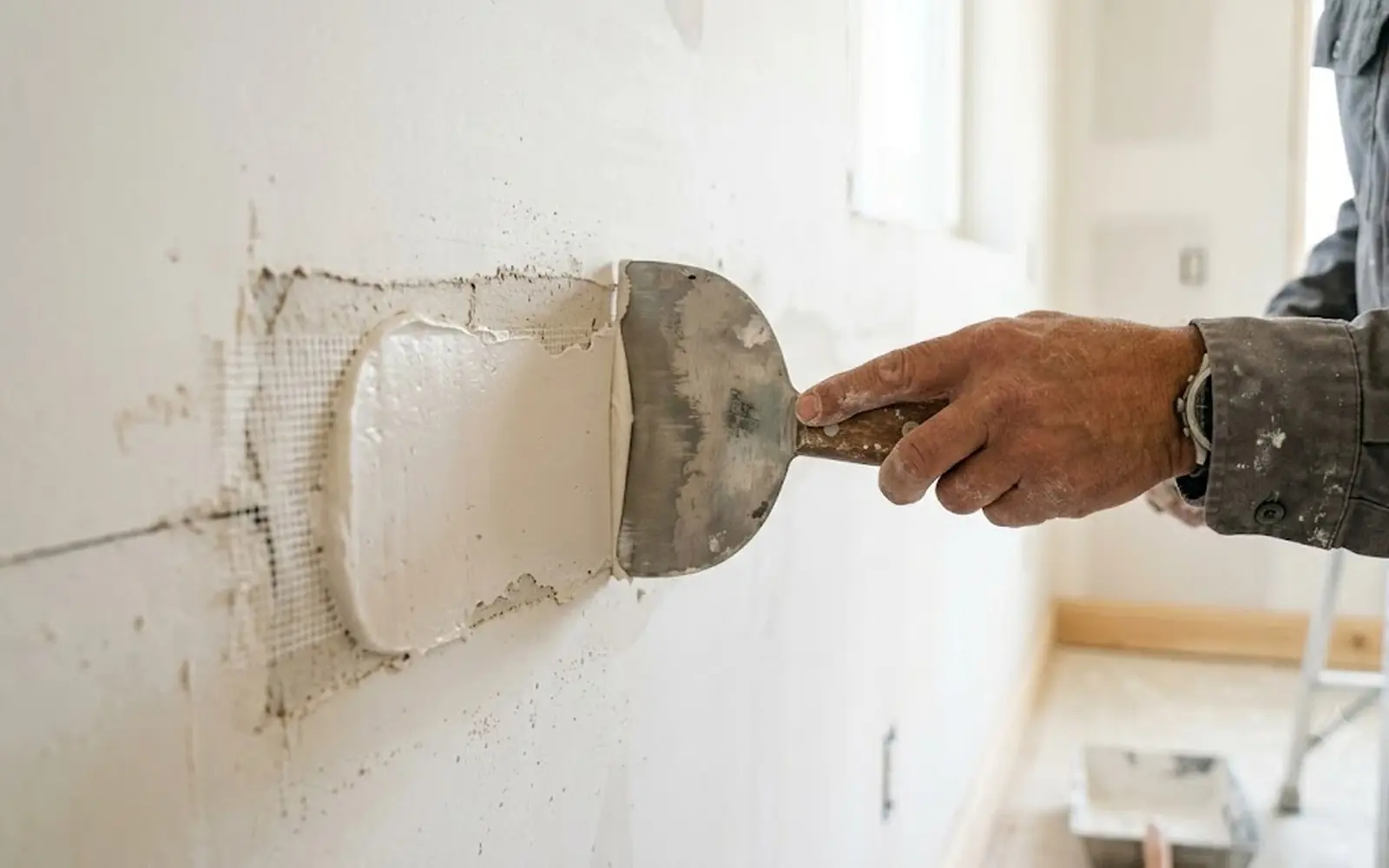
Drywall Repair and Finishing
Small holes, recurring cracks, water stains and texture matching: the repair side of the drywall trade.
Repairs are easy. Invisible repairs are the trade.
Drywall repair and finishing terms pull steady volume in our demand data, and they describe a different skill than new installation: making damage disappear into an existing wall. Anyone can fill a hole; the craft is feathering compound and matching texture so the patch cannot be found under paint, and that is what you are hiring.
Repairs sort by cause. Doorknob holes and anchor damage are cosmetic and quick. Nail pops and hairline cracks at corners of doors and windows are the house moving seasonally, fixed properly with screws and tape rather than caulk smears. Recurring cracks along the same line, stair-step cracks, or doors that stop latching are foundation and framing questions wearing a drywall costume, and they deserve a structural look before another patch.
Water damage has its own rule: fix the leak first, then repair the drywall, and replace rather than repaint anything that stayed wet or grew mold. Stains bleed through ordinary paint forever, so a stain-blocking primer is part of any competent water-stain repair. Sagging ceiling board that got soaked comes down; it does not dry back into shape.
Common repairs and what they involve
From patch kits to ceilings, roughly by size of the visit.
Small holes and anchor damage
Mesh patches and setting compound, feathered wide. The classic handyman list item, priced by visit rather than by hole.
Nail pops and settlement cracks
Re-screwing board and re-taping joints, not just filling. Done right they stay gone; caulked over, they return every season.
Water damage and stains
Cut out compromised board, dry the cavity, stain-blocking primer, patch and blend. Leak repair comes first, always.
Texture matching
Orange peel, knockdown and hand textures each spray and trowel differently. Matching is the difference between repaired and obvious.
Popcorn ceiling removal
Scrape-and-skim to flat, or overlay with new board. Pre-1980 ceilings deserve an asbestos test before anyone scrapes.
Skim coating walls
A full thin coat over rough, patched or wallpaper-scarred walls, delivering that Level 5 surface under new paint.
What does it cost?
Commonly published ballparks put typical patch visits, a few holes, a cracked seam, roughly in the $150 to $600 band including finishing and texture blending, with larger water-damage repairs in the high hundreds and popcorn removal or whole-room skim coating commonly priced per square foot into the thousands.
The lever is finishing time: each compound coat needs drying, so even small patches take multiple short visits or one visit with quick-set compounds. Bundling repairs across the house into one appointment is the honest way to buy them cheaply.
Ballparks based on commonly published national averages, stated as assumptions, not measured local pricing. Your competing quotes set the real number for your home and ZIP.
How to hire for drywall repair work
Who does the work
Handyman services and drywall contractors both do repair well; drywall specialists win on texture matching and big blends. Painters often subcontract or include minor patching, which is worth asking when a repaint is planned anyway.
What pros will ask
Photos of each damage spot with something for scale, the wall texture close up, whether stains are dry or the leak is fixed, and a full list of every ding in the house so the visit covers all of it.
What to check before signing
That the price includes texture matching and priming, not just mud; that water repairs confirm the source is fixed; and on recurring cracks, that the pro is willing to say when a problem is structural instead of patching it silently again.
Related searches homeowners make
Pulled from the same demand data behind our Walls, Wallcoverings and Paint category.
Drywall Repair and Finishing questions, answered straight
How much does drywall repair cost?
As a planning ballpark, a visit covering a few patches commonly runs $150 to $600 with finishing and texture blending, while water-damage rebuilds and ceiling work run higher. Per-hole pricing misleads; the visit and the finishing coats are the real units.
Why do the same cracks keep coming back?
Because they were filled, not fixed. Seasonal cracks need the board re-fastened and the joint re-taped with compound feathered wide. Cracks that return even after proper taping, or that stair-step and widen, are worth a structural opinion.
Can water-stained drywall just be painted over?
Only after the leak is fixed and only through a stain-blocking primer; ordinary paint lets the stain ghost back through. Board that got saturated, sagged or grew mold should be cut out and replaced rather than decorated.
How is texture matched on a patch?
By replicating the original application: spray cans or hoppers for orange peel and knockdown, trowels and brushes for hand textures, then priming the whole area so sheen matches. On prominent walls, pros sometimes retexture corner to corner because a perfect spot match is impossible.
Should I remove popcorn ceilings?
Flat ceilings modernize a room and are a popular pre-sale move, but pre-1980 texture can contain asbestos, so test before scraping. Skim-coating or overlaying with thin board are the standard paths; both are messy, well-understood, and best priced whole rooms at a time.
Get quotes for your drywall repair project
Free for homeowners. No obligation. Up to four local drywall pros compete.
Keep planning your walls
More guides from the Walls, Wallcoverings and Paint hub.