
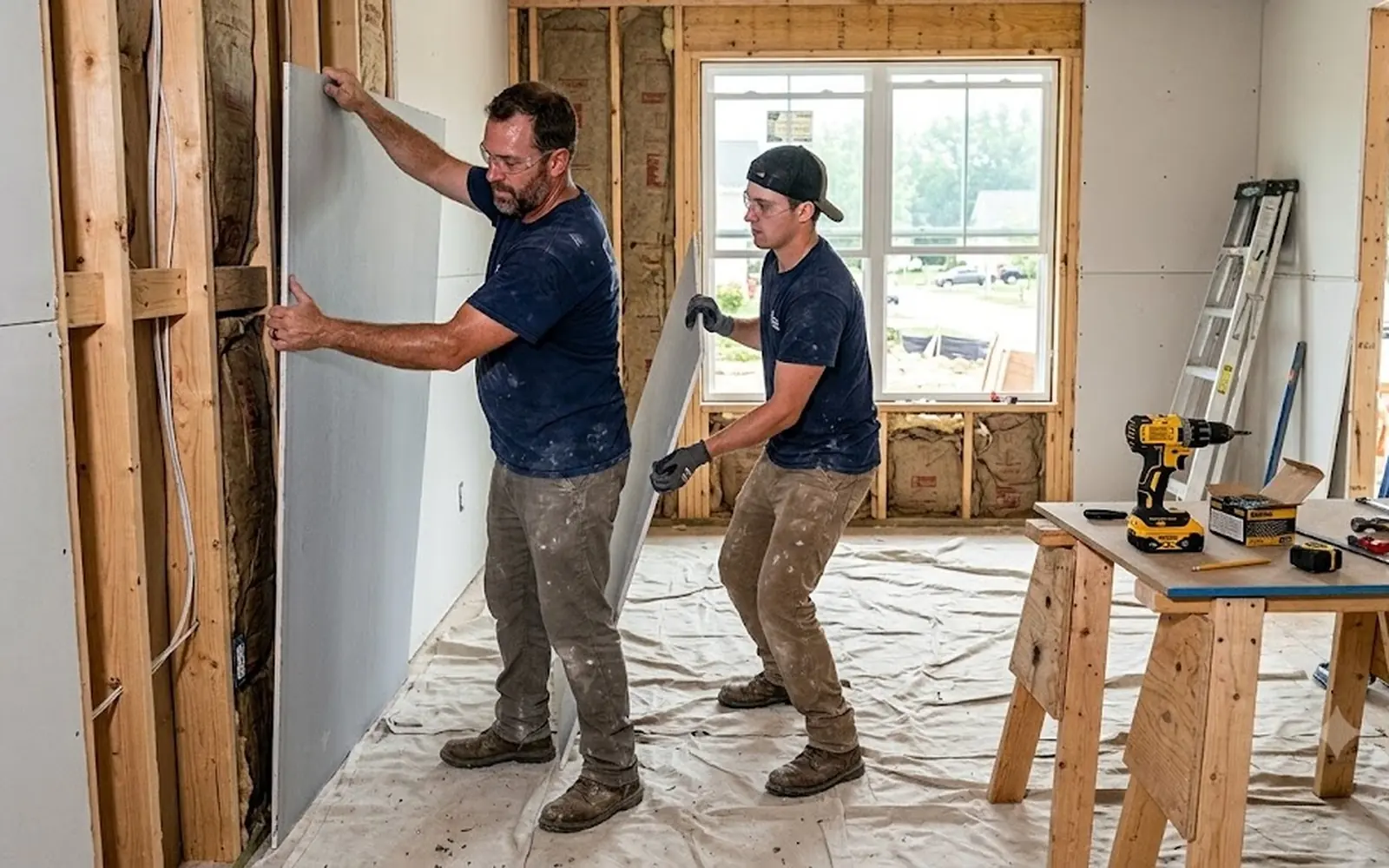
Drywall Installation
Drywall contractor searches run five figures in our demand data. Here is the trade behind every smooth wall.
The surface every other finish depends on
Drywall and drywall contractor searches form the second pillar of this category's service demand, behind painters. The two trades are joined at the wall: paint can only be as good as the drywall under it, and a raking evening light will find every shortcut a finisher took years earlier.
The job has two distinct halves. Hanging is fast and physical: sheets screwed to framing, cut around boxes and openings. Finishing is the craft: taping seams, then two to three widening coats of joint compound, then sanding, executed to an industry finish level. Level 4 is the standard under most paint; Level 5, a full skim coat, is the spec for gloss paint and hard side-lighting. When people say a drywall job looks bad, they mean the finishing.
Board choice is the quiet decision: standard half-inch for most walls, moisture-resistant board for baths and laundry (not inside showers, which want cement board), fire-rated board where code requires it near garages and furnaces, and sound-damping assemblies for bedrooms and media walls. The price differences per sheet are small against the labor around them.
Drywall decisions worth weighing
Scope and board first, then the finish level that determines how walls look in daylight.
New walls and ceilings
Basements, additions and garages: hanging, taping and finishing as one contract, priced by square footage and height.
Board types
Standard, moisture-resistant, fire-rated, abuse-resistant and sound-damping boards each have their rooms. Cement board owns wet tile zones.
Finish levels
Level 4 under standard paint; Level 5 skim coat under gloss, dark colors and big windows. Agree on the number before work starts.
Ceilings and lids
Overhead work is its own labor rate, and lids show flaws worst. Sagging old ceilings often re-board cheaper than they repair.
Soundproofing assemblies
Double board, damping compound and channel systems for real noise control. Priced above standard work and worth it where it matters.
Plaster considerations
Older homes have plaster, not drywall. Skimming over sound plaster or overlaying with board are the usual paths; matching is a specialty.
What does it cost?
Commonly published ballparks put hung-taped-and-finished drywall roughly in the $2 to $4 per square foot band, which prices a typical room in the low thousands and full basements in the mid thousands. High ceilings, Level 5 finishes and sound assemblies sit above the band.
Levers include ceiling height and lids in scope, finish level, corner and detail count, and local labor. Drywall alone is cheap; the finishing hours are the product you are buying.
Ballparks based on commonly published national averages, stated as assumptions, not measured local pricing. Your competing quotes set the real number for your home and ZIP.
How to hire for drywall installation work
Who does the work
Drywall contractors for whole rooms and larger; general contractors bring them automatically on remodels. For a single new wall or a garage, smaller drywall outfits and skilled handyman services price competitively.
What pros will ask
Square footage and ceiling heights, room use (moisture, garage, media), the finish level you expect, whether insulation or framing corrections are needed first, and photos of the space as it stands.
What to check before signing
That the bid states board types, the finish level by number, sanding and dust control, and who primes. Ask to see a finished job or photos under raking light; that is where drywall quality is visible and portfolios are honest.
Related searches homeowners make
Pulled from the same demand data behind our Walls, Wallcoverings and Paint category.
Drywall Installation questions, answered straight
How much does drywall installation cost?
As a planning ballpark, professionally hung and finished drywall commonly runs $2 to $4 per square foot of board, so a standard room lands in the low thousands and a basement in the mid thousands. Height, finish level and repairs to framing move the number.
What is a Level 5 finish and do I need it?
A full skim coat of compound over the entire surface, on top of standard taping. It is the spec for glossy paint, dark colors and walls washed by window or fixture light. Standard Level 4 is fine under matte and eggshell in most rooms.
What drywall goes in a bathroom?
Moisture-resistant board on bathroom walls and ceilings, and cement board or an equivalent tile backer inside tub and shower surrounds. Standard drywall behind shower tile is the classic hidden defect in quick remodels.
How long does drywalling a room take?
Hanging is a day or less; finishing spans several days because each compound coat must dry before the next. A week end to end for a room is normal, and rushing coats is how ridged seams and cracked corners get built.
Can drywall go over my old plaster walls?
Often yes: overlaying sound plaster with thin board is a standard renovation path that buys flat, paint-ready walls without full demolition. Loose, failing plaster should come down instead. Electrical box extensions and trim depth are the details a pro will handle.
Get quotes for your drywall project
Free for homeowners. No obligation. Up to four local drywall pros compete.
Keep planning your walls
More guides from the Walls, Wallcoverings and Paint hub.