
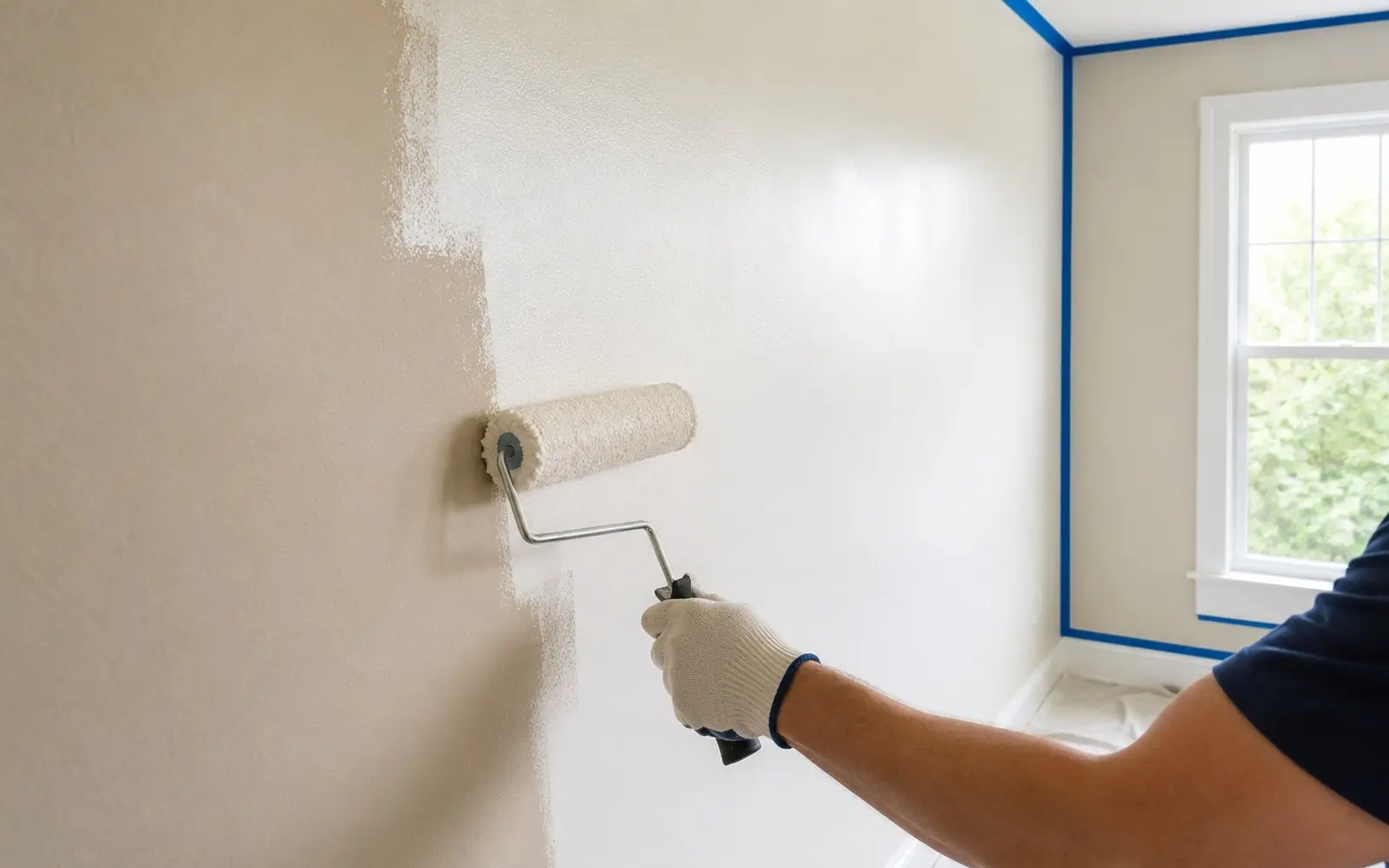
Interior Painting
Home painter searches lead this category's service demand. The paint is the easy part; here is the rest.
The highest-impact dollars in home improvement
Interior home painting drives the biggest block of service searches in our walls and paint demand data, and it earns the attention: nothing else changes how a home feels per dollar spent. A repainted interior reads as newer, cleaner and better maintained, which is why it tops every pre-listing punch list agents write.
Professionals will tell you the paint job is decided before the lid comes off: filling nail holes and cracks, sanding glossy spots, caulking gaps, priming stains and patches, and cutting clean lines at ceilings and trim. Prep is most of the labor hours in a quality quote, and it is exactly what gets skipped in a cheap one. Two bids that differ mostly in price usually differ mostly in prep.
Product choices matter less than prep but still matter. Higher paint grades cover better and scrub cleaner, which pays off in hallways and kids' rooms. Sheen is the practical decision: flat and matte hide wall flaws but mark easily, eggshell and satin balance most rooms, and semi-gloss belongs on trim, doors and moisture rooms. Low-VOC formulations are now standard enough that there is little reason to accept strong fumes.
Interior painting decisions worth weighing
Scope first, then surfaces, then the product line items on the quote.
Walls-only repaint
The refresh standard: patch, prime and two coats on walls, ceilings and trim untouched. Fastest and cheapest whole-room change.
Full room repaint
Walls, ceiling, trim and doors as one job. Costs more, but mismatched old trim against fresh walls is the classic regret.
Trim, doors and cabinets
Enamel work is its own craft: more prep, finer brushes, sprayed finishes. Cabinet painting in particular belongs with specialists.
Ceilings and stain blocking
Water stains, smoke and tannin bleed need dedicated primers, not extra coats. Ceilings show every shortcut in raking light.
Color and sheen strategy
Sample boards on two walls beat chips under store lighting. One sheen step up in halls and baths saves scrubbing regrets.
Paint grades
Contractor lines cover; premium lines cover better, touch up cleaner and survive washing. The gallon delta is small next to labor.
What does it cost?
Commonly published ballparks put professional repainting of a standard bedroom roughly in the $300 to $1,000 band, and whole-interior repaints of typical homes commonly land in the low-to-mid thousands, scaling with ceiling height, trim complexity and wall condition.
Labor dominates: paint is usually a minor share of an interior quote. The levers are prep condition, color changes that need extra coats, ceilings and trim in scope, and furniture handling.
Ballparks based on commonly published national averages, stated as assumptions, not measured local pricing. Your competing quotes set the real number for your home and ZIP.
How to hire for interior painting work
Who does the work
Dedicated painting contractors for whole-home and enamel work; quality handyman services handle single rooms well. Cabinet refinishing and decorative finishes are specialties worth hiring as specialties.
What pros will ask
Room count and sizes, ceiling heights, current colors versus new ones, wall condition and any stains, whether ceilings and trim are included, and your timeline. Photos of each room make remote quotes meaningful.
What to check before signing
That the quote itemizes prep steps, coats and the exact product line, states who moves furniture and protects floors, includes touch-up terms, and that color sign-off happens on a wall sample before full rollout.
Related searches homeowners make
Pulled from the same demand data behind our Walls, Wallcoverings and Paint category.
Interior Painting questions, answered straight
How much does it cost to paint a room?
As a planning ballpark, professional walls-only repainting of a standard bedroom commonly runs $300 to $1,000 including labor and materials, with large rooms, tall ceilings, heavy prep and trim work pushing higher. Whole-home interior quotes price better per room than single rooms.
How many coats of paint do walls need?
Two finish coats is the professional standard, over spot-priming of patches and stains. One-coat promises hold up only in same-color refreshes on well-prepped walls. Dramatic color changes sometimes need a tinted primer plus two coats.
What sheen should I choose?
Common practice: flat or matte for ceilings and low-traffic walls, eggshell or satin for most living spaces, semi-gloss for trim, doors, kitchens and baths. Higher sheen wipes cleaner but highlights wall imperfections, so prep quality and sheen rise together.
Is expensive paint worth it?
Generally yes for walls you touch and wash: premium lines cover in fewer coats, touch up more invisibly and scrub without burnishing. Since labor is most of a paint job, saving a few dollars per gallon is the wrong place to economize.
How long does interior painting take?
A single room is typically a day; a whole-home interior commonly runs several days to a week or more with a crew, driven by prep condition and trim scope. Low-VOC paints mean rooms are usually livable the same night.
Get quotes for your interior painting project
Free for homeowners. No obligation. Up to four local painting pros compete.
Keep planning your walls
More guides from the Walls, Wallcoverings and Paint hub.