
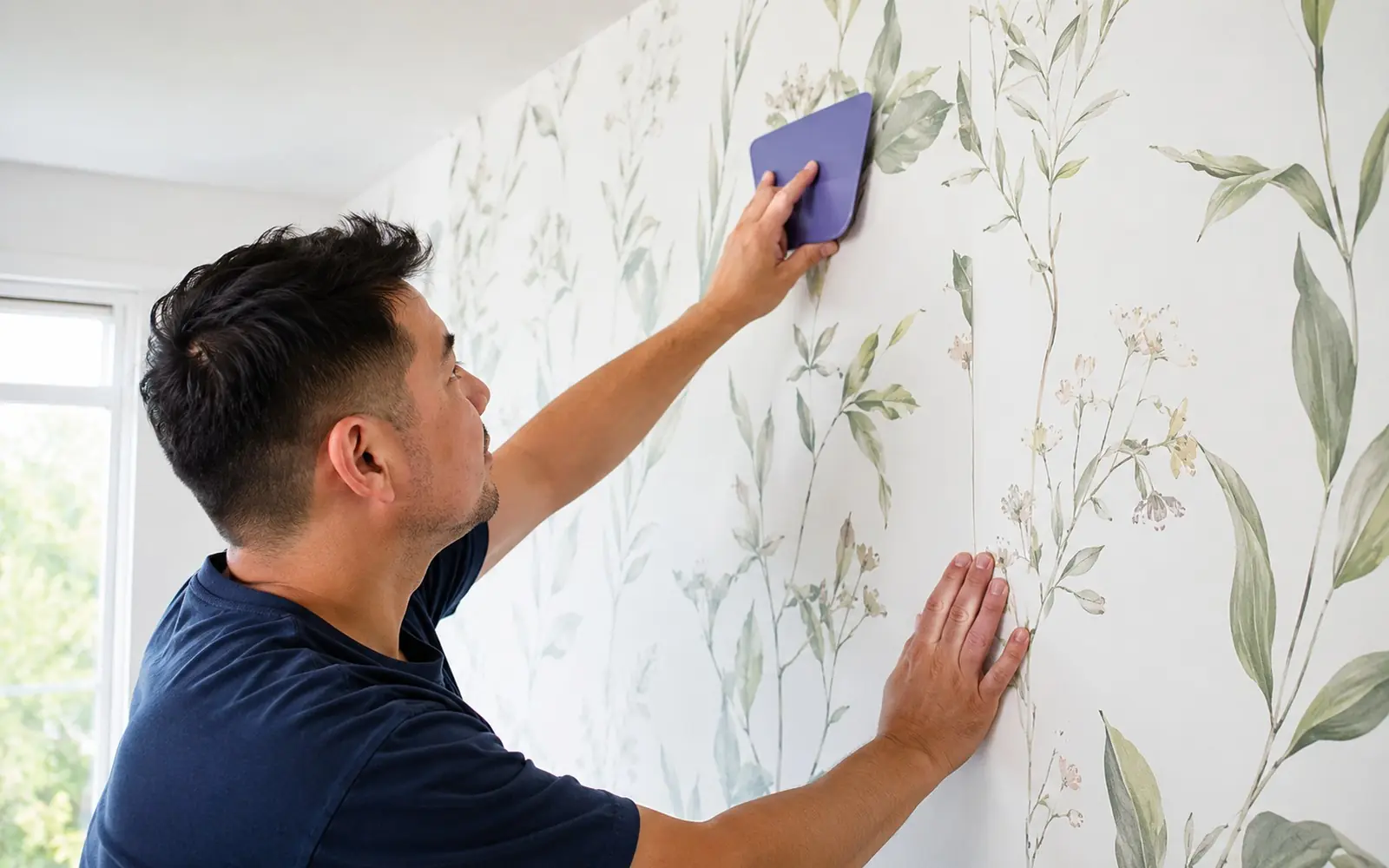
Wallpaper Installation
Wallcoverings are back, and hanging them well is a real trade. Here is how the project actually works.
The wallcovering comeback, hung properly
Wallpaper and wallcovering installation is the classic specialty in this category's demand data, and the search interest has real project intent behind it: bold patterns, textured papers and full-wall murals are the fastest way to give a room a designed look that paint alone cannot reach.
The material menu matters more than most buyers expect. Traditional unpasted papers and modern paste-the-wall products hang differently; vinyl and nonwoven coverings survive kitchens, baths and kids; grasscloth and silks are beautiful, unforgiving of moisture and touch, and belong in dining rooms and bedrooms; peel-and-stick suits renters and commitment-averse accent walls, with honest limits on seam life and wall prep.
Two truths decide project success. First, walls must be smooth, primed and sized: paper telegraphs every bump paint would forgive, and correct priming is also what makes future removal civilized. Second, pattern layout is the visible skill: where seams fall, how the motif centers on the focal wall, and how repeats match at corners. That is what a professional paperhanger is actually selling.
Wallcovering options worth weighing
Material first, then where each belongs and what each demands of the wall.
Nonwoven and paste-the-wall
The modern standard: dimensionally stable, hangs clean, strips dry at removal. The right default for most rooms.
Vinyl and washable coverings
Scrubbable and moisture-tolerant for kitchens, baths and halls. The practical choice where walls get touched.
Grasscloth, silk and naturals
Texture and depth no print matches, with visible seams as part of the look. Dry rooms, careful hands, professional hanging.
Murals and statement walls
Printed-to-size scenes and oversized patterns. Layout and centering are everything; order with overage and a repeat plan.
Peel-and-stick
Renter-friendly and DIY-approachable on smooth walls. Expect shorter service life and respect its dislike of texture.
Removal and wall recovery
Old paper off, adhesive washed, walls skimmed where needed. Often the bigger half of a repapering quote, and worth doing right.
What does it cost?
Commonly published ballparks put professional hanging roughly in the $30 to $100 per roll band for labor, which prices a typical accent wall in the low hundreds and full rooms from several hundred to a few thousand depending on paper class, before the covering itself, which ranges from modest to designer-priced per roll.
Removal is the hidden line: stripping old paper and restoring walls commonly costs as much as hanging. Delicate naturals, high patterns with big repeats, and stairwells all price above the band.
Ballparks based on commonly published national averages, stated as assumptions, not measured local pricing. Your competing quotes set the real number for your home and ZIP.
How to hire for wallpaper work
Who does the work
A professional paperhanger or a painting contractor with real wallcovering experience; the two trades overlap but are not identical. For grasscloth, silks and expensive murals, insist on a portfolio of that specific material.
What pros will ask
Wall dimensions and photos, the covering you have chosen or shortlisted with its repeat length, wall condition and any existing paper, and whether removal is part of the job. Rolls are ordered from measurements plus waste; let the installer confirm quantity before you buy.
What to check before signing
That the quote includes wall prep and priming or sizing, seam and pattern-layout approach for your specific paper, removal terms if applicable, and responsibility for damaged or short-shipped rolls. Leftover labeled rolls should stay with you for future repairs.
Related searches homeowners make
Pulled from the same demand data behind our Walls, Wallcoverings and Paint category.
Wallpaper Installation questions, answered straight
How much wallpaper do I need?
Measure wall width and height, then let the pattern repeat drive the math: bigger repeats waste more per roll. The working habit is to have the installer confirm quantity and order one extra roll from the same dye lot for repairs, since lots vary visibly.
Can wallpaper go in bathrooms and kitchens?
Yes, with the right product: vinyl and washable nonwovens handle humidity and wiping. Keep naturals like grasscloth out of splash and steam zones, and let good ventilation do its part. Direct shower-zone walls belong to tile, not paper.
Is peel-and-stick as good as real wallpaper?
It is a different product: fast, removable and renter-friendly on smooth walls, but with shorter seam life and poor tolerance for texture. For statement walls in owned homes, traditionally hung nonwoven paper usually looks better and lasts far longer.
How hard is wallpaper removal?
It ranges from satisfying to miserable depending on how the wall was primed originally. Strippable modern papers pull dry; older pasted vinyls want scoring, solution or steam, and walls often need washing and skim repairs afterward. Pricing removal sight unseen is why pros ask for a test patch.
Why hire a pro instead of hanging it myself?
Straight walls with a forgiving nonwoven pattern are honest DIY. Large repeats, corners that must match, stairwells, murals and delicate naturals punish inexperience in visible, expensive material. When the paper costs real money, the hanging fee is insurance.
Get quotes for your wallpaper project
Free for homeowners. No obligation. Up to four local wallcovering pros compete.
Keep planning your walls
More guides from the Walls, Wallcoverings and Paint hub.