
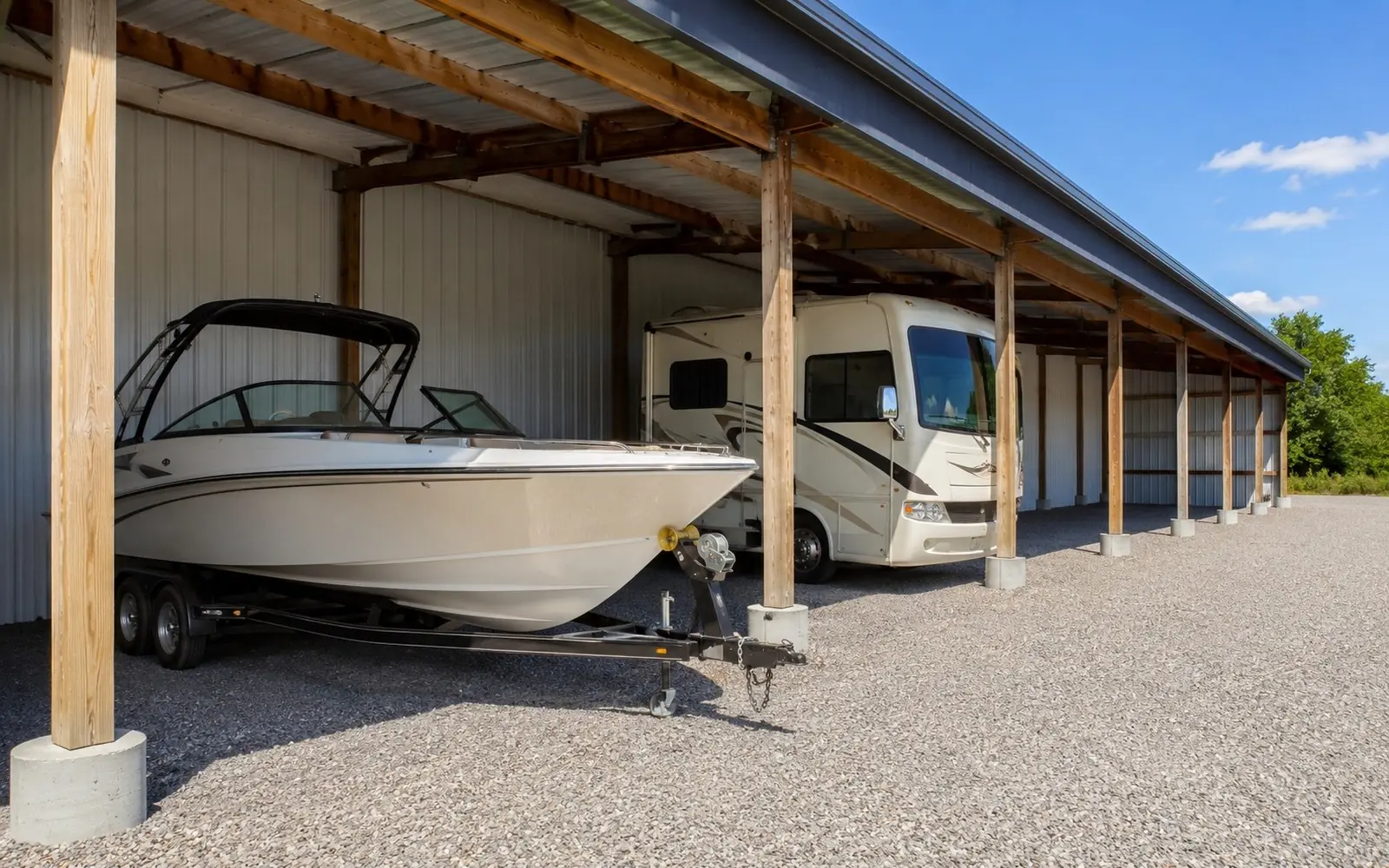
Vehicle, Boat and RV Storage
Things with wheels and hulls need their own kind of storage. Here is how the options ladder up and what each protects against.
A parking problem, a weather problem, or both
Vehicle, boat, car and RV storage together form a demand pool nearly as large as household storage in our data. The buyers split into two camps: people out of driveway, since HOAs and city codes increasingly ban rigs at the curb, and people protecting a machine, the classic car, the boat in the off-season, the RV between trips.
The product ladder is simple. Open lots are fenced parking, cheapest and exposed. Covered canopies block sun and precipitation, the biggest killers of paint, rubber and upholstery, for a modest premium. Enclosed units and bays add walls, locks and dust control. Climate-controlled indoor storage, the top rung, is where collector cars and anything with sensitive electronics or leather belongs.
Match the rung to the machine and the season. A daily-driver overflow car can live on a lot. A boat over winter wants shrink wrap or a roof plus real winterization. An RV appreciates a canopy at minimum, because roof seams baked by sun become next spring's water damage. The storage decision is really a maintenance decision wearing a parking hat.
The storage ladder for vehicles
From cheapest to most protective. Price climbs one step at a time.
Open lot spaces
Fenced, gated parking by the month. Fine for running vehicles on short stays; sun and weather do their slow work on anything parked long.
Covered canopy spaces
A roof without walls. Blocks UV, rain, snow load and hail, the highest-value protection per dollar for RVs and boats on trailers.
Enclosed units and bays
A private garage away from home. Adds security, dust control and a door you can lock; the standard for cars stored across a season.
Climate-controlled indoor storage
Stable temperature and humidity for classics, collector cars and anything with leather, wood or vintage electronics. Priced accordingly.
Marina and dry stack boat storage
Racked indoor boat storage with forklift launch service near the water. Convenience and hull protection bundled into one monthly bill.
Winterizing and prep services
Fuel stabilizer, fluid protection, battery tending, shrink wrap. Many facilities sell it; a stored machine that was not prepped is a repair bill on layaway.
What does vehicle storage cost?
Open lots are the entry price, covered spaces commonly add a moderate premium, and enclosed or indoor spaces cost several times lot rates, scaling with the footprint your rig occupies. Big RVs pay big numbers everywhere because they consume the square footage of a studio apartment.
Metro location moves prices as much as the product does. A lot at the edge of town often beats a facility near the marina by enough to fund your fuel for the season, so price the radius you are willing to drive.
Ballparks based on commonly published national averages, stated as assumptions, not measured local pricing. Your competing quotes set the real number for your move and ZIP.
How to choose vehicle storage
Match protection to value
Decide what you are defending against: theft, sun, freeze or all three. The machine's value and sensitivity pick the rung; the budget picks the facility.
Inspect security in person
Gates that log entries, cameras that record, lighting, fencing and staff presence. Ask how access works after hours and what their claims process looks like.
Prep the machine and the paperwork
Winterize, tend the battery and top the tank as appropriate, then confirm your insurer covers the vehicle in storage; comprehensive-only storage coverage often costs surprisingly little.
Related searches homeowners make
Pulled from the same demand data behind our Moving and Storage category.
Vehicle, Boat and RV Storage questions, answered straight
Can I store a car in a regular self storage unit?
Often yes, in drive-up 10x20 units where the facility allows vehicles, with proof of registration and insurance. Confirm the policy first; some facilities restrict vehicles to designated spaces only.
Do I keep insurance on a stored vehicle?
Yes, and dropping to comprehensive-only coverage during storage is the standard money-saving move. It protects against theft, fire and weather while the car is off the road; talk to your insurer before the policy lapses.
What does winterizing a boat actually involve?
Draining or protecting water systems, stabilizing fuel, fogging the engine per manufacturer guidance, battery care and covering or shrink wrapping. Facilities and marinas sell the package; skipping it is how cracked blocks happen.
Is covered storage worth it over an open lot?
For anything stored across a season, usually yes. Sun degrades paint, seals, tires and roofs steadily, and the covered premium is small compared to what UV damage costs an RV roof or a boat's upholstery.
How do I stop rodents from moving in?
Seal soft food and paper out of the vehicle, close vents and exhausts with steel wool or purpose covers, and favor facilities with active pest control. A stored RV with a granola bar inside is a rodent hotel with a reservation.
Need transport or storage help?
Free for homeowners. No obligation. Up to four local pros compete.
Keep planning your move
More guides from the Moving and Storage hub.
Self Storage Units
Unit sizes, climate control and how to compare facility pricing.
Read the guidePortable Containers
Pods and containers: how they price and when they beat both truck and mover.
Read the guideHiring Movers
Full service vs labor only, binding quotes and the vetting that matters.
Read the guide