
Portable Storage Containers
A storage unit that comes to your driveway and then follows you to the next one. Here is when the pod model wins.
The middle path between rental truck and full-service mover
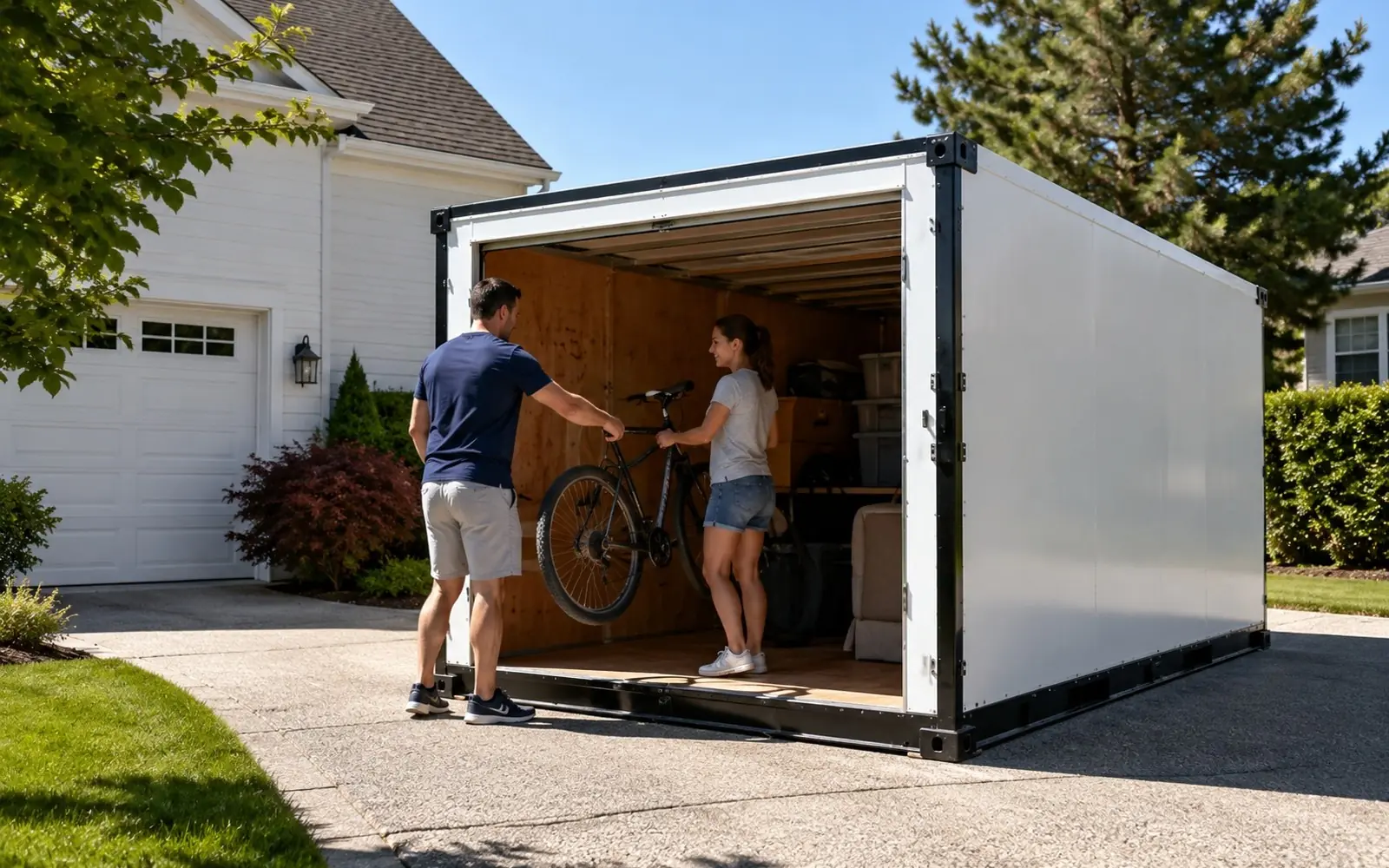
Portable containers, the pods of the demand data, flip the moving sequence: the company drops a container at your home, you load it on your own schedule, and they haul it to your next address or hold it in a warehouse until you are ready. You supply labor, they supply driving, and the price lands squarely between DIY truck and full-service mover.
The scheduling freedom is the quiet superpower. A truck gives you a frantic day or two; a container sits in the driveway for weeks, letting you load room by room after work. On the other end, it waits while your closing slips, absorbing exactly the gap that forces truck movers into paying for storage and a second loading day.
The constraints are physical. You need somewhere legal to park a container, which rules out plenty of apartments and permit-hungry cities without an HOA or curbside permit conversation first. Weather-wise, containers live outdoors, so pack as if the container will meet rain, because somewhere between here and there it will.
Ways homeowners use containers
The recurring patterns behind pod and portable storage searches.
Local moving buffer
Load over weeks, have it dropped at the new house, unload over weeks. Removes the single-day crunch that makes moving miserable.
Long distance shipping
The company hauls your loaded container cross-country while you drive or fly. Often the best price-to-effort ratio for mid-size households.
On-driveway storage during remodels
A container in the driveway holds furniture while floors get refinished or a kitchen gets gutted, cheaper than moving everything twice to a facility.
Warehouse storage between homes
Loaded containers can wait in the company's storage center for months, bridging sale-to-closing gaps without a second move.
Staging a home for sale
Realtors love empty rooms. A container swallows the clutter and follows you to the buyer's favorite house.
Multiple-container moves
Bigger houses take two or three containers, priced per box. Past that point, compare seriously against a full-service weight-based quote.
What do containers cost?
Pricing stacks from three parts: delivery and pickup fees, monthly rent while you have the container, and the transport charge that scales with distance. A local move with a month of use sits near the low band; a cross-country container with storage time lands in the thousands and still commonly undercuts full-service movers.
Quotes are dynamic by route and season, so get two or three container companies pricing the same size, dates and addresses, and ask what the monthly rent becomes if your dates slip.
Ballparks based on commonly published national averages, stated as assumptions, not measured local pricing. Your competing quotes set the real number for your move and ZIP.
How to run a container move
Confirm placement first
Measure the driveway, check HOA rules or city permit requirements for street placement, and clear the overhead: branches and wires foil deliveries daily.
Size and book with slack
A 16-foot container roughly handles two to three rooms; big households book two. Reserve early for summer and month-end, and pad your rental window.
Load tight and hire the muscle
Weight spread evenly, straps at every tier, gaps stuffed with soft goods. Hourly labor-only crews load containers brilliantly and cost a fraction of full service.
Related searches homeowners make
Pulled from the same demand data behind our Moving and Storage category.
Portable Storage Containers questions, answered straight
How long can I keep the container?
Rent is monthly and most companies are happy to let it sit, at your driveway or in their warehouse, for as long as you pay. That flexibility is the product; just get the ongoing monthly rate in writing.
What sizes do containers come in?
Most fleets run roughly 8, 12 and 16 foot boxes, with the largest holding about two to three rooms of furniture. Whole-house moves take multiples, priced per container.
Are containers weatherproof?
They are weather-resistant steel or composite boxes, not vaults. Pack electronics and fabrics in plastic, keep cardboard off the floor, and use moisture absorbers for storage measured in months.
Can containers be stored somewhere other than my driveway?
Yes, storage at the company's secured warehouse between moves is a core part of the service and a common reason to choose containers when closings do not line up.
Container or rental truck, which is cheaper?
The truck is usually cheaper in raw dollars for a local move done in one day. Containers win when timing is uncertain, when you want weeks to load, or when driving a 26-foot truck across the country sounds like a bad vacation.
Get container and moving quotes together
Free for homeowners. No obligation. Up to four local pros compete.
Keep planning your move
More guides from the Moving and Storage hub.
Self Storage Units
Unit sizes, climate control and how to compare facility pricing.
Read the guideMoving Truck Rental
Truck sizes, real total costs and when DIY actually saves money.
Read the guideLong Distance Moving
Interstate rules, weight-based pricing and delivery windows explained.
Read the guide