
Self Storage Units
Storage is the biggest demand block in this category after movers themselves. Here is how to rent a unit that earns its rent.
Renting a small room for your stuff, on purpose
Self storage searches, storage units, storage rental, storage facilities, add up to one of the largest demand pools in our moving and storage data. The product is simple: a locked space you rent month to month. The market is not simple, because facilities compete on teaser rates and make their money on the months after you are too settled in to leave.
Size is the first decision. A 5x5 unit holds a closet's worth; 5x10 swallows a one-bedroom's overflow; 10x10 handles the contents of a small apartment; 10x20 approaches a full house or a car. Renting a size down and shelving vertically routinely beats paying for floor you never stack.
The second decision is climate control, which costs more and matters for wood furniture, electronics, photos, instruments and anything that warps, cracks or molds. In humid climates it is closer to mandatory than optional. For plastic bins of garage gear, a standard drive-up unit is usually fine and cheaper.
Unit types and features to weigh
The menu at most facilities, roughly from simplest to priciest.
Drive-up units
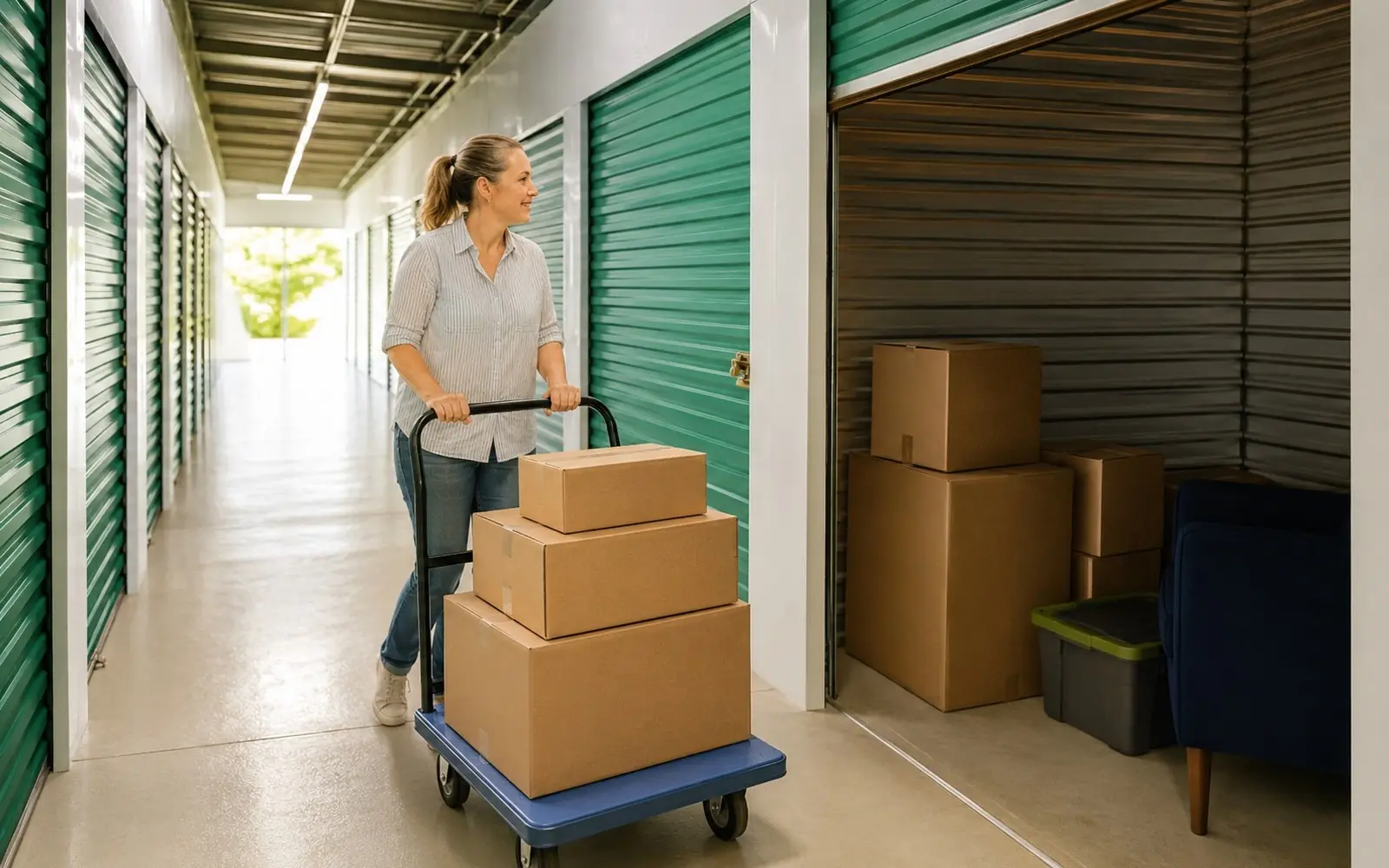
Garage-style doors you park in front of. Cheapest per foot and easiest for heavy loads, at the cost of temperature swings and dust.
Interior climate-controlled units
Inside a conditioned building, often up an elevator. The default for furniture, electronics and anything sentimental, at a monthly premium.
Small lockers and 5x5s
For documents, seasonal gear and the overflow shelf that never fits. Cheap, and the easiest units to forget you are paying for.
Large units, 10x20 and up
House-size storage between homes, or a car under a roof. At this size, compare against portable containers stored in the company's yard.
Vehicle, boat and RV spaces
Open lots, covered canopies and enclosed bays for things with wheels; covered in detail in our vehicle storage guide.
Business and student storage
Inventory shelves, file archives and summer dorm storage. Ask about access hours and delivery acceptance if the unit works for a living.
What does self storage cost?
Small units in low-cost metros rent near the bottom of the range; large climate-controlled units in tight urban markets pass the top. The advertised move-in special is real but temporary, and facilities commonly raise rates after some months of tenancy, so ask directly how often and how much existing tenants have been raised.
Add the quiet costs when comparing: mandatory insurance or proof of coverage, admin fees, locks, and the mileage of a facility across town versus the one near your commute.
Ballparks based on commonly published national averages, stated as assumptions, not measured local pricing. Your competing quotes set the real number for your move and ZIP.
How to choose a storage facility
Visit before you sign
Walk the actual corridor. You are checking cleanliness, lighting, working cameras and gates, dry floors and the absence of pest traps doing overtime.
Interrogate the rate
Get the post-promo rate, the rate-increase history, fees and the insurance requirement in writing. The cheapest first month is rarely the cheapest year.
Pack for retrieval
Label boxes on the aisle-facing side, keep a simple inventory list on your phone, leave a walk path, and put anything you might actually need near the door.
Related searches homeowners make
Pulled from the same demand data behind our Moving and Storage category.
Self Storage Units questions, answered straight
What size storage unit do I need?
Closet's worth: 5x5. One-bedroom overflow: 5x10. Small apartment: 10x10. Multi-bedroom house: 10x15 to 10x20. Stack vertically with shelves and you can often rent one size smaller than the calculator says.
Is climate control worth the premium?
For wood, leather, electronics, photos, instruments and documents, yes, especially in humid or extreme climates. For sealed plastic bins of tools and outdoor gear, standard drive-up units are usually fine.
Why did my rent go up after a few months?
Teaser pricing is the industry's standard playbook: a low move-in rate, then scheduled increases. Ask about increase policy before signing, and re-shop nearby facilities every year; moving units is annoying and often worth it.
Does the facility insure my belongings?
No, the rental agreement almost always puts that on you. Facilities typically require proof of coverage or sell a policy at the counter; your homeowners or renters policy may already extend some off-premises coverage, so check before buying twice.
What cannot go into self storage?
Anything living, anything flammable or hazardous, food that can rot or attract pests, and in most contracts anything irreplaceable like cash or heirloom jewelry. When in doubt, ask the manager, not the internet.
Need movers to fill that unit?
Free for homeowners. No obligation. Up to four local pros compete.
Keep planning your move
More guides from the Moving and Storage hub.
Portable Containers
Pods and containers: how they price and when they beat both truck and mover.
Read the guideVehicle, Boat and RV Storage
Indoor, covered or open lot, and what each protects you from.
Read the guideMoving Checklist
The eight-week countdown that keeps a move from unraveling.
Read the guide