
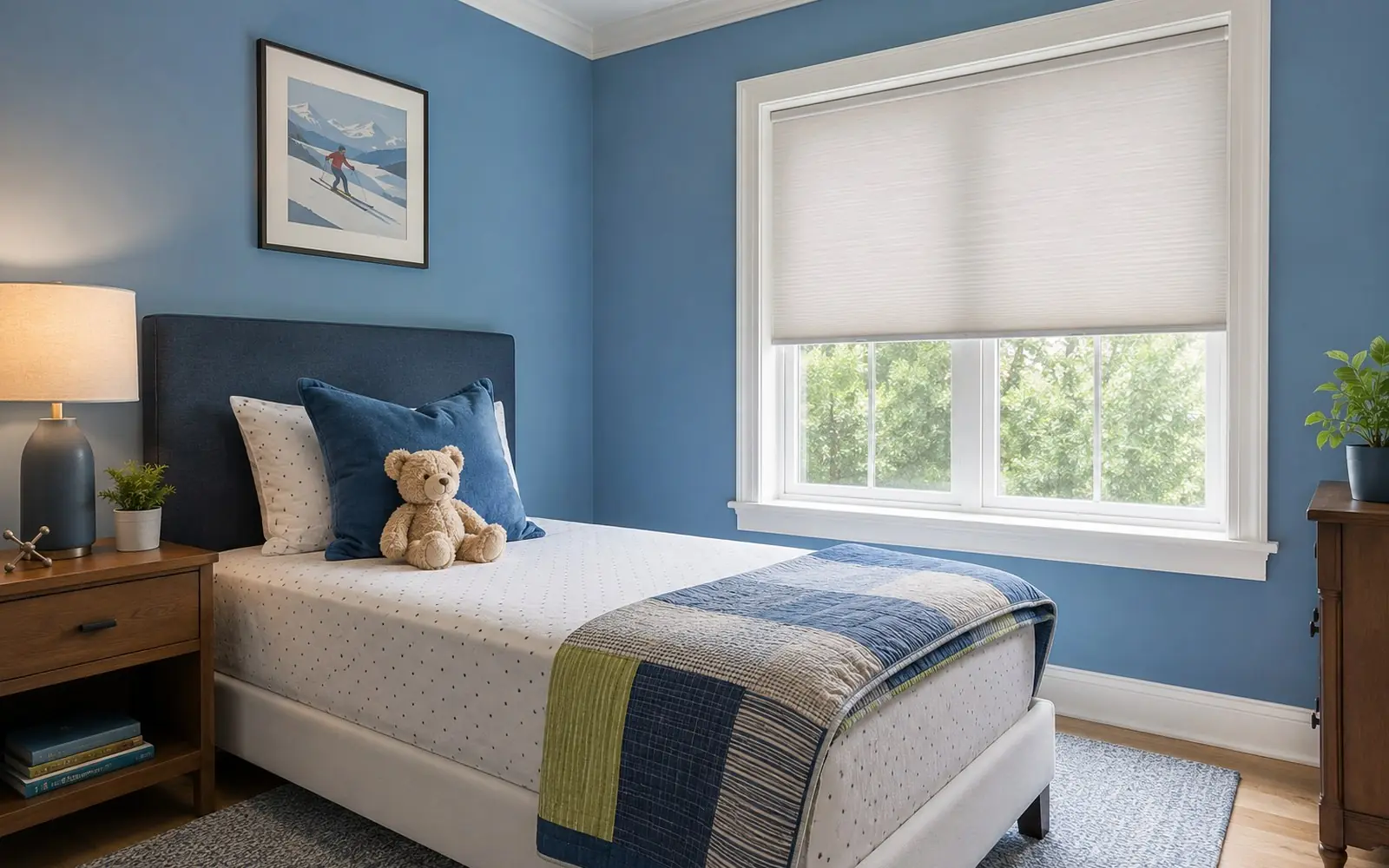
Kids Bedding Sets
The federal rules land on the mattress and the bed, not the bedding, and that changes what is worth checking before you buy.
The standards attach to the mattress, not to the sheet set
Bedding is the part of a child's room with the least regulation attached to it and the most marketing. The parts of federal law reviewed for this page set requirements for crib mattresses, cribs and bunk beds.123 None of them sets a standard for a comforter, a quilt or a sheet set. That is worth saying plainly rather than implying a rule exists.
What the rules do give you is a set of dimensions the bedding has to work with. A full-size crib mattress must measure at least 27 and a quarter inches wide and 51 and 5 eighths inches long.1 The corner gap between mattress and crib must not exceed 3.15 inches, and that gap is measured with a test mattress sheet already on the mattress.1 The sheet is inside the tested condition, not an afterthought to it.
The other number worth carrying to a bedding aisle is the bunk bed rule. Guardrail height is measured as no less than 5 inches above the top surface of the mattress, using a mattress of the maximum thickness specified by the bed manufacturer's instructions.2 Buy the mattress to that number. The rule measures the mattress and says nothing about what you pile on top of it.
Six bedding decisions, and which ones a rule reaches
Some of these run into a published federal requirement, and the rest are yours to judge, so the honest thing is to say which is which.
Fitted sheets for a crib
Size to the mattress, and the mattress has a floor: at least 27 and a quarter by 51 and 5 eighths inches.1 The federal test places the mattress with the test mattress sheet against the perimeter and in the corner of the crib and allows a corner gap of no more than 3.15 inches.1 A sheet that bunches at the corner works against that.
Bunk bed bedding and mattress depth
The 5 inch minimum guardrail height is measured above the top surface of the mattress, with a mattress of the maximum thickness the bed manufacturer specifies.2 Find that number in the instructions before you shop. A deeper mattress raises the sleeper without raising the rail, and the rule accounts for neither toppers nor bedding.
Toddler and twin sheet sets
If the bed takes a full-size crib mattress, you are buying to a federally specified size.1 The crib itself is specified too, at 28 inches wide plus or minus 5 eighths and 52 and 3 eighths inches long plus or minus 5 eighths between innermost surfaces.3 Measure the mattress rather than trusting a bed's product name.
Comforters, quilts and duvets
No standard in the parts reviewed for this page covers them. The requirements found sit on crib mattresses, cribs, non-full-size cribs and bunk beds.13 If you want guidance on soft bedding in a sleep space, go to CPSC directly rather than to a retailer's copy.
Canopies, bed skirts and anything that hangs
The federal lead paint ban defines a furniture article to exclude household items such as window shades, venetian blinds, or wall hangings and draperies, so hanging textiles sit outside that particular ban.4 Watch what a canopy or valance puts within reach of a window covering cord instead.5
Where the bed actually sits
This is the bedding decision with real consequences. CPSC describes cord strangulation as a hidden hazard in a room considered safe, such as a bedroom, and notes children can access cords by climbing on furniture.5 Separately, 44 percent of reported tip-over fatalities happened in bedrooms.6 Placement beats product choice here.
What does it cost?
This page has no bedding price, because the research behind it reached no manufacturer publishing one. That is a gap, and filling it with an average would mean copying a lead-generation site that publishes no methodology. Those numbers are not data and they are not repeated here.
What is free to check is the part that matters. The crib mattress minimum dimensions and the 3.15 inch corner gap are published in the Code of Federal Regulations, so a tape measure settles whether a mattress and sheet combination is inside the standard.1 The bunk bed maximum mattress thickness is published in the instructions that came with the bed.2 Neither costs anything to verify, and both matter more than brand.
Every figure above is a dimension read from the Code of Federal Regulations; no bedding, sheet or mattress price was obtainable from a manufacturer for this page, so none is given.
How to hire for a kids bedroom refresh that includes bedding
Who does the work
Bedding is a retail purchase, not a trade job, so nobody is hired for it on its own. It usually rides along with a decorator, a delivery crew assembling a bed, or nobody at all. If a designer is specifying bedding as part of a room, they are buying from the same catalogues you can, and the value is in the specifying and the measuring.
What pros will ask
Expect a question about mattress depth, because that decides whether a fitted sheet holds. For a bunk or loft, expect a question about the maximum mattress thickness in the bed's instructions, since that is what the 5 inch guardrail height is measured against.2 For a crib, expect the mattress size and whether it is full-size or not, because the two sit under different parts.13
What to check before signing
Check the mattress against the published minimums before the bedding order goes in, and check the corner gap with the sheet on rather than off, which is how the standard tests it.1 Confirm no order line quietly upgrades a bunk mattress past the manufacturer's stated maximum thickness.2 Confirm any window covering work in the same room is being handled, because that is a real hazard in a bedroom.5
Related searches homeowners make
Pulled from the same demand data behind our Kids Rooms category.
Kids bedding questions, answered straight
What size sheet fits a full-size crib mattress?
Buy to the mattress, and the mattress has published minimum dimensions. A full-size crib mattress must measure at least 27 and a quarter inches wide and 51 and 5 eighths inches long.1 The federal test is run with a sheet on: when the mattress with the test mattress sheet is placed against the perimeter and in the corner of the crib, the corner gap must not exceed 3.15 inches.1 So a sheet that bunches or adds bulk at the corner is working inside the same tolerance the standard measures.
Does a mattress topper on a bunk bed cause a problem?
The standard does not measure toppers, which is the point. The upper edge of the guardrails must sit no less than 5 inches above the top surface of the mattress, measured with a mattress of the maximum thickness specified by the bed manufacturer's instructions.2 Everything you add above that mattress raises the sleeping surface without raising the rail, and the rule does not account for it. Find the maximum thickness in the instructions and treat it as a ceiling for the whole build-up, not just the mattress.
Is there a federal safety standard for kids bedding sets?
Not in any part reviewed for this page. The standards found attach to hardware and to the mattress: 16 CFR 1241 for crib mattresses, 16 CFR 1219 for full-size cribs, 16 CFR 1220 for non-full-size cribs and play yards, and 16 CFR 1213 for bunk beds.1372 None of those sets a requirement for a comforter, quilt, pillow or sheet set. If a retailer implies a bedding set meets a federal safety standard, ask which part number they mean.
Does the lead paint rule cover curtains, bed skirts or bedding?
No. The ban on lead-containing paint applies to toys and other articles intended for use by children and to furniture articles for consumer use, for products manufactured after February 27, 1978.4 The rule's definition of a furniture article explicitly excludes household items such as window shades, venetian blinds, or wall hangings and draperies.4 Textiles hanging in a child's room sit outside that ban. That is a statement about scope, not an all-clear on any other hazard.
What does a kids bedding set cost?
No source used for this page publishes a figure, so none is printed. Bedding prices move constantly and the only number worth anything is the one on the manufacturer's own site on the day you order. The averages that fill search results come from lead-generation aggregators with no stated methodology. If you want somewhere useful to put the money, put it in a mattress that meets the published dimensions and, on a bunk, one that stays inside the manufacturer's maximum thickness.12
Where these facts came from
Every figure on this page was read out of the page linked below. We do not cite cost aggregators.
- 16 CFR 1241, safety standard for crib mattresses (ASTM F2933-25)
- 16 CFR 1213, safety standard for entrapment hazards in bunk beds
- 16 CFR 1219, safety standard for full-size baby cribs
- 16 CFR 1303, ban on lead-containing paint and certain consumer products bearing it
- 16 CFR 1260, safety standard for operating cords on custom window coverings
- CPSC, Product Instability or Tip-Over Injuries and Fatalities Associated with Televisions, Furniture, and Appliances: 2023 Report
- 16 CFR 1220, safety standard for non-full-size baby cribs and play yards
Get quotes for your kids bedding sets project
Free for homeowners. No obligation. Up to four local pros compete.
Keep planning
More guides from the Kids Rooms hub.
Kids Room Decorating and Decor
Published wallpaper and decal prices, the federal rule that governs repainting an older room, and what anchoring has to do with decor.
Read the guideKids Room Themes and Ideas
How to build a theme out of reversible materials with published prices, and which theme choices carry a real safety cost.
Read the guideFurniture Tip-Over Safety
What CPSC actually counted, which furniture and which ages, and the limits of the federal standard that took effect in September 2023.
Read the guide