
Vinyl and Resilient Flooring
Waterproof, quiet and everywhere: the resilient category that took over kitchens, baths and basements.
The category that solved the water problem
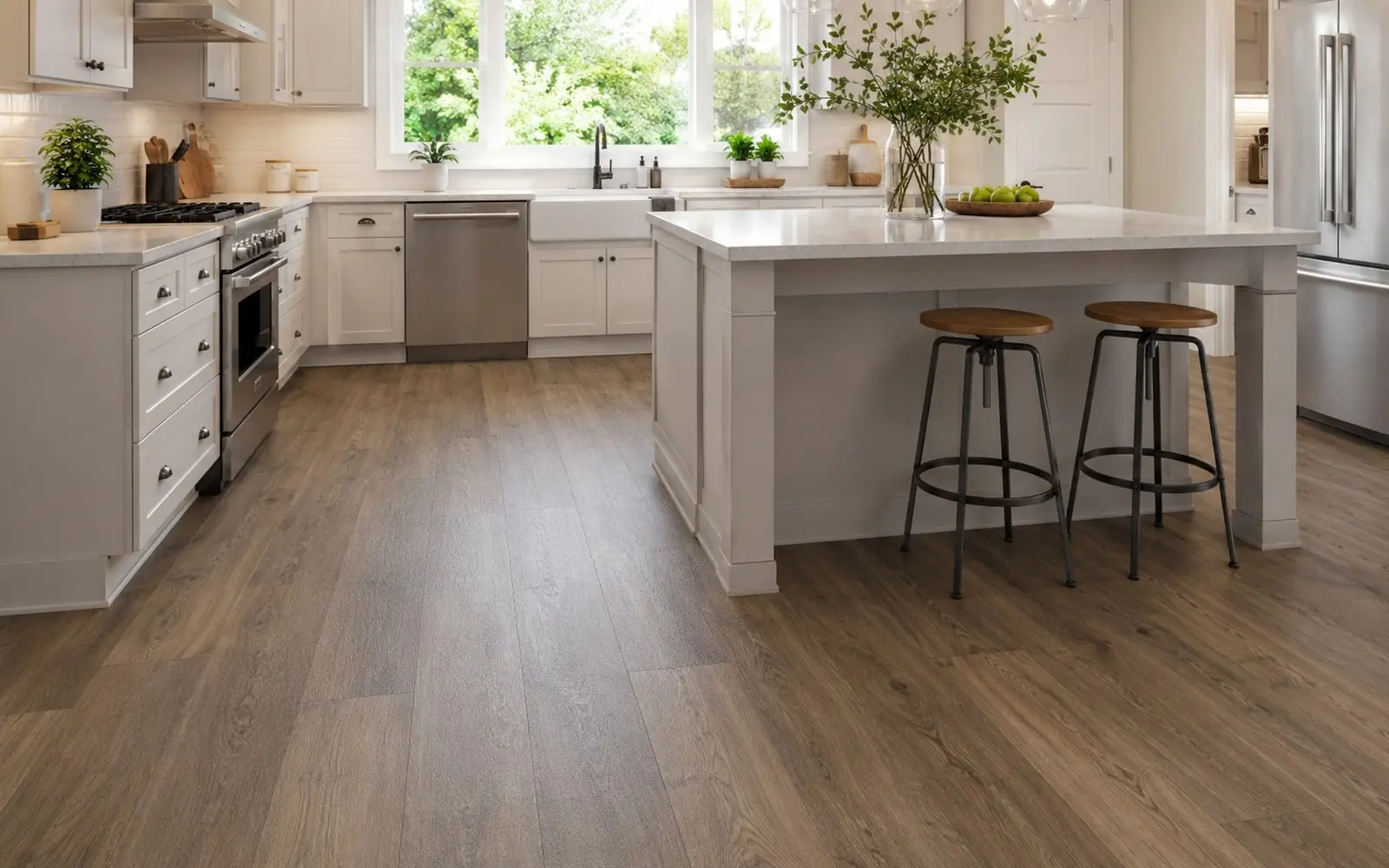
Vinyl terms thread through our entire flooring demand data: vinyl flooring, vinyl tile, linoleum and their cousins add up to a block rivaling the biggest single materials, and the growth is all on one product: luxury vinyl plank. LVP took the wood look, made it waterproof, quiet and warm underfoot, and became the default answer for kitchens, baths, basements and rentals.
The resilient family is broader than plank. Sheet vinyl remains the seamless budget workhorse for wet rooms. Vinyl tile spans from groutable stone looks to peel-and-stick. True linoleum, the natural-materials original, still earns kitchens with its warmth and repairability. Cork brings walking comfort and quiet with its own guide-worthy rules, and rubber owns gyms and laundry rooms.
Specs to read on LVP: the wear layer in mils (20 mil is the common household-durable line, higher for heavy use), rigid core versus flexible construction (rigid SPC and WPC cores span small subfloor sins and feel solider), and attached underlayment for quiet. Waterproof claims on quality vinyl are genuine, with the honest footnote that water can still travel around a floating floor to the subfloor below, so wet-room installs still respect flashing and caulk details.
Resilient options worth weighing
Plank leads the parade, but the older formats still win specific rooms.
Luxury vinyl plank (LVP)
The wood look, waterproof and click-installed. Wear layer and core type are the specs that separate grades.
Rigid core: SPC and WPC
Stone and wood polymer cores that bridge minor subfloor flaws and feel more solid. The current mainstream recommendation.
Sheet vinyl
Seamless rolls for baths, laundries and rentals at the lowest cost per foot. Modern prints far outclass their reputation.
Vinyl tile and groutable formats
Stone looks that can take real grout lines, plus peel-and-stick for quick refreshes with honest lifespan limits.
Linoleum
The natural original: linseed oil and cork, warm, durable and repairable. A different product from vinyl despite the shared aisle.
Cork and rubber
Cork for quiet, warm comfort in kitchens and offices; rubber for gyms and utility floors. Both niche, both excellent in their niche.
What does it cost?
Commonly published ballparks put installed LVP roughly in the $4 to $8 per square foot band, sheet vinyl below it, and premium rigid-core, linoleum and cork at or above the top. Whole kitchens and basements commonly land in the low thousands.
Levers include wear-layer grade, subfloor flattening, old floor removal and glue-down versus floating installation. As with laminate, approachable DIY keeps professional pricing honest in this category.
Ballparks based on commonly published national averages, stated as assumptions, not measured local pricing. Your competing quotes set the real number for your home and ZIP.
How to hire for vinyl flooring work
Who does the work
Flooring installers and remodel contractors handle LVP and sheet goods; glue-down commercial-style installs and linoleum favor specialists. For basements, ask about moisture testing before anyone opens a box.
What pros will ask
Rooms and square footage, subfloor type and any moisture history, the product or grade you want, and door-height and appliance clearances. Rental owners should say so; spec advice changes for tenant traffic.
What to check before signing
That the bid includes subfloor prep and moisture checks on slabs, states the wear layer and product line, and covers transitions, baseboard or quarter-round, and appliance moves. Spare planks from the same lot stay with you.
Related searches homeowners make
Pulled from the same demand data behind our Flooring, Carpet and Tile category.
Vinyl and Resilient Flooring questions, answered straight
Is luxury vinyl plank really waterproof?
The planks themselves, on quality lines, genuinely are: spills, pet accidents and wet mopping do not harm them. Water can still migrate at edges to the subfloor beneath a floating floor, so flooding is not invited and wet rooms still deserve careful perimeter details.
What wear layer should I buy?
20 mil has become the common recommendation for busy households and pets, 12 mil for light-traffic bedrooms, and 22 to 28 mil for rentals and commercial-grade duty. The wear layer, not total thickness, is the durability spec.
LVP or tile in bathrooms?
Tile remains the fully waterproof-system answer and the resale classic; LVP gets remarkably close for less money, installs faster and feels warmer. Full guest and family baths do fine in quality LVP; steamy primary suites and shower surrounds stay tile territory.
What is the difference between vinyl and linoleum?
Vinyl is a synthetic printed product; linoleum is natural linseed oil, cork and jute with color through its body, repairable and famously long-serving. Linoleum costs more and wants professional installation, and its fans consider both facts worth it.
How long does vinyl flooring last?
Commonly cited service runs 10 to 25 years by grade and traffic. It cannot be refinished, so deep gouges mean plank swaps, which is why the leftover box from installation is worth its shelf space.
Get quotes for your vinyl flooring project
Free for homeowners. No obligation. Up to four local flooring pros compete.
Keep planning your floors
More guides from the Flooring, Carpet and Tile hub.