
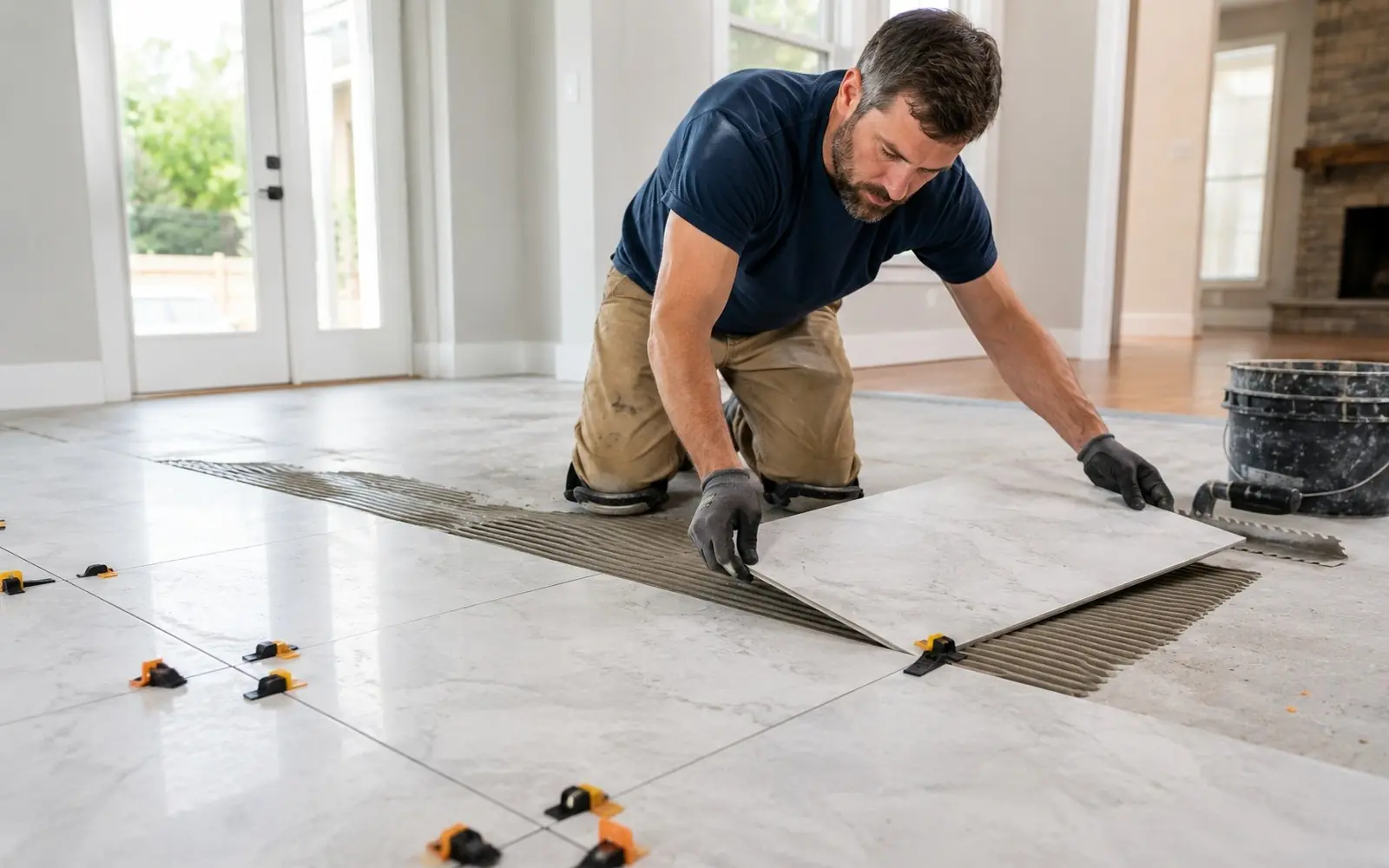
Tile Flooring
Ceramic and porcelain together dominate this category's searches. Waterproof, permanent and setter-dependent.
The permanent floor, priced mostly in labor
Tile terms are everywhere in our flooring demand data: ceramic tile alone is a top-three search, with porcelain, floor tile and mosaic close behind. Tile earns that attention by being the one floor that genuinely does not care about water, which makes it the default in baths, laundries and entries, and a permanent choice anywhere else.
Ceramic versus porcelain is a density story. Porcelain is fired harder and absorbs almost no water, rated for floors, freeze exposure and heavy traffic; ceramic is easier to cut, friendlier priced and fine on most interior floors and any wall. Within porcelain, through-body and rectified tiles are the upgrade specs, and wood-look planks and large-format slabs are where the style demand has moved.
What separates tile from every floating floor is that installation is craftsmanship over a system: a flat, stiff substrate, correct backer or membrane, full mortar coverage, straight lines and level lippage-free faces, then grout and movement joints done to spec. The tile is often the cheap part; the setter is the product, and redoing bad tile costs more than doing it right once.
Tile choices worth weighing
Material and format first, then the installation specs that decide how it looks in five years.
Porcelain
Dense, nearly waterproof and floor-rated everywhere including outdoors in freeze climates. The default recommendation for floors.
Ceramic
Easier cutting and friendlier budgets for interior floors and walls. Check the floor rating; not every ceramic belongs underfoot.
Wood-look planks and large formats
Tile's fashion frontier: plank floors that shrug off water and oversized tiles with minimal grout. Both demand flatter substrates.
Mosaics and pattern
Sheet-mounted small formats for showers, niches and statement floors. More grout lines mean more traction and more labor.
Grout, membranes and movement joints
Uncoupling membranes, quality grout and honored expansion joints are the invisible specs that prevent cracks.
Heated tile floors
Electric mats under bathroom tile are the affordable luxury; see the radiant heating guide in our plumbing cluster.
What does it cost?
Commonly published ballparks put installed ceramic and porcelain floors roughly in the $10 to $20 per square foot band, with tile itself often $2 to $10 of that and labor carrying the rest. Large formats, patterns, mosaics and substrate correction push past the band.
Levers include substrate condition and prep, tile size and layout complexity, demolition of old floors, and region. Cheap tile installed superbly beats premium tile installed poorly, every time, for exactly as long as you own the floor.
Ballparks based on commonly published national averages, stated as assumptions, not measured local pricing. Your competing quotes set the real number for your home and ZIP.
How to hire for tile flooring work
Who does the work
A dedicated tile contractor or a flooring company with real tile crews; tile setting is a certified craft (industry certifications exist and are worth asking about). Bathroom tile in wet zones overlaps with our bathroom guides and the same rule: the setter is the product.
What pros will ask
Rooms and square footage, current floor and subfloor, the tile you want or a look-and-budget brief, and pattern intentions. Large tile over wavy subfloors is the collision a site visit exists to catch before the bid.
What to check before signing
That the bid covers substrate prep to flatness spec, backer or membrane by name, layout approval before setting, grout and sealant type, and movement joints. Ask to see photos of their large-format work in raking light; lippage hides nowhere.
Related searches homeowners make
Pulled from the same demand data behind our Flooring, Carpet and Tile category.
Tile Flooring questions, answered straight
Ceramic or porcelain tile for floors?
Porcelain for floors, entries, showers and anywhere freeze or heavy traffic applies; its density earns the premium. Quality floor-rated ceramic serves fine in dry interior rooms at a friendlier price. On walls, either works and ceramic cuts easier.
How much does tile flooring cost installed?
As a planning ballpark, $10 to $20 per square foot installed covers most ceramic and porcelain floors, labor-heavy by nature. Mosaics, patterns, big slabs and substrate repairs run beyond. Local bids against your actual rooms set the real figure.
Why did my tiles crack?
Almost always the system under them: deflecting subfloors, skipped membranes, voids in mortar coverage or ignored movement joints. Tile transmits the substrate's honesty. This is why the setter and prep matter more than the tile brand.
Is tile cold and hard to live with?
It is the hardest and coolest common floor, which is a feature in hot climates and a complaint in cold ones. Electric radiant mats under bathroom and kitchen tile solve the cold at modest cost when added during installation. Rugs solve the rest.
Can new tile go over old tile?
Sometimes, over sound, well-bonded existing tile with proper prep and height checks at doors. Most quality installs still prefer tear-out so the substrate can be verified and membranes installed. Let the setter make the call on your actual floor.
Get quotes for your tile flooring project
Free for homeowners. No obligation. Up to four local tile pros compete.
Keep planning your floors
More guides from the Flooring, Carpet and Tile hub.