
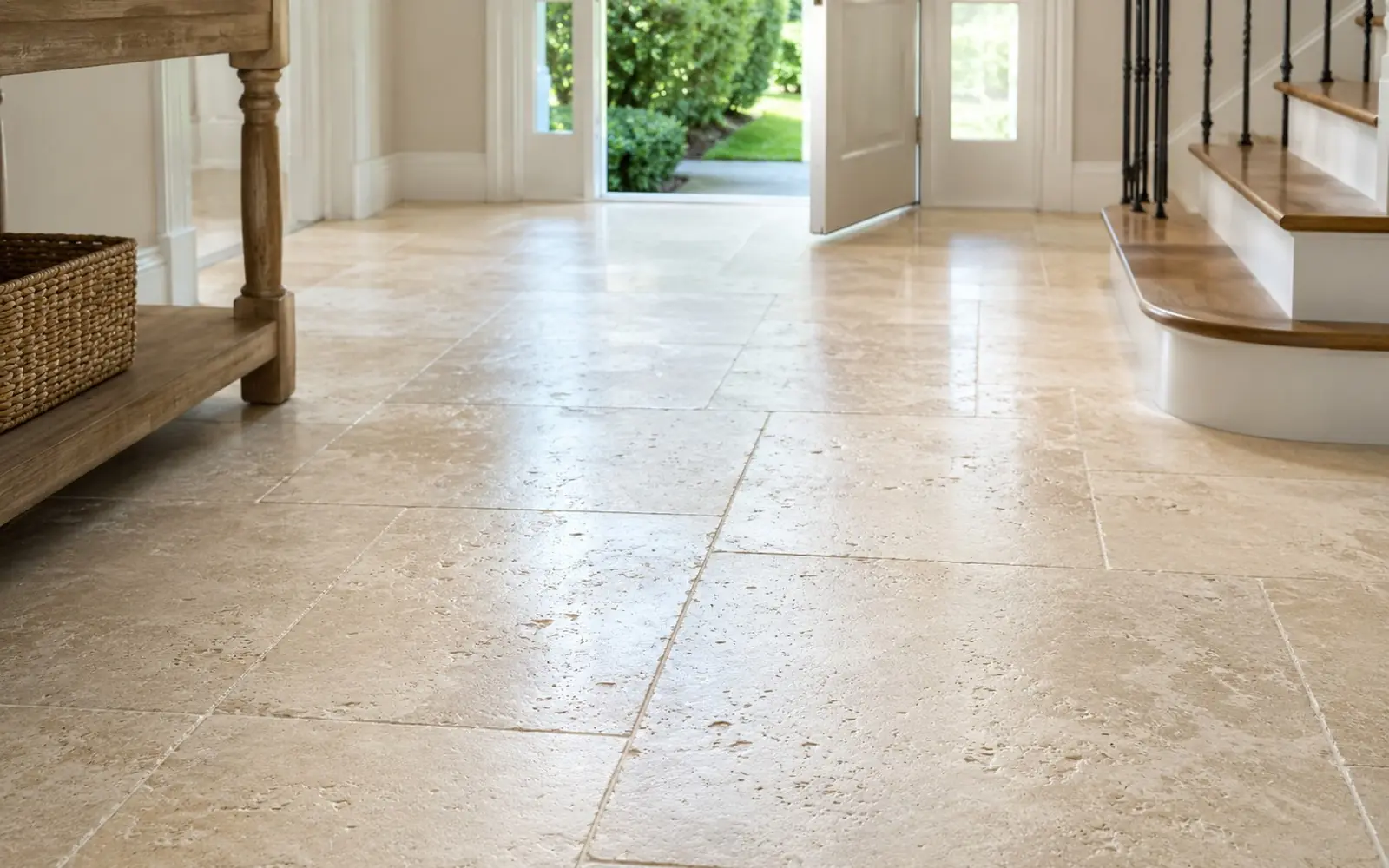
Stone and Marble Flooring
Marble, granite, travertine and slate each pull real search volume. Here is the whole family, honestly.
Real stone, real rules
The stone searches in our flooring demand data, marble, granite, travertine and slate tiles, add up to a premium block that porcelain's stone-look boom has not erased. Nothing manufactured fully replicates the depth and variation of real stone, and in entries, baths and kitchens it still signals permanence the way it always has.
The family has personalities. Granite is the workhorse: hard, scratch-resistant and nearly carefree once sealed. Marble is the beauty with rules: it etches under acids (lemon juice, vinegar, some cleaners) and prefers honed finishes on floors where etching and slips both matter. Travertine brings warm, pitted Old-World texture, filled or unfilled, and wears gracefully. Slate delivers slip-resistant texture and moody color, with occasional flaking on lower grades as its known quirk.
All stone shares three truths. It is porous and wants sealing on a recurring schedule (granite least often, travertine and marble more). It is heavy and demands stiff, flat substrates, which on wood-framed floors deserves verification, not optimism. And it is priced as much in labor as material: stone setting rewards experienced hands, and every guide on this page assumes you hire them.
Stone options worth weighing
Match the stone's personality to the room's abuse level, then seal on schedule.
Granite tile
Hardest of the mainstream stones: entries, kitchens and traffic take it well. Polished shows water spots; flamed and honed grip better.
Marble
The luxury benchmark, honed for floors. Accept etching as patina or choose another stone; that decision is the whole marble question.
Travertine
Warm European texture, filled and honed for interiors, tumbled for that aged look. Wears and repairs more forgivingly than marble.
Slate
Natural cleft texture with real slip resistance for entries, mudrooms and baths. Buy quality grades to avoid flaking layers.
Limestone and specialty stones
Soft, subtle and architectural; happiest in gentler rooms and honest about scratching in gritty ones.
Stone-look porcelain
The pragmatic rival: stone visuals with zero sealing and easier setting. Worth an honest side-by-side before committing either way.
What does it cost?
Commonly published ballparks put installed natural stone flooring roughly in the $15 to $30 per square foot band, with the stone itself commonly $5 to $20 of that and exotic marbles far beyond. Substrate stiffening, patterns and borders push totals higher.
Levers include the stone and grade, tile size, substrate work on framed floors, and finishing details like borders and inlays. Sealing is a small recurring cost that protects the whole investment and belongs in the care plan from day one.
Ballparks based on commonly published national averages, stated as assumptions, not measured local pricing. Your competing quotes set the real number for your home and ZIP.
How to hire for stone flooring work
Who does the work
Tile contractors with specific natural stone experience; stone is less forgiving than porcelain in handling, cutting and setting, and honed marble in particular telegraphs sloppy lippage. Ask for stone-floor references, not just tile ones.
What pros will ask
Rooms and square footage, the stone you are considering, subfloor construction (slab or framed), and the room's traffic and spill profile. On framed floors, expect a stiffness conversation before anyone talks patterns.
What to check before signing
That the bid covers substrate verification and prep, membrane and mortar spec suited to stone, sealing after installation, and grout choices that flatter the stone. Confirm slabs and tiles are inspected and laid out for veining approval before setting.
Related searches homeowners make
Pulled from the same demand data behind our Flooring, Carpet and Tile category.
Stone and Marble Flooring questions, answered straight
Which natural stone is best for floors?
Granite for durability with least fuss, honed marble for luxury with accepted etching rules, filled travertine for warm texture and graceful wear, slate for grip in wet entries. There is no single best; there is the right personality per room.
How much does stone flooring cost?
As a planning ballpark, installed natural stone commonly runs $15 to $30 per square foot, labor-heavy like all tile, with premium marbles and complex patterns well beyond. Stone-look porcelain typically undercuts it meaningfully, which is why the comparison is worth making.
Does stone flooring need sealing?
Yes, on a schedule that varies by stone: granite infrequently, marble and travertine more often, with penetrating sealers renewed as water stops beading. It is a maintenance line item, small but permanent, that keeps stains from becoming geology.
Is marble too delicate for real life?
Marble floors have survived centuries of cathedral traffic; what they do is develop patina: etching from acids and fine wear that honed finishes disguise well. Households that want stone without patina should choose granite or porcelain and skip the heartbreak.
Can stone tile go on any floor?
Only floors stiff and flat enough to carry it: concrete slabs are ideal, and wood-framed floors often need verification and stiffening first. Cracked stone over a bouncy subfloor is an installation failure, not a stone failure, and a good setter prevents it up front.
Get quotes for your stone flooring project
Free for homeowners. No obligation. Up to four local tile pros compete.
Keep planning your floors
More guides from the Flooring, Carpet and Tile hub.