
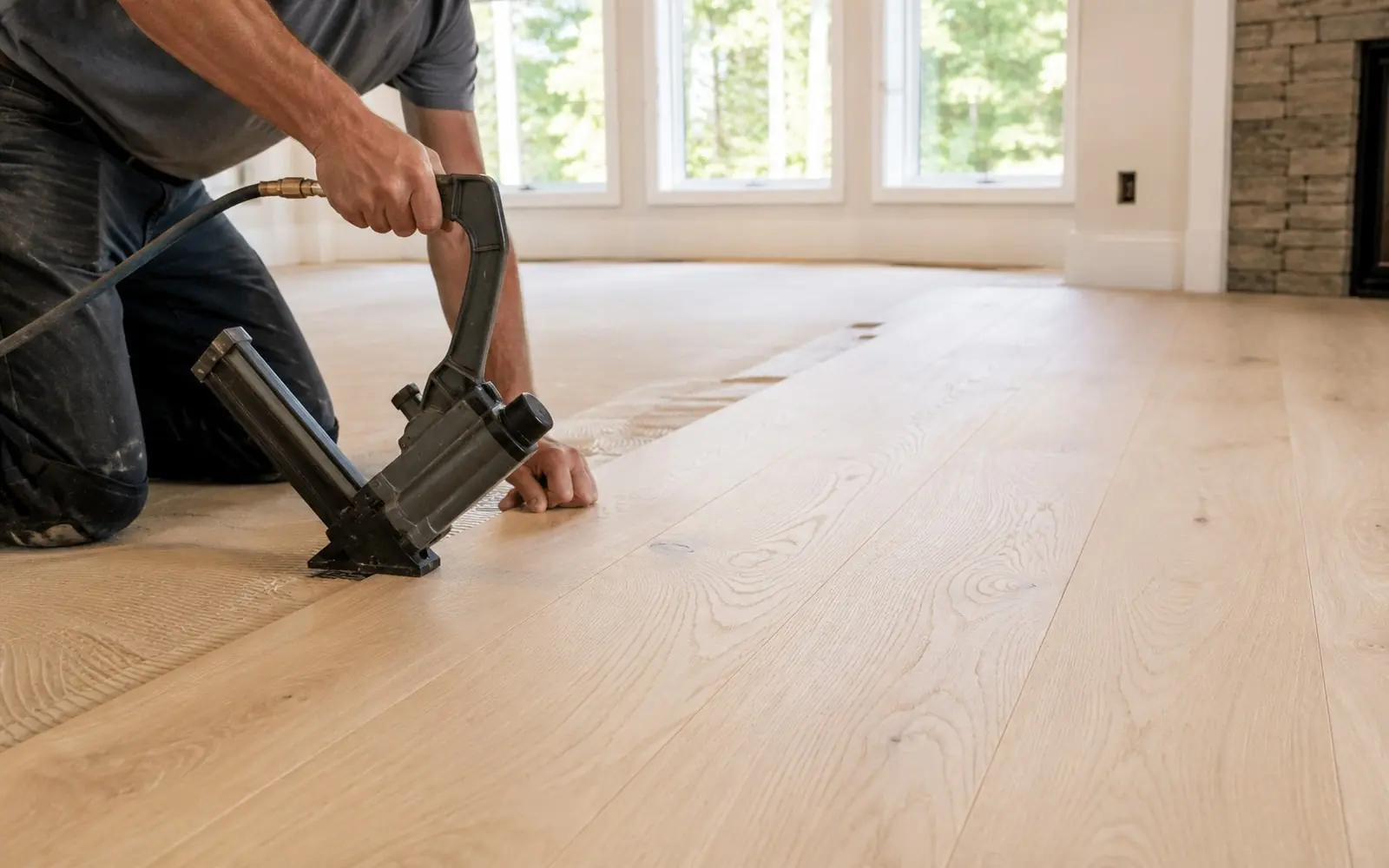
Hardwood Flooring
The floor every other floor imitates, and the only one that gets refinished instead of replaced.
The floor that appreciates while everything else wears out
Wood flooring terms stack up to one of the largest blocks in our demand data, spread across solid, engineered and species searches. The enduring appeal is unique among floors: hardwood is the surface buyers pay extra for, the one that can be renewed by sanding instead of replaced, and the one whose scratches read as character rather than failure.
The core decision is solid versus engineered. Solid planks are one piece of wood, refinishable for generations, and happiest nailed over wood subfloors above grade. Engineered planks put a real wood wear layer over a stable core, tolerate concrete slabs and moderate humidity swings, and refinish as many times as their wear layer allows, which ranges from zero to several sandings depending on grade. Neither is the cheap version; they are different tools.
Species and finish set the daily experience. Oak remains the American default for good reasons: hard enough, grain that hides wear, takes any stain. Maple and hickory run harder and cleaner-grained; walnut is softer and darker. Site-finished floors give seamless custom color; factory-finished planks install faster with tougher coatings. Water is the one enemy every version shares, which is why kitchens are debated and full baths are off the list.
Hardwood choices worth weighing
Construction first, then species, then the finish question that splits installers.
Solid hardwood
One-piece planks, nailed down, refinishable for decades. The long-game floor for above-grade wood subfloors.
Engineered hardwood
Real wood face on a stable core: slab-friendly and steadier through seasons. Wear-layer thickness is the spec that matters.
Species and hardness
Oak the versatile default, hickory and maple harder, walnut softer and richer. Dogs and dropped pans argue for the harder end.
Site-finished vs prefinished
Site finishing gives seamless custom results with dust and cure time; factory finishes are tougher and same-day livable.
Refinishing instead of replacing
Sanding and refinishing existing hardwood costs a fraction of new wood and is the best value move in flooring.
Wood-look alternatives
Where water or budget rule wood out, luxury vinyl and wood-look tile carry the aesthetic; see their guides in this cluster.
What does it cost?
Commonly published ballparks put installed hardwood roughly in the $8 to $15 per square foot band across mainstream solid and engineered products, with exotic species, wide planks and patterns beyond it. Refinishing existing floors is commonly cited in the $3 to $8 per square foot range, a fraction of replacement.
Levers include species and grade, subfloor preparation, removal of existing floors, and site versus factory finishing. Humidity acclimation time is free but non-negotiable; floors installed straight off the truck are the ones that gap and cup.
Ballparks based on commonly published national averages, stated as assumptions, not measured local pricing. Your competing quotes set the real number for your home and ZIP.
How to hire for hardwood flooring work
Who does the work
Hardwood flooring contractors for installation and dedicated refinishers for sand-and-finish work; the best shops do both. General flooring installers vary widely on wood, so ask specifically about nail-down and finishing experience.
What pros will ask
Square footage and rooms, subfloor type (wood or slab), your species and color intentions, pets and traffic reality, and whether existing wood might be refinished instead of replaced. An installer visit should measure moisture, not just dimensions.
What to check before signing
That the bid covers acclimation, subfloor prep and moisture testing, states finish system and coats, and includes transitions and shoe molding. For refinishing, ask about dust containment and how many sandings your floor has left in it.
Related searches homeowners make
Pulled from the same demand data behind our Flooring, Carpet and Tile category.
Hardwood Flooring questions, answered straight
Solid or engineered hardwood?
Solid for above-grade rooms over wood subfloors where maximum refinishing life matters; engineered for slabs, basements-adjacent levels and wide planks, where its stability wins. Quality engineered with a thick wear layer is genuine hardwood, not a compromise.
How much does hardwood flooring cost installed?
As a planning ballpark, mainstream hardwood commonly runs $8 to $15 per square foot installed, with material roughly half the number. Refinishing existing wood commonly runs $3 to $8 per square foot, which is why checking under old carpet is always worth a look.
Can hardwood go in kitchens?
Commonly yes, with site-finished or well-sealed floors and prompt spill habits; kitchens are hardwood's accepted risk zone. Full bathrooms and laundry rooms are not, and mudrooms earn tile. Engineered construction tolerates the kitchen assignment a little better.
How often can floors be refinished?
Solid hardwood typically sands 4 to 6 times over its life, engineered from zero to a few depending on wear-layer thickness. A refinish is usually worthwhile every decade or two of family traffic, and it resets the floor to new for a fraction of replacement.
Does hardwood really help resale?
Consistently among the most-requested features in buyer surveys, and listings lean on it for a reason. It will not return every dollar by itself, but hardwood in main living areas photographs, shows and appraises as the premium surface it is.
Get quotes for your hardwood flooring project
Free for homeowners. No obligation. Up to four local flooring pros compete.
Keep planning your floors
More guides from the Flooring, Carpet and Tile hub.