
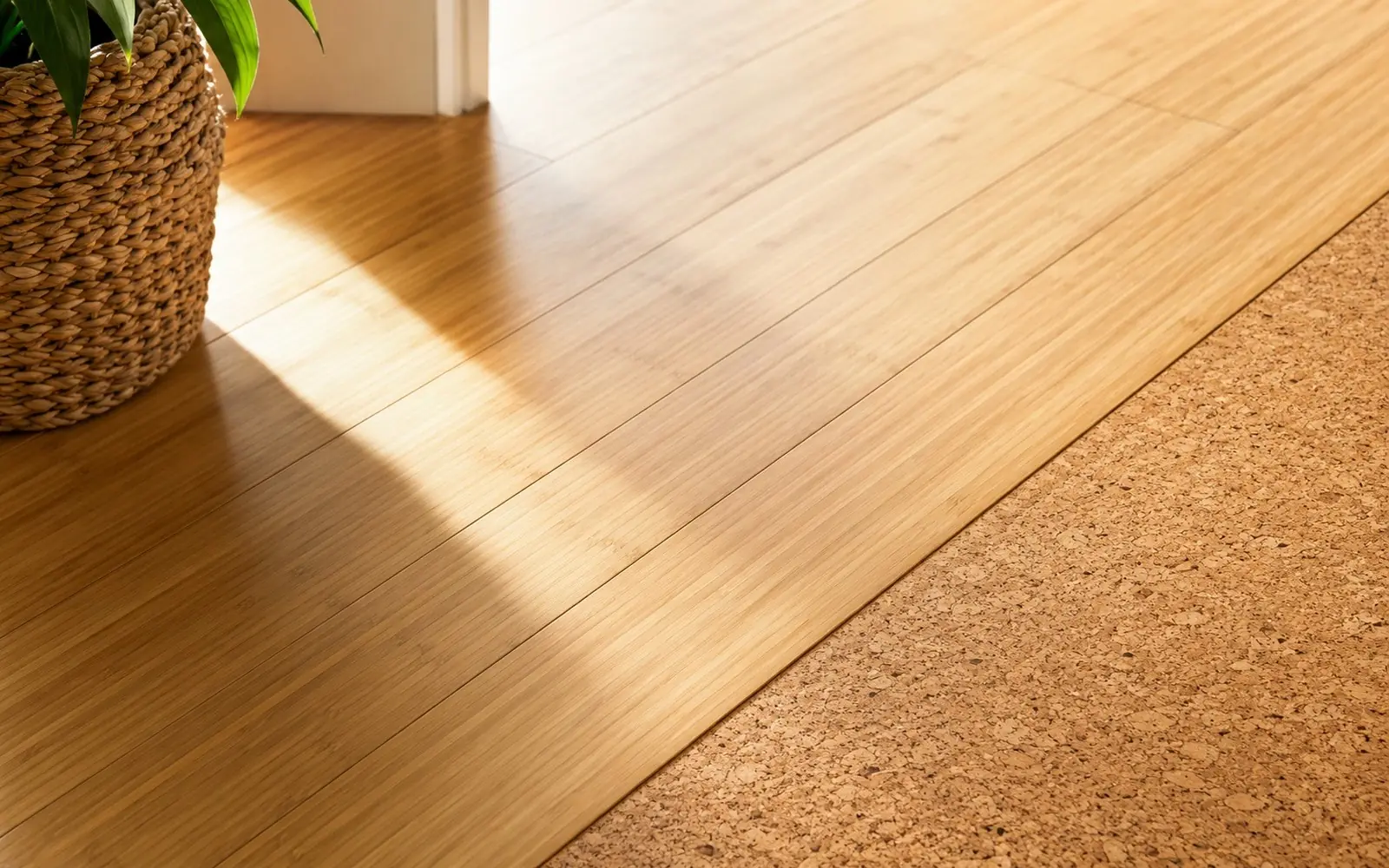
Bamboo and Cork Flooring
Two big searches with renewable stories: one harder than oak, one softer than everything.
The renewable floors, past the marketing
Bamboo and cork each pull five-figure search volume in our flooring demand data, more than several mainstream materials, powered by their sustainability stories: bamboo regrows in years rather than decades, and cork is peeled from living oaks that keep growing. The stories are true; the buying decisions still deserve the same scrutiny as any floor.
Bamboo's headline is strand-woven construction: stalks shredded and compressed with resin into planks measurably harder than oak, in both solid and engineered formats. That hardness is real, and so are the caveats: quality varies more by manufacturer than in oak, cheap bamboo dents and delaminates, and all bamboo dislikes dry-winter humidity swings and standing water about as much as hardwood does. Buy from established lines with real warranties, not by price alone.
Cork is the opposite personality: a floor you choose with your feet. Its cellular structure gives walking comfort, warmth, quiet and a forgiving surface that kitchens and home offices love. It dents under stilettos and heavy furniture (some of it recovers), fades in strong sun, and wants its finish maintained in wet-ish rooms. Sealed well and treated reasonably, cork serves for decades and stays the quietest room in the house.
Bamboo and cork options worth weighing
Construction grade decides more than species story in both materials.
Strand-woven bamboo
The hard stuff: compressed strand construction outscoring oak on hardness tests. The bamboo to buy for traffic and pets.
Traditional and engineered bamboo
Horizontal and vertical bamboo show the classic node grain but dent easier; engineered cores add slab-friendly stability.
Bamboo finishes and quality tiers
Manufacturer matters more than in oak: established lines with aluminum-oxide finishes and real warranties beat bargain imports.
Cork planks and tiles
Click-together floating planks for easy installs, glue-down tiles for the classic seamless look and patterns.
Cork underfoot benefits
Warmth, quiet and joint-friendly give. The kitchen and office floor people thank themselves for at hour three of standing.
Care and placement rules
Both want stable humidity and prompt spill habits; cork adds felt pads under furniture and sun management to the list.
What does it cost?
Commonly published ballparks put installed bamboo roughly in the $6 to $12 per square foot band, in hardwood's neighborhood but usually below oak of comparable quality, and cork in a similar range with glue-down work toward the top. Both undercut premium hardwood while beating laminate money.
Levers are the usual flooring suspects: product grade, subfloor prep, removal and region, plus finish system on cork. The savings against hardwood shrink at the premium end of both materials, so compare at the grade you would actually buy.
Ballparks based on commonly published national averages, stated as assumptions, not measured local pricing. Your competing quotes set the real number for your home and ZIP.
How to hire for bamboo or cork flooring work
Who does the work
Hardwood flooring installers handle bamboo with the same tools and rules; cork wants installers who have actually done it, particularly glue-down tile work and site-applied finishes.
What pros will ask
Rooms, square footage and subfloor type, the product line you are considering, your humidity situation (dry winters, humid summers), and traffic and pet reality. For cork, sun exposure through big windows is worth mentioning.
What to check before signing
That acclimation and moisture testing are in the bid, expansion gaps are honored (both materials move), and finish coats on cork are specified. On bamboo, confirm the exact line and warranty; on both, keep spare material from the lot.
Related searches homeowners make
Pulled from the same demand data behind our Flooring, Carpet and Tile category.
Bamboo and Cork Flooring questions, answered straight
Is bamboo flooring as durable as hardwood?
Strand-woven bamboo from reputable manufacturers tests harder than oak and lives up to it in service. Traditional bamboo and bargain imports do not, which is where the material's mixed reputation comes from. Buy the construction and the brand, not the word bamboo.
Does cork flooring dent permanently?
Small compressions often recover thanks to cork's cellular structure; concentrated loads like narrow furniture feet and heels can mark it for good. Felt pads and load spreaders are standard cork citizenship, and many owners consider the trade obvious for the comfort.
Are bamboo and cork good for kitchens?
Cork is a beloved kitchen floor for standing comfort, with well-maintained finish as the condition. Bamboo follows hardwood's kitchen rules: acceptable with good habits, unhappy with standing water. Neither belongs in full bathrooms.
How sustainable are they really?
Genuinely strong stories: bamboo matures in a few years and cork harvesting does not fell the tree. Verify the rest per product, formaldehyde-free certifications and responsible finishes, since a green raw material can still be processed badly.
How long do bamboo and cork floors last?
Quality strand bamboo is commonly expected to serve on hardwood-like timelines, with some products refinishable. Cork commonly serves decades with finish maintenance, and glue-down cork can be refinished as well. In both cases the warranty tier at purchase is a fair proxy.
Get quotes for your bamboo or cork flooring project
Free for homeowners. No obligation. Up to four local flooring pros compete.
Keep planning your floors
More guides from the Flooring, Carpet and Tile hub.