
Carpet Installation
Carpet is the single biggest search in this category. The pad and the installer decide how it ages.
Still the bedroom and basement favorite
Carpet leads our flooring demand data outright, edging past even the generic flooring term. Hard surfaces get the headlines, but carpet keeps winning bedrooms, basements and stairs on the merits: warmth, quiet, softness underfoot and the lowest installed price of any major floor.
Fiber is the first decision. Nylon is the durability benchmark and holds its shape in traffic. Polyester delivers color and softness for less money with a shorter prime. Triexta sits between, with strong stain performance that made it the pet-household favorite. Wool is the premium natural. Within any fiber, density and twist tell you more about wear than the pile height showrooms push.
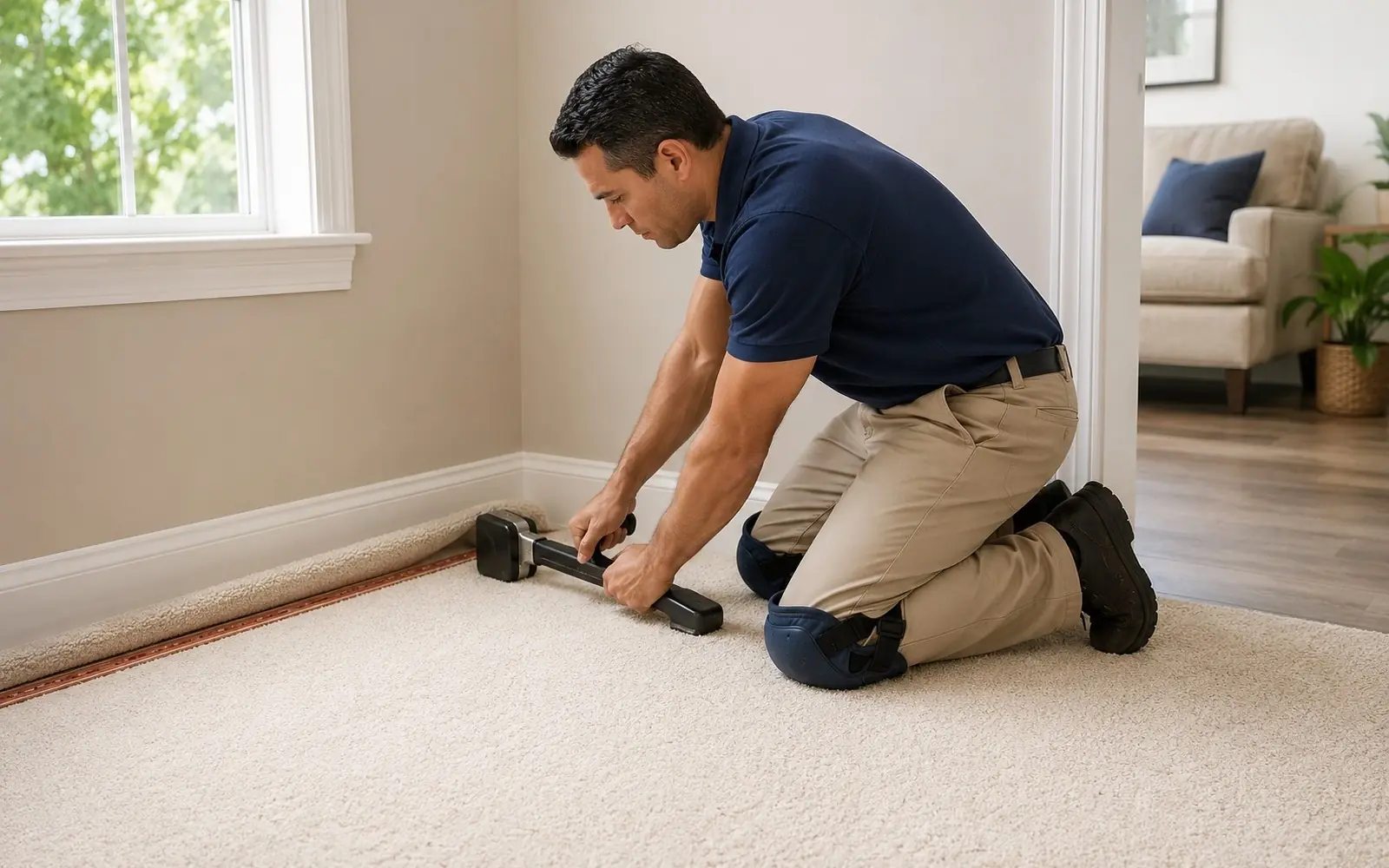
The part buyers skip is the part that determines how carpet feels and lasts: the pad and the stretch. A quality pad extends carpet life and comfort for a small per-yard premium, and power-stretched installation, not knee-kicked into place, is what prevents the wrinkles and ripples that show up two summers later. Those two specification lines are worth more than any brand name on the sample.
Carpet choices worth weighing
Fiber first, then construction, then the two lines that decide longevity.
Nylon
The wear benchmark: resilient, cleanable and long-lived in halls and stairs. Usually the price ceiling among synthetics.
Polyester and triexta
Softness and color value; triexta adds serious stain resistance. The mainstream bedroom pick at friendly prices.
Wool and naturals
Warm, self-extinguishing and beautiful aging, at premium prices and with its own cleaning rules.
Loop, cut and patterned styles
Berber loops for durability, plush and frieze cuts for comfort, patterns to hide traffic. Style is the visible choice; density is the durable one.
The pad underneath
Rebond thickness and density ratings set comfort and wear. Upgrading pad is the cheapest longevity purchase in flooring.
Stairs and transitions
Stairs wear fastest and price by the step. Waterfall versus wrapped nosing and matching transitions are installer conversations.
What does it cost?
Commonly published ballparks put installed carpet with pad roughly in the $3 to $7 per square foot band for mainstream synthetics, with wool and premium builds beyond it. A typical bedroom lands in the hundreds; whole-home carpet commonly runs into the low thousands.
Levers include fiber and density, pad grade, furniture moving, old-floor removal and stairs, which price per step. Remnants and seasonal promotions genuinely move this category more than most flooring.
Ballparks based on commonly published national averages, stated as assumptions, not measured local pricing. Your competing quotes set the real number for your home and ZIP.
How to hire for carpet installation work
Who does the work
Flooring retailers with installation crews, independent carpet installers, and flooring contractors all do this work; the differentiator is who power-stretches and seams properly, not the sales floor.
What pros will ask
Room measurements and a sketch, traffic and pet realities, your fiber and budget preferences, and what happens to existing flooring. Seam placement in big rooms is worth discussing before the quote, not after the install.
What to check before signing
That the bid itemizes carpet, pad grade, removal, moving furniture and stairs; that installation is power-stretched per industry standard; and that seam locations are drawn on the plan. Warranty terms on both product and workmanship belong in writing.
Related searches homeowners make
Pulled from the same demand data behind our Flooring, Carpet and Tile category.
Carpet Installation questions, answered straight
How much does carpet installation cost?
As a planning ballpark, mainstream carpet with pad commonly runs $3 to $7 per square foot installed, so an average bedroom lands in the several-hundred-dollar range. Stairs, haul-away and premium fibers add from there. Competing local quotes set your real number.
What carpet is best for stairs and halls?
Dense, low-pile construction in a resilient fiber, classically nylon, with a firm pad. Loop and tight frieze styles hide traffic patterns. Softness sells in the showroom, but density is what still looks good in year seven.
Does the pad really matter?
More than the carpet brand. A dense quality pad improves feel, insulates sound and extends carpet life; a bargain pad lets even good carpet crush and wrinkle early. It is the last place to save a few cents per foot.
How long does carpet last?
Commonly cited service runs 5 to 15 years depending on fiber, density, pad and traffic. Matting in halls and stairs while bedrooms stay fine is normal, which is why many owners re-carpet high-traffic areas on their own cycle.
Carpet or hard flooring for resale?
Buyers currently favor hard surfaces in main living areas, with carpet still welcome in bedrooms and basements for warmth and quiet. The pragmatic play many owners choose: hard floors in common spaces, fresh neutral carpet where softness wins.
Get quotes for your carpet project
Free for homeowners. No obligation. Up to four local flooring pros compete.
Keep planning your floors
More guides from the Flooring, Carpet and Tile hub.