
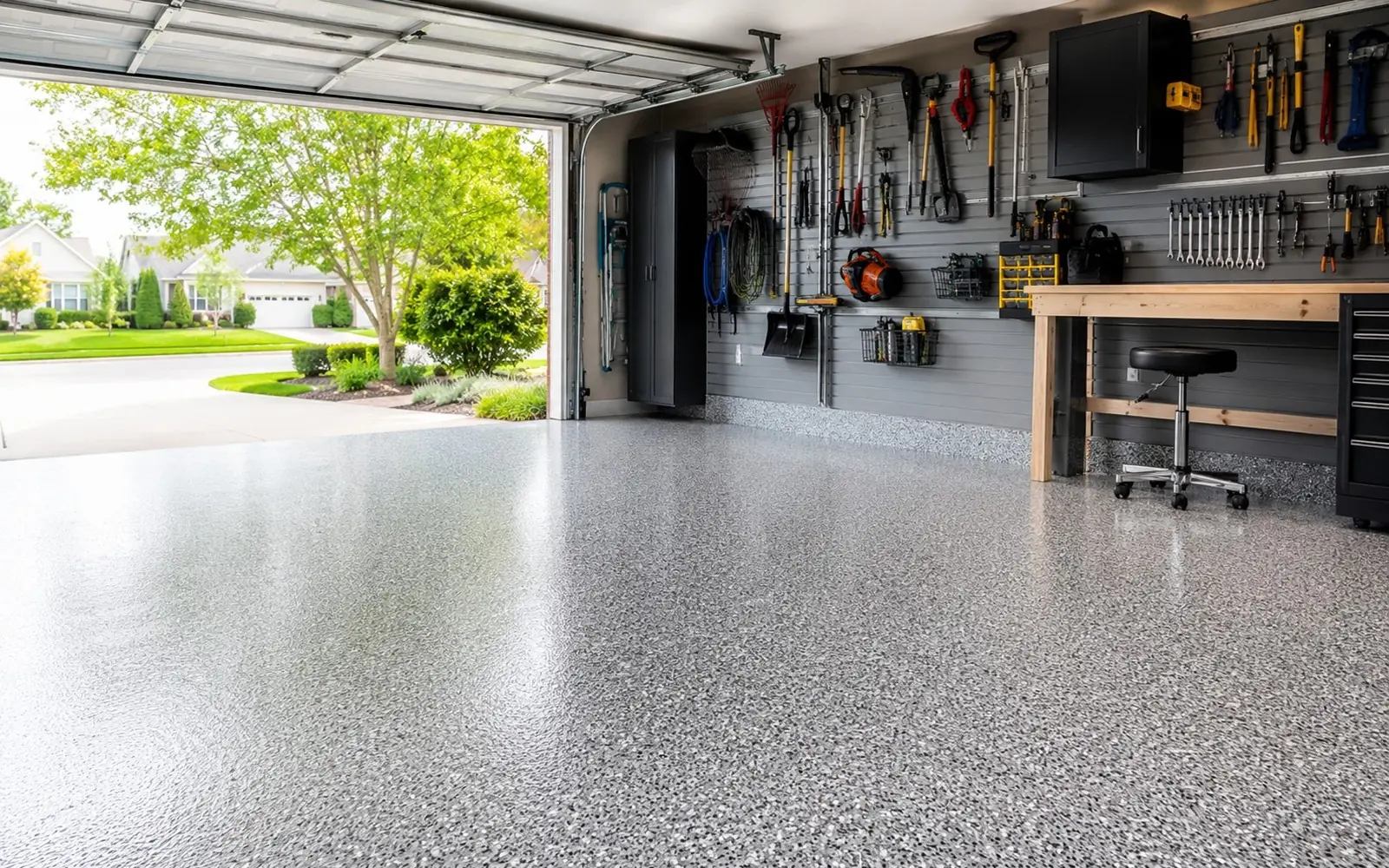
Garage Flooring
A five-figure search of its own in our demand data: the hardest-working floor in the house, upgraded.
From bare slab to finished floor
Garage flooring earns its own healthy line in our demand data, bigger than several living-space materials, and the reason is what garages have become: gyms, shops, showrooms and the home's true mudroom. A bare slab dusts, stains and looks like a slab; every option here fixes some mix of that.
Coatings are the headline category. Epoxy delivers the classic thick, glossy, chip-flaked floor with excellent chemical resistance; its weaknesses are UV yellowing near sun and hot-tire pickup when applied over poorly prepped concrete. Polyaspartic systems cure fast, shrug off UV and temperature swings, and have largely taken over the professional one-day-floor market at a price premium. In both cases, surface preparation, mechanical grinding, moisture checks and crack repair, is most of the job and all of the longevity.
The no-coating paths have real merits. Interlocking PVC and polypropylene tiles float over imperfect slabs, install in an afternoon, drain or seal depending on style, and swap out tile by tile after damage. Roll-out mats are the fastest and cheapest cover. Densifiers and sealers merely tame dust and darken the slab honestly. Match the option to what the garage actually does all day.
Garage floor options worth weighing
Coatings for permanence, tiles and mats for speed and forgiveness.
Epoxy coating systems
Multi-layer, chip-broadcast floors with serious chemical resistance. Prep quality decides whether they last decades or peel in two.
Polyaspartic coatings
The pro one-day floor: fast cure, UV-stable, flexible through temperature swings. The premium coating tier.
DIY coating kits
Weekend epoxy kits at hardware-store prices. Honest expectations: thinner films, shorter life, and prep still decides everything.
Interlocking tiles
PVC and rigid tiles that float over cracked slabs and install in hours. Repairable, movable and gym-friendly.
Roll-out mats and parking pads
Coverage in an afternoon at the lowest cost, containing drips and slush. The renter and quick-fix answer.
Sealers and densifiers
Clear penetrating treatments that stop dusting and ease cleaning while keeping the concrete look and price low.
What does it cost?
Commonly published ballparks put professional coating systems roughly in the $4 to $9 per square foot band, landing a two-car garage in the low thousands, with polyaspartic at the top of the band. Tile systems commonly run $3 to $6 per square foot in materials; mats and sealers sit below all of it.
Levers are slab condition (cracks, moisture, old coatings to grind off), system tier and flake or color options. Moisture testing matters: coatings over damp slabs are the category's signature failure.
Ballparks based on commonly published national averages, stated as assumptions, not measured local pricing. Your competing quotes set the real number for your home and ZIP.
How to hire for garage flooring work
Who does the work
Concrete coating specialists for epoxy and polyaspartic work; their grinders and moisture meters are the difference from a painted floor. Tiles and mats are honest DIY, or an easy add-on for a handyman visit.
What pros will ask
Garage dimensions, slab age and condition photos including cracks and stains, any previous coatings, moisture history, and what the space does: parking, gym, shop or all three.
What to check before signing
That the bid includes mechanical grinding (not acid etch alone), moisture testing, crack and spall repair, the named coating system and coats, and a written warranty against delamination. One-day claims are fine for polyaspartic; for epoxy, cure times deserve respect.
Related searches homeowners make
Pulled from the same demand data behind our Flooring, Carpet and Tile category.
Garage Flooring questions, answered straight
Epoxy or polyaspartic for a garage floor?
Polyaspartic wins on cure speed, UV stability and flexibility, at a premium; quality epoxy systems remain excellent value with proper prep and a few days of cure patience. Both fail the same way, over bad prep, so the installer matters more than the chemistry.
How much does a garage floor coating cost?
As a planning ballpark, professionally coated two-car garages commonly land between $1,500 and $4,000 depending on system and slab condition. DIY kits cost a few hundred dollars and deliver proportionately less film and lifespan.
Why do garage coatings peel?
Almost always preparation: coatings applied over sealed, damp, dusty or un-ground concrete let go under hot tires first. Mechanical grinding, moisture testing and repair before coating are what professional pricing actually buys.
Are interlocking tiles better than coatings?
Different bet: tiles forgive bad slabs, install instantly and repair tile by tile, but liquids can reach the concrete through seams and rigid tiles can creak. Coatings are permanent and seamless but demand a sound slab. Car-project garages often prefer tiles; showroom garages prefer coatings.
Can I just seal the concrete?
Yes, and it is the honest budget move: a penetrating sealer or densifier stops dusting, resists stains and makes sweeping pleasant, all for the price of a weekend. It will not hide cracks or add color; it just makes good concrete behave.
Get quotes for your garage flooring project
Free for homeowners. No obligation. Up to four local flooring pros compete.
Keep planning your floors
More guides from the Flooring, Carpet and Tile hub.