
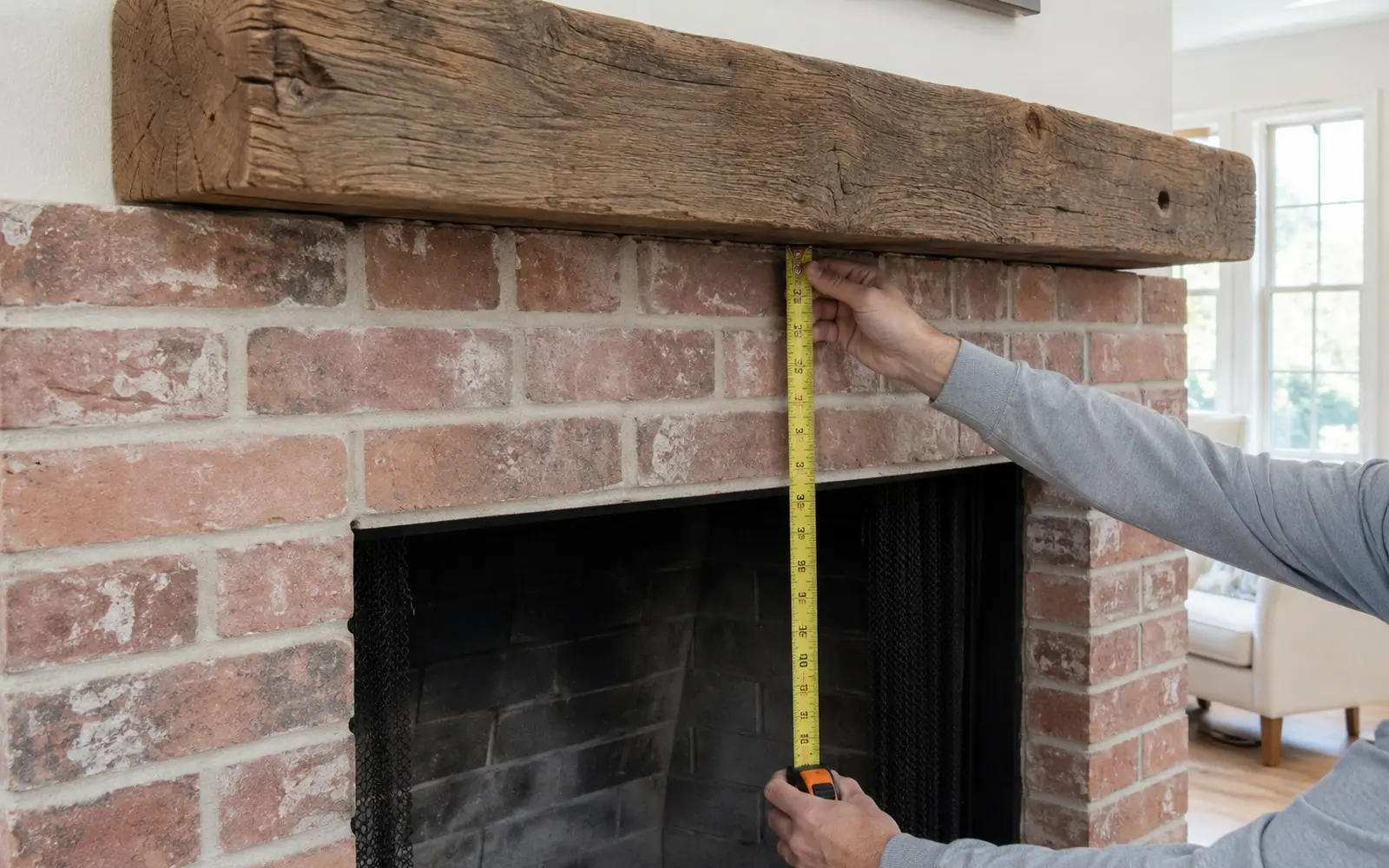
Fireplace Mantels
The two clearance numbers a mantel has to meet, where they come from, and what an inspector checks.
A mantel is a clearance problem before it is a design choice
Two numbers govern a mantel, and both come from the same place. CSIA's own fireplace inspection procedure states: "According to NFPA 211, any combustible trim and mantels should be at least 6 inches from the fireplace opening. Combustibles above the fireplace opening should be 12" above the opening if they project more than 1 1/2" from the fireplace face."1 Six inches of separation, and twelve inches of height once the shelf sticks out far enough. Design around those, not the other way round.
The reason to take them seriously is in the fire data. USFA reports that the heat source was too close to combustibles in 27% of nonconfined residential building heating fires2. It also reports that heating was the second leading cause of all residential building fires, following cooking, and that residential building heating fire incidence peaked in January at 20%2. A mantel is combustible material fixed permanently within inches of a heat source.
Clearance is also inspectable. The annual language CSIA quotes from NFPA 211 asks for chimneys, fireplaces and vents to be inspected once a year for soundness, freedom from deposits, and correct clearances3. Correct clearances is the mantel clause. It means the thing your carpenter fits in an afternoon is something a sweep can flag a year later, and the fix at that point is joinery, not a chimney repair.
What the clearance rules actually say
Six points that decide whether a mantel design will pass an inspection.
Six inches from the opening
CSIA, citing NFPA 211, puts any combustible trim and mantels at least 6 inches from the fireplace opening1. That applies to the legs and the surround as much as the shelf. Measure from the opening itself, not from the outer edge of the brick or stone facing.
Twelve inches above, once it projects
Combustibles above the opening should be 12 inches above it if they project more than 1 1/2 inches from the fireplace face1. A deep beam mantel triggers that rule. A flat, shallow trim board may not. The projection is what switches the requirement on.
Clearances are named in the annual rule
The inspection language CSIA quotes covers soundness, freedom from deposits, and correct clearances, once a year3. Clearance is not a one-off sign-off at install. It is checked again whenever the fireplace is inspected, which is why an undocumented mantel change can surface long after the work.
Combustibles too close is a real cause
USFA attributes 27% of nonconfined residential building heating fires to the heat source being too close to combustibles2. Nonconfined means the fire got out of the appliance or chimney. That is the category a mantel sits in, and it is the reason the clearance figures exist at all.
A Level 1 inspection will not dismantle it
CSIA defines readily accessible as reachable without tools or ladders, and accessible as possibly needing a ladder or common hand tools4. Neither permits removing permanently attached components or destructive action to the building4. Your inspector measures and reports. Nobody is pulling the mantel off to look behind it.
A freestanding stove changes the number
If a stove sits in front of the fireplace rather than an insert going inside it, a different figure applies. CSIA says clearances for unlisted appliances should conform to local code, normally 36 inches from appliance to combustible material in all directions4. A mantel is combustible material.
What does a fireplace mantel cost?
No source used for this guide publishes a price for a mantel, fitted or unfitted. Not the standards bodies, not the fire agencies, not the trade association. There is not even a wage to work back from: the May 2025 national occupational employment and wage table lists no occupation containing the word chimney or sweep5. So this page gives dimensions, which are verifiable, and no dollar figures, which are not.
What actually moves the number is whether the design has to change. A shallow trim board that clears the opening by 6 inches is one job1. A deep beam that projects more than 1 1/2 inches and therefore has to sit 12 inches above the opening is another, especially if the existing masonry does not leave that much room1. Get the measurements settled before anyone quotes, because a clearance failure found later is a rebuild, not an adjustment.
The only figures above are clearance dimensions, taken from CSIA citing NFPA 211, and a statement that no wage data exists. No source here publishes a mantel price.
How to hire for a fireplace mantel
Who does the work
Fitting a mantel is carpentry or masonry. Confirming it clears is chimney work, and the two are usually different people. CSIA's Level 1 fireplace procedure has the inspector checking mantel and trim clearance directly1. So give your carpenter the 6 inch and 12 inch figures in writing, and have the result confirmed at your next annual inspection3.
What pros will ask
The height and width of the fireplace opening. How far the mantel will project from the fireplace face, because more than 1 1/2 inches changes the required height1. Whether the material is combustible. Whether anything sits in front of the opening, since a freestanding unlisted appliance brings the 36 inch clearance into play4. Whether the fireplace is masonry or factory-built.
What to check before signing
A drawing with dimensions on it, showing clearance from the opening rather than from the facing. Confirmation that projection was measured from the fireplace face1. And read the disclaimer on any inspection you rely on: CSIA states it does not warrant in any way whatsoever that adhering to its procedure will reveal every possible defect4.
Related searches homeowners make
Pulled from the same demand data behind our Fireplaces & Chimneys category.
Fireplace mantel questions, answered straight
How far does a mantel have to be from the fireplace opening?
CSIA, citing NFPA 211, says any combustible trim and mantels should be at least 6 inches from the fireplace opening, and that combustibles above the opening should be 12 inches above it if they project more than 1 1/2 inches from the fireplace face1. Two cautions. That wording reaches you through CSIA, not from NFPA 211 itself, whose clause text was not read for this guide6. And CSIA's own procedure defers to local code requirements in other clearance situations4, so check your building department.
Can I mount a television above my fireplace?
No source used for this guide addresses televisions, so this page will not pretend to answer it. What the sources do say is that combustibles projecting more than 1 1/2 inches from the fireplace face should sit 12 inches above the opening1, and that USFA attributes 27% of nonconfined residential building heating fires to the heat source being too close to combustibles2. Take that to the appliance manufacturer and your building department, and get the answer in writing.
Does my mantel affect the chimney inspection?
Yes. Correct clearances are one of the three things the annual inspection language names, alongside soundness and freedom from deposits3. CSIA's Level 1 fireplace procedure has the inspector looking at mantel and trim clearance as part of the job1. A mantel fitted without reference to the figures can turn up as a finding on a report you commissioned for an entirely different reason, usually just before you list the house.
My mantel is already too close. What happens now?
The annual language CSIA quotes ends with the line that cleaning, maintenance and repairs shall be done if necessary3. Your inspector reports the clearance and stops there: a Level 1 inspection does not permit removing permanently attached components or destructive action to the building4. Fixing it is joinery. You either move the mantel, reduce how far it projects from the fireplace face, or change the material. Get the new dimensions checked at the next inspection.
Do the same rules apply to a stone or steel mantel?
The wording CSIA cites is specific: it covers combustible trim and mantels1. It does not state a separate figure for non-combustible material, and no source used for this guide does either. That is a genuine gap rather than permission. If you are fitting stone, steel or another non-combustible shelf, ask your building department what your adopted code says, and check the appliance's own listing if there is a stove or insert involved.
Where these facts came from
Every figure on this page was read out of the page linked below. We do not cite cost aggregators.
- CSIA, Level 1 Standard Operating Procedure, masonry fireplace
- USFA, Heating Fires in Residential Buildings, Topical Fire Report Series
- CSIA, Homeowner Resources
- CSIA, Level 1 Standard Operating Procedure, masonry chimney
- BLS, Occupational Employment and Wage Statistics, May 2025 national table
- NFPA 211 standard development page
Get quotes for your fireplace mantels project
Free for homeowners. No obligation. Up to four local pros compete.
Keep planning
More guides from the Fireplaces & Chimneys hub.
Fireplace Inserts and Liner Installation
A wood insert is regulated hardware. The fireplace it goes into is not. Here are the limits, the dates and the Level 2 trigger.
Read the guideFireplace Screens and Doors
Hearth extension dimensions, what a screen actually protects against, and how a door set affects the sweep.
Read the guideFireplace Logs, Tool Sets and Accessories
Why a certified rating comes from lumber not logs, where gas logs sit in EPA rules, and what actually triggers a sweep.
Read the guide