
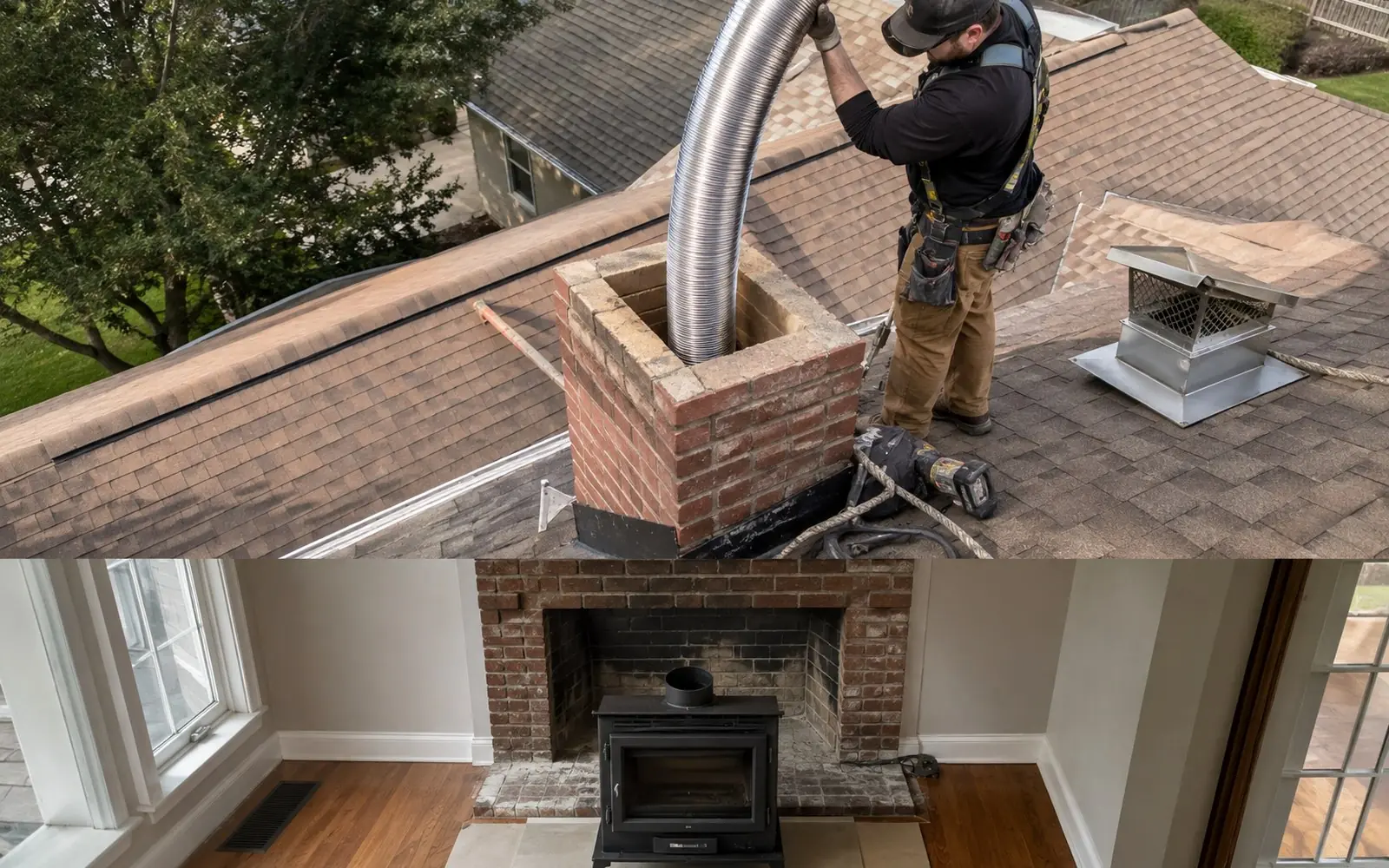
Fireplace Inserts and Liner Installation
A wood insert is regulated hardware. The fireplace it goes into is not. Here are the limits, the dates and the Level 2 trigger.
An insert is regulated hardware, the fireplace around it is not
This is the distinction almost nobody draws. EPA states it did not include new indoor fireplaces for regulation, based on its review of data indicating that typical fireplaces are not effective heaters, and put them into a voluntary program covering cleaner-burning new fireplaces and retrofits1. A wood-burning insert is a different animal. It is a wood heater, and wood heaters carry a mandatory certification with a number attached.
The number is in the regulation. Affected wood heaters manufactured, imported or sold at retail on or after 15 May 2015 had to be certified to a weighted average of 4.5 g/hr, and from 15 May 2020 the limit is 2.0 g/hr2. A cord wood alternative sits at a weighted average of 2.5 g/hr and requires a cord wood test method approved by the Administrator2. EPA published its amendments on 2 April 2020 and kept 15 May 2020 as the retailer sell-through date3.
Then there is the chimney. CSIA recommends a Level 2 inspection if you are planning on lining or relining the chimney, and also when a new appliance is added or an existing one is replaced with a dissimilar one4. An insert is both of those at once. A Level 2 requires video scanning of the chimney interior, a trip onto the roof, and inspection within accessible attics, basements and crawl spaces4.
Six things that separate an insert job from a fireplace job
The regulation, the dates and the inspection level change once an appliance goes in.
A wood insert is a wood heater
EPA's rule reaches wood heaters, not fireplaces. It does not affect existing woodstoves already in use, does not apply to heaters fueled solely by oil, gas or coal, and does not reach outdoor fireplaces, fire pits, pizza ovens or chimineas1. A certified appliance inside an unregulated firebox is the point.
The limits, in grams per hour
A weighted average of 4.5 g/hr applied from 15 May 2015, and 2.0 g/hr from 15 May 20202. The cord wood alternative compliance option sits at 2.5 g/hr and requires a cord wood test method approved by the Administrator2. Ask which of those a quoted model was certified against.
Crib wood and cord wood are not the same test
The subpart distinguishes crib wood testing under EPA Method 28R from an alternative cord wood test method approved by the Administrator2. EPA says the 2015 rule is based on tests that burn standardized configurations of lumber rather than logs, the wood a homeowner would actually burn3.
Relining triggers a Level 2
CSIA names lining or relining as a Level 2 situation, alongside adding a new appliance and replacing one with a dissimilar appliance4. Video scanning of the interior is required at Level 2, and where size or multiple offsets prevent it, the sweep must note that in the report4.
Flue sizing has published ratios
CSIA sets out NFPA 211 guidelines for flue sizing: one twelfth of the fireplace opening area for round flues, one tenth for square or standard rectangular flues, and one eighth for rectangular flues with an aspect ratio of 2 to 1 or greater4. Ask your installer to show the arithmetic.
A freestanding stove has its own figures
If a stove goes on the hearth rather than an insert into the firebox, CSIA says clearances for unlisted appliances should conform to local code, normally 36 inches from appliance to combustible material in all directions5. Floor protection should extend 18 inches beyond the stove unless listed otherwise5.
What does an insert or a liner cost?
No authoritative source publishes an installed price for a stainless liner, a cast-in-place liner or a wood, gas or pellet insert. EPA regulates emissions, not prices. CSIA publishes procedures, not rates. The May 2025 national occupational employment and wage table contains no occupation with the word chimney or sweep, so there is no federal wage to work back from8. Any average cost range you have seen was not built on data like this.
What moves the number is scope, most of it knowable in advance. Relining pulls you into a Level 2 with a camera and a roof visit rather than a Level 14. Flue shape and size decide the liner, and the sizing ratios are published4. The appliance is a list-price item you can check: EPA runs a compliance monitoring program and links a certified wood heater database6, though that database returned no readable model list to us, so no count is quoted here.
The emission limits come from the regulation and EPA's pages. No source here publishes an installed price, a labour rate or a liner price, so none is stated.
How to hire for an insert or a reline
Who does the work
Usually one company sells the appliance, lines the chimney and inspects it, which is efficient and worth a second opinion. A CSIA Certified Chimney Sweep earns the credential by completing a review and passing the exam9, and CSIA tells homeowners to ask for the inspection by name and find someone else if the sweep does not recognise the term7.
What pros will ask
Which fuel: wood, gas or pellet. The dimensions and shape of the existing flue, since round, square and high aspect ratio rectangles carry different sizing ratios4. Whether the chimney has been lined before. Whether there has been a chimney fire, storm or seismic event, each its own Level 2 trigger4. The model number you are considering.
What to check before signing
That a Level 2 with video scanning is written into the scope, not offered as an extra4. That the report will say so if the interior could not be scanned4. That the certified model is named so you can check it against EPA's database6. And that any grams per hour figure comes with its test method, given EPA's note about lumber versus logs3.
Related searches homeowners make
Pulled from the same demand data behind our Fireplaces & Chimneys category.
Insert and liner questions, answered straight
Does my new wood insert have to be EPA certified?
If it is an affected wood heater, yes. Wood heaters manufactured, imported or sold at retail on or after 15 May 2015 had to be certified to a weighted average of 4.5 g/hr, and from 15 May 2020 the limit is 2.0 g/hr2. A cord wood alternative compliance option sits at 2.5 g/hr2. The rule does not affect existing woodstoves already in use in people's homes, so an old appliance staying put is not caught1.
Why does my stove not behave like its certified rating?
EPA has said so itself. Its 2020 amendments page states that the 2015 rule is based on tests that burn standardized configurations of lumber, rather than tests that burn logs, the type of wood a typical homeowner would burn for heat3. The subpart distinguishes crib wood testing under EPA Method 28R from an alternative cord wood test method approved by the Administrator2. A certified grams per hour figure is a laboratory result under a named method.
Do I need an inspection before the chimney is relined?
CSIA recommends a Level 2 when you are planning on lining or relining the chimney4. That is not a formality. A Level 2 requires video scanning of the chimney interior, and if scanning is impossible because of size or multiple offsets the sweep is told to note that in the report4. It also requires going on the roof and inspecting within accessible attics, basements and crawl spaces, and should cover all flues and their connected appliances4.
How is the right liner size worked out?
For fireplace flues, CSIA publishes the NFPA 211 guidelines as ratios of the fireplace opening area: one twelfth for round flues, one tenth for square or standard rectangular flues, and one eighth for rectangular flues with an aspect ratio of 2 to 1 or greater4. Ask to see the opening area measured and the ratio applied. Those figures reach you through CSIA citing NFPA 211, whose clause text was not read for this guide.
Could I put a freestanding stove on the hearth instead?
Different job, different figures. CSIA says clearances for unlisted appliances should conform to local code requirements, normally 36 inches from appliance to combustible material in all directions, and that floor protection should extend 18 inches beyond the stove unless listed otherwise5. The chimney obligations remain: the annual language CSIA quotes covers chimneys, fireplaces and vents once a year for soundness, freedom from deposits and correct clearances7.
Where these facts came from
Every figure on this page was read out of the page linked below. We do not cite cost aggregators.
- EPA, Residential Wood Heaters
- eCFR, 40 CFR 60.532, standards for wood heaters
- EPA, Final 2020 New Source Performance Standards for Residential Wood Heaters
- CSIA, Level 2 Standard Operating Procedure, masonry fireplace
- CSIA, Level 1 Standard Operating Procedure, masonry chimney
- EPA, Wood Heater Compliance Monitoring Program
- CSIA, Homeowner Resources
- BLS, Occupational Employment and Wage Statistics, May 2025 national table
- CSIA, Certified Chimney Sweep credential
Get quotes for your fireplace inserts and liner installation project
Free for homeowners. No obligation. Up to four local pros compete.
Keep planning
More guides from the Fireplaces & Chimneys hub.
Fireplace Screens and Doors
Hearth extension dimensions, what a screen actually protects against, and how a door set affects the sweep.
Read the guideFireplace Logs, Tool Sets and Accessories
Why a certified rating comes from lumber not logs, where gas logs sit in EPA rules, and what actually triggers a sweep.
Read the guideChimney Caps
A cap sits at the top, and only the Level 2 procedure explicitly sends someone up there. Here is what to ask for.
Read the guide