
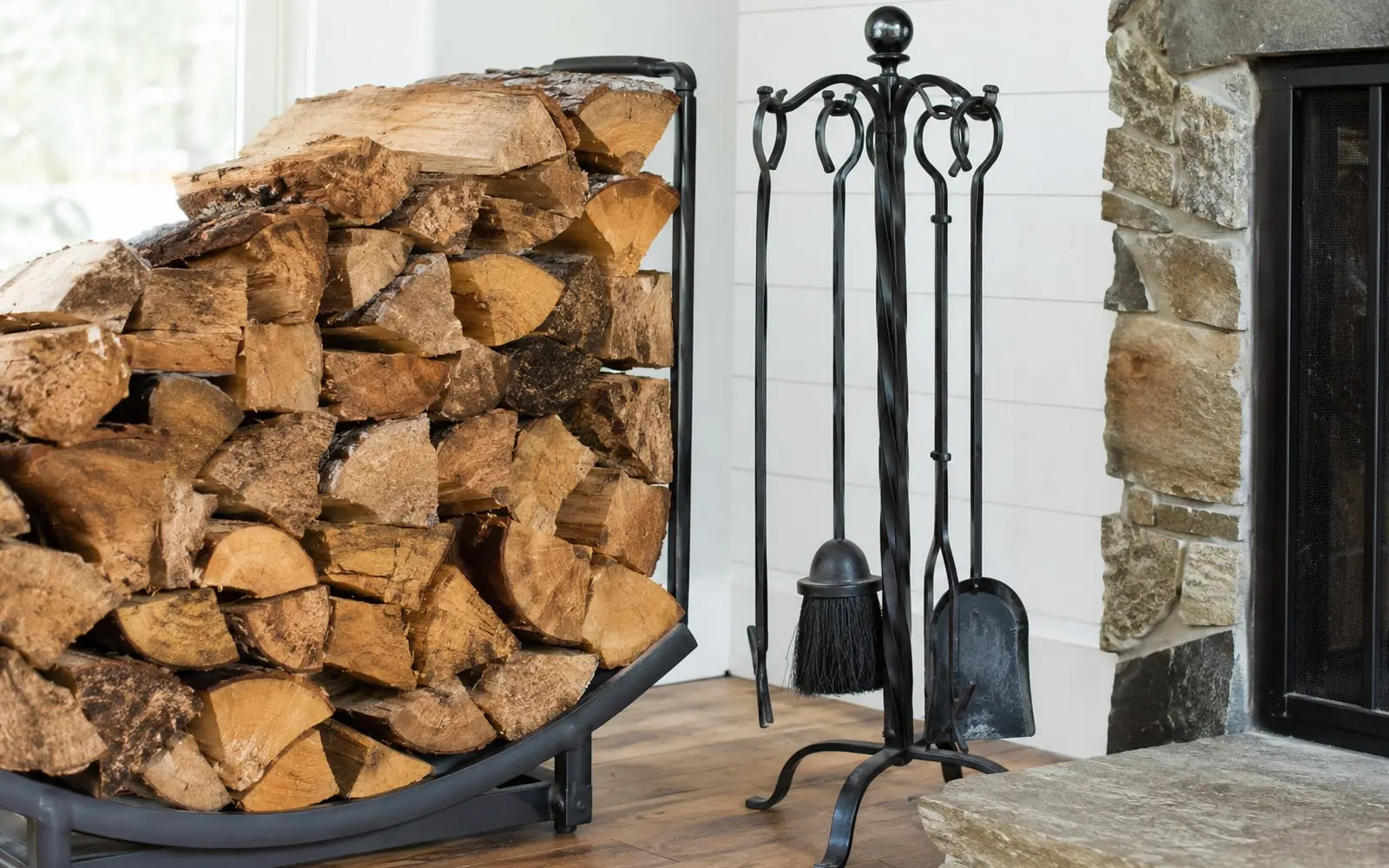
Fireplace Logs, Tool Sets and Accessories
Why a certified rating comes from lumber not logs, where gas logs sit in EPA rules, and what actually triggers a sweep.
Your fuel is not what the certified number was tested on
EPA says this itself, and it is the most useful sentence in the topic. Its page on the 2020 amendments states that the 2015 rule is based on tests that burn standardized configurations of lumber, rather than tests that burn logs, the type of wood a typical homeowner would burn for heat1. The regulation carries the same split, distinguishing crib wood testing under EPA Method 28R from an alternative cord wood test method approved by the Administrator5. A certified figure describes a test fire under a named method.
So do not manage your chimney by the label. CSIA's trigger is not a fuel type or a season, it is a measurement: masonry fireplaces should be swept at 1/8 inch of sooty buildup, and sooner if there is any glaze present, which CSIA describes as enough buildup to cause a chimney fire capable of damaging the chimney or spreading to the home2. Factory-built fireplaces get a tighter rule, swept when any appreciable buildup occurs2.
Accessories divide into two piles. One pile is hearth goods, which no authority regulates and no source used here writes about. The other is safety equipment, and CPSC is specific about that: install battery-operated CO alarms, or CO alarms with battery backup, on every level of the home and outside sleeping areas, and interconnected alarms are best, because when one sounds they all sound4.
Six things worth knowing before you buy fuel or accessories
Every card here comes from a federal rule or a CSIA procedure.
The certified number came from lumber
EPA states plainly that the 2015 rule rests on tests burning standardized configurations of lumber rather than logs, the wood a typical homeowner would actually burn for heat1. Treat a grams per hour figure as a laboratory result, not a promise about your woodpile, and ask which method produced it.
One eighth of an inch is the trigger
CSIA recommends sweeping masonry fireplaces at 1/8 inch of sooty buildup, and sooner if any glaze is present2. It describes that amount as enough buildup to cause a chimney fire capable of damaging the chimney or spreading to the home2. The measurement decides, not the calendar and not the fuel.
Factory-built fireboxes have a tighter rule
CSIA says factory-built fireplaces should be swept when any appreciable buildup occurs, because the deposit is quite acidic and can shorten the life of the fireplace by corroding the different components of the prefab system2. If yours is prefab, the reason for sweeping is corrosion as much as fire.
Gas log sets sit outside the EPA rule
EPA's residential wood heater rule does not apply to new or existing heaters fueled solely by oil, gas or coal3. There is no federal emission certification for a gas log set under that rule. What still applies is the inspection language CSIA quotes, which names vents alongside chimneys and fireplaces2.
Fire pits and chimineas are outside as well
The same EPA page states the rule would not apply to outdoor fireplaces, fire pits, pizza ovens or chimineas3. It also confirms the rule does not affect existing woodstoves and other wood-burning heaters currently in use3. Unregulated is not the same as unimportant.
The accessory that earns its place is an alarm
CPSC lists the symptoms of carbon monoxide poisoning as headache, dizziness, weakness, nausea, vomiting, sleepiness and confusion, and says that if you suspect CO poisoning you should get outside to fresh air immediately and then call 9114. No hearth accessory does anything comparable.
What do logs, tools and accessories cost?
No source used for this guide publishes a retail price for firewood, a gas log set, a tool set or a CO alarm. Those prices do exist on manufacturer and retailer pages, but none were captured here, so none are quoted. The federal wage tables offer nothing either: the May 2025 national occupational employment and wage table contains no occupation with the word chimney or sweep in it6.
The number worth watching is not the accessory, it is the sweeping it leads to. CSIA's threshold is condition-based, so buildup reaching 1/8 inch, or any glaze appearing, brings the sweep forward2. Nobody publishes what that sweep costs. What you can control is knowing where you stand, which is what the annual inspection is for2. On the appliance side, the published figures are emission limits: 2.0 g/hr since 15 May 2020, with a cord wood alternative at 2.5 g/hr5.
Emission figures come from the regulation and EPA's pages, buildup thresholds from CSIA. No source here publishes a retail price for fuel, tools or alarms, so none is stated.
How to hire around logs and accessories
Who does the work
Buying fuel and hearth tools is retail, not a trade, and no credential attaches. The person who matters is whoever inspects the chimney once a year, since CSIA tells homeowners to ask for a Level 1 chimney inspection by name and to find someone else if the sweep does not know the term2. A gas log set brings in gas work, which is licensed locally.
What pros will ask
Whether the fireplace is masonry or factory-built, because the sweeping thresholds differ2. What you burn and how often. Whether there is any glaze in the system, which moves the sweep forward2. When it was last swept and last inspected. For a wood appliance, the model and whether it was certified against the crib wood or cord wood method5.
What to check before signing
For a gas log set, that the vent is inside the scope of your annual inspection, since the language CSIA quotes names vents2. For anything wood-burning, that a quoted grams per hour figure arrives with its test method1. And check what the report will cover: CSIA states it does not warrant in any way whatsoever that its procedure reveals every possible defect7.
Related searches homeowners make
Pulled from the same demand data behind our Fireplaces & Chimneys category.
Fuel and accessory questions, answered straight
Does what I burn change how often the chimney is swept?
The honest answer is that CSIA does not set the trigger by fuel, it sets it by measurement. Masonry fireplaces should be swept at 1/8 inch of sooty buildup, and sooner if any glaze is present2. Factory-built fireplaces should be swept when any appreciable buildup occurs, because the deposit is acidic and corrodes the prefab components2. So whatever you burn, what decides is what an inspector finds on the flue wall, which is why the inspection is annual.
Are gas logs regulated by EPA?
Not under the wood heater rule. EPA states that rule does not apply to new or existing heaters fueled solely by oil, gas or coal, and would not apply to outdoor fireplaces, fire pits, pizza ovens or chimineas either3. So there is no federal grams per hour certification to compare gas log sets against. The inspection obligation is unaffected: the language CSIA quotes from NFPA 211 names chimneys, fireplaces and vents, once a year2.
Do I need a CO alarm if I only burn wood?
CPSC's guidance is not conditional on fuel. It says to install battery-operated CO alarms, or CO alarms with battery backup, on every level of the home and outside sleeping areas, and that interconnected alarms are best, because when one sounds they all sound4. CPSC also reports more than 200 accidental non-fire CO deaths a year associated with consumer products, more than 100 of them linked to portable generators4. That total covers all consumer products, not fireplaces.
What should be in a fireplace tool set?
No source used for this guide specifies the contents of a tool set, and inventing a standard would be worse than saying so. What the sources do establish is where housekeeping ends and the trade begins. CSIA says a complete chimney sweeping includes the chimney flue and smoke chamber2, which is rod and brush work above the firebox. A hearth brush and shovel clear ash. They do not touch the part that matters for fire.
Can a creosote-removing log replace a sweep?
No source used for this guide evaluates those products, so this page takes no position on whether they do anything. What it can tell you is the standard they would have to displace. CSIA's trigger is a measured 1/8 inch of sooty buildup, brought forward by any glaze, and the inspection that finds it is annual2. Nothing you burn tells you where you stand on that measurement. Only an inspection does.
Where these facts came from
Every figure on this page was read out of the page linked below. We do not cite cost aggregators.
- EPA, Final 2020 New Source Performance Standards for Residential Wood Heaters
- CSIA, Homeowner Resources
- EPA, Residential Wood Heaters
- CPSC, Carbon Monoxide Information Center
- eCFR, 40 CFR 60.532, standards for wood heaters
- BLS, Occupational Employment and Wage Statistics, May 2025 national table
- CSIA, Level 1 Standard Operating Procedure, masonry chimney
Get quotes for your fireplace logs, tool sets and accessories project
Free for homeowners. No obligation. Up to four local pros compete.
Keep planning
More guides from the Fireplaces & Chimneys hub.
Chimney Caps
A cap sits at the top, and only the Level 2 procedure explicitly sends someone up there. Here is what to ask for.
Read the guideGas and Electric Fireplaces
What EPA rules do not cover, why a gas vent still gets an annual inspection, and where CPSC says CO alarms go.
Read the guideChimney Sweeps and Repair
The inspection and the sweep are two different jobs. Here is the buildup threshold, the inspection levels, and what a quote should name.
Read the guide