
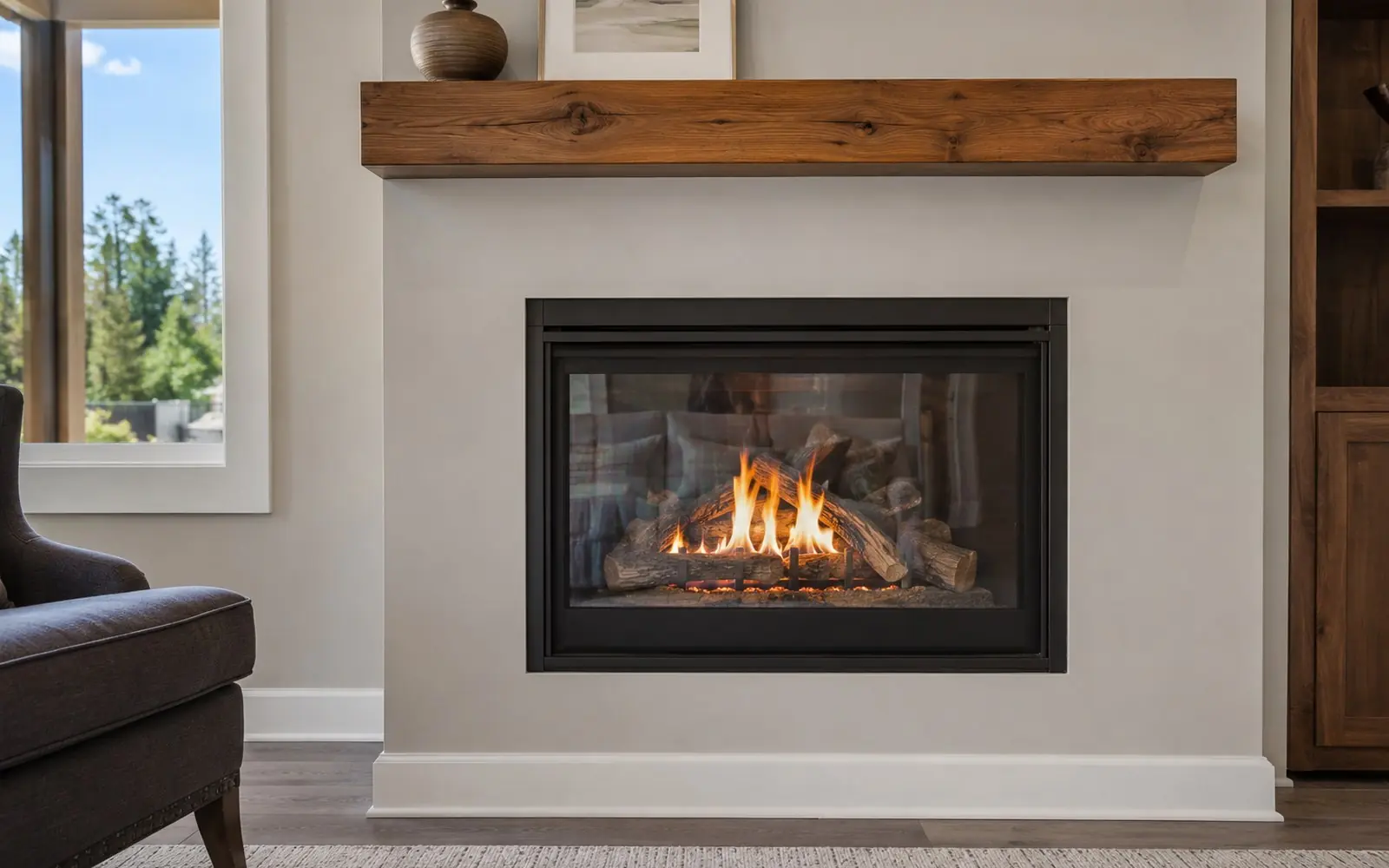
Gas and Electric Fireplaces
What EPA rules do not cover, why a gas vent still gets an annual inspection, and where CPSC says CO alarms go.
EPA certification means nothing on a gas or electric unit
Start with what does not apply. EPA's emission rule for residential wood heaters does not cover new or existing heaters fueled solely by oil, gas or coal1. A gas fireplace sits outside it. EPA also left new indoor fireplaces out of the rule, saying its data indicated typical fireplaces are not effective heaters, and put them into a voluntary program for cleaner-burning fireplaces and retrofits1. An EPA badge on a gas or electric unit is not a federal emissions status.
What does apply is the inspection rule, and it names vents. CSIA, quoting NFPA 211, states: "Chimneys, fireplaces, and vents shall be inspected at least once a year for soundness, freedom from deposits, and correct clearances. Cleaning, maintenance, and repairs shall be done if necessary."2 A direct-vent gas fireplace has a vent, so it is in scope. CSIA's quotation carries no date, so read it as CSIA's stated practice, not as confirmed current text of the standard.
The third thing is carbon monoxide. CPSC tells homeowners to install battery-operated CO alarms, or CO alarms with battery backup, on every level of the home and outside sleeping areas, and says interconnected alarms are best because when one sounds they all sound3. An electric unit burns no fuel, so there are no flue gases and the CO question falls away. What replaces it is electrical supply, and the unused flue.
Six things that change when the fuel changes
Each card is tied to a named source.
Gas sits outside the EPA rule
EPA's residential wood heater rule does not apply to new or existing heaters fueled solely by oil, gas or coal, and does not reach outdoor fireplaces, fire pits, pizza ovens or chimineas1. If a salesperson calls a gas unit EPA certified, ask which rule they mean.
Indoor fireplaces were left out on purpose
EPA states it did not include new indoor fireplaces for regulation, based on its review of data indicating that typical fireplaces are not effective heaters1. Fireplaces sit instead in a voluntary EPA program encouraging cleaner-burning fireplaces and retrofits1. Voluntary is the operative word.
Vents are named in the annual rule
The inspection language CSIA quotes from NFPA 211 covers chimneys, fireplaces and vents, and asks for soundness, freedom from deposits and correct clearances once a year2. A sealed gas firebox does not exempt the vent run behind it. Book it whether or not anything looks wrong.
Ask for the inspection by name
CSIA tells homeowners to ask for a Level 1 chimney inspection, and adds that if the sweep does not know what that is, find one who does2. Level 1 is defined in NFPA 211, the Standard for Chimneys, Fireplaces, Vents, and Solid Fuel-Burning Appliances2.
The 2020 deadline was a wood deadline
The date people half-remember is 15 May 2020, when retailers had to stop selling wood heating devices that did not meet the tighter standard4. The limit behind it is a weighted average of 2.0 g/hr for affected wood heaters from that date5. None of it touches gas or electric.
CO alarms and symptoms
CPSC lists the symptoms of carbon monoxide poisoning as headache, dizziness, weakness, nausea, vomiting, sleepiness and confusion, and says that if you suspect CO poisoning you should get outside to fresh air immediately and then call 9113. Put that list where the household will see it.
What does a gas or electric fireplace cost?
No government agency and no trade association publishes an installed price for a gas or electric fireplace, so this guide does not print one. The gap is real, not an oversight. The May 2025 national occupational employment and wage table carries no occupation containing the word chimney or sweep8, so there is no federal wage benchmark either. The average cost pages elsewhere have nothing underneath them.
What moves your number is scope, and one item is worth knowing before you call. CSIA says a Level 2 inspection is recommended when conditions of use are changing, including replacing an existing appliance with a dissimilar one of a different fuel, efficiency or type7. Swapping a wood-burning firebox for gas is a change of fuel, so expect a Level 2. A Level 2 requires video scanning of the chimney interior and a trip onto the roof7.
Every figure above comes from the sources listed. None of them publishes an installed price, a labour rate or an hourly charge, so none is stated.
How to hire for a gas or electric fireplace
Who does the work
Two credentials are in play and neither substitutes for the other. A CSIA Certified Chimney Sweep earns the title by completing a CSIA review and passing the exam9. That is a trade credential, not a state licence, and no source here establishes how many states license the trade. Ask separately who connects the gas and what licence they hold, since gas licensing is local.
What pros will ask
Expect questions about the fuel and about what is being replaced. Whether the appliance vents through a wall or up an existing masonry flue. Whether you are converting a wood-burning firebox, which is a change of fuel and pushes you to a Level 27. Whether the flue serves anything else, since a Level 2 covers all flues and their connected appliances7.
What to check before signing
The quote should name the inspection level, and the report should say what was not reached. CSIA separates readily accessible, which needs no tools and no ladders, from accessible, which can require a ladder or common hand tools, and neither includes destructive access6. CSIA also states it does not warrant in any way whatsoever that adhering to its procedure will reveal every possible defect6.
Related searches homeowners make
Pulled from the same demand data behind our Fireplaces & Chimneys category.
Gas and electric fireplace questions, answered straight
Does a gas fireplace need an annual chimney inspection?
Yes, if you go by the language the trade follows. CSIA, quoting NFPA 211, states that chimneys, fireplaces and vents shall be inspected at least once a year for soundness, freedom from deposits and correct clearances, and that cleaning, maintenance and repairs shall be done if necessary2. Vents are named alongside chimneys, so a direct-vent run is in scope. CSIA's quotation is undated, so treat it as CSIA's stated practice, not as confirmed current text of the standard.
Is there such a thing as an EPA certified gas fireplace?
Not in the way the phrase is usually used. EPA's rule for residential wood heaters does not apply to new or existing heaters fueled solely by oil, gas or coal1. Certification under that rule is a mandatory status for a wood heater and does not exist for a gas unit. EPA also left new indoor fireplaces out of the rule, saying its data indicated typical fireplaces are not effective heaters, and offered a voluntary program instead1. Ask the seller which rule.
I am converting a wood-burning fireplace to gas. What inspection do I need?
A Level 2. CSIA says a Level 2 is recommended when conditions of use are changing, including replacing an existing appliance with a dissimilar one of a different fuel, efficiency or type7. Video scanning of the chimney interior is required during a Level 2, and if it cannot be scanned because of size or multiple offsets, the sweep is told to note that in the report7. A Level 2 also requires going on the roof and inspecting accessible attics, basements and crawl spaces7.
Where do CO alarms go if I have a gas fireplace?
CPSC says to install battery-operated CO alarms, or CO alarms with battery backup, on every level of the home and outside sleeping areas, and that interconnected alarms are best because when one sounds they all sound3. CPSC also reports that more than 200 people in the United States die every year from accidental non-fire related CO poisoning associated with consumer products, and that more than 100 of those deaths are linked to portable generators3. That count covers all consumer products, not fireplaces.
Does an electric fireplace need any of this?
It burns no fuel, so there are no flue gases and nothing to sweep out, and EPA's wood heater rule has nothing to say about it1. What remains is the chimney it may be sitting inside. The annual language CSIA quotes asks for soundness as well as freedom from deposits2, and a masonry structure you have stopped using still has to stay standing and weathertight. Have it looked at once, then decide whether to cap it.
Where these facts came from
Every figure on this page was read out of the page linked below. We do not cite cost aggregators.
- EPA, Residential Wood Heaters
- CSIA, Homeowner Resources
- CPSC, Carbon Monoxide Information Center
- EPA, Final 2020 New Source Performance Standards for Residential Wood Heaters
- eCFR, 40 CFR 60.532, standards for wood heaters
- CSIA, Level 1 Standard Operating Procedure, masonry chimney
- CSIA, Level 2 Standard Operating Procedure, masonry fireplace
- BLS, Occupational Employment and Wage Statistics, May 2025 national table
- CSIA, Certified Chimney Sweep credential
Get quotes for your gas and electric fireplaces project
Free for homeowners. No obligation. Up to four local pros compete.
Keep planning
More guides from the Fireplaces & Chimneys hub.
Chimney Sweeps and Repair
The inspection and the sweep are two different jobs. Here is the buildup threshold, the inspection levels, and what a quote should name.
Read the guideFireplace Mantels
The two clearance numbers a mantel has to meet, where they come from, and what an inspector checks.
Read the guideFireplace Inserts and Liner Installation
A wood insert is regulated hardware. The fireplace it goes into is not. Here are the limits, the dates and the Level 2 trigger.
Read the guide