
Stamped and Decorative Concrete
Stone looks at concrete prices. Nearly seven thousand stamped concrete searches, with stains, sealers and coatings right behind.
The style layer of the concrete trade
Decorative terms form a big cluster in our demand data: stamped concrete near seven thousand tracked searches, with decorative concrete, concrete stain, sealers, coatings and paint each in the thousands. The pitch is simple: concrete's price and durability wearing the look of slate, flagstone, brick or polished stone.
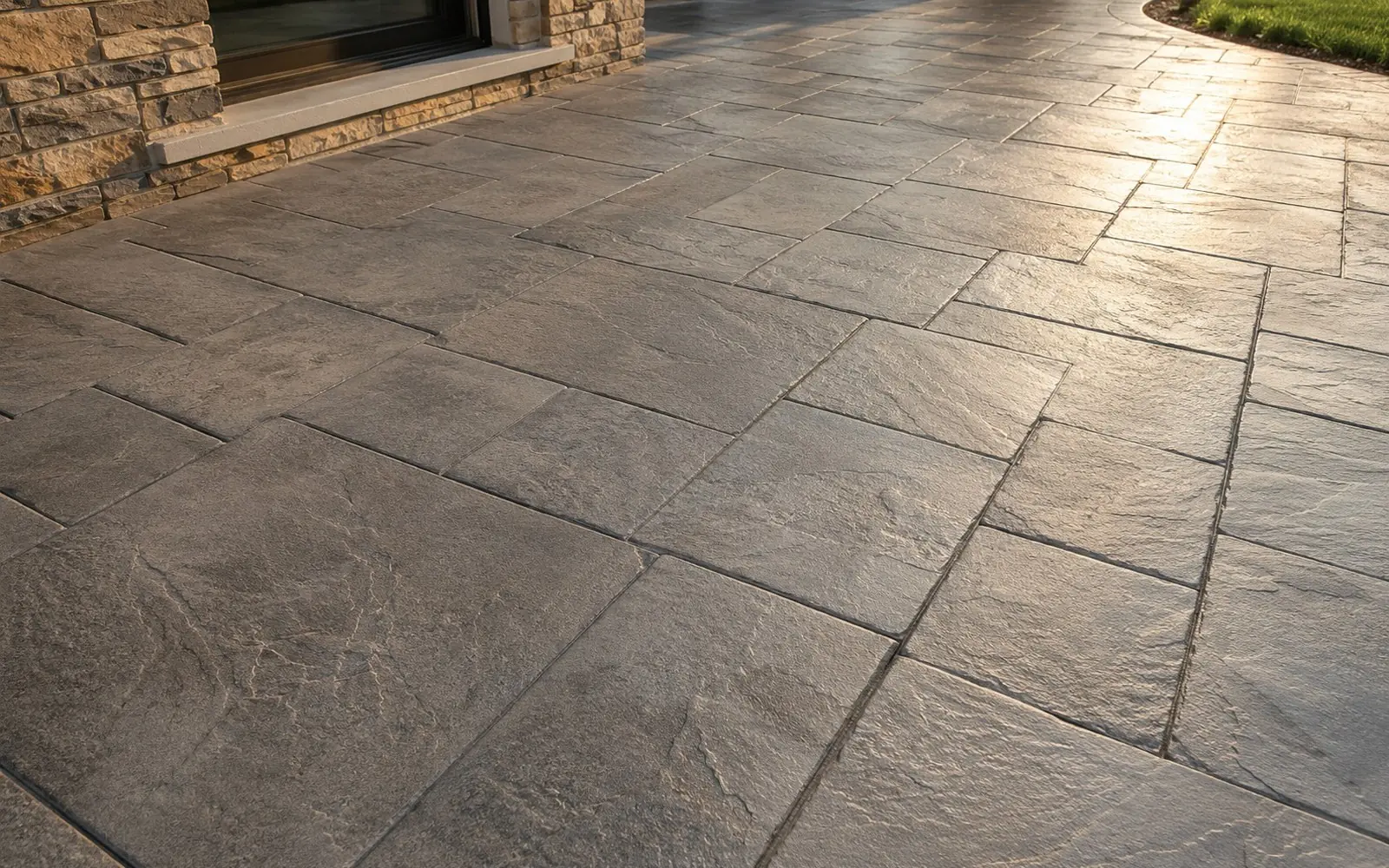
Stamping happens while fresh concrete is plastic: crews press pattern mats into colored concrete, add accent release colors, then saw joints and seal. Done well it convincingly reads as stone at a fraction of natural stone's installed price. Done badly, with thin slabs, rushed timing or missing sealer, it fades and chips in a few seasons, which is why portfolio and references matter more here than anywhere else in flatwork.
Existing slabs have their own decorative path. Acid stains and water-based dyes turn plain gray into mottled color; overlays add a new sculptable surface layer; polishing grinds interior floors to a sheen; and epoxy or polyaspartic coatings give garage floors a showroom finish. All of it depends on the slab underneath being sound, clean and dry.
The decorative menu
New pours and existing slabs have different options.
Stamped concrete
Pattern mats and color pressed into fresh pours: slate, flagstone, brick and wood-plank looks at mid-range pricing.
Acid stains and dyes
Translucent, mottled color for existing slabs, indoors and out. Every slab takes stain differently, so demand a test patch.
Decorative overlays
A thin engineered layer over sound but ugly concrete, stampable and stainable. The facelift option when tear-out is not justified.
Polished concrete
Interior floors ground and polished to a matte or gloss sheen. Durable, easy to clean and popular in basements and modern homes.
Epoxy and garage coatings
Chemical and abrasion resistant coatings with chip or quartz broadcast. Prep grinding is most of the job; quality lives there.
Sealers and maintenance
All decorative work lives under sealer. Plan a re-seal every two to four years outdoors, or watch color and surface dull early.
What does it cost?
Commonly published ballparks: stamped concrete around $12 to $18 per square foot installed, with multi-pattern and border work higher; staining existing slabs roughly $3 to $8 per square foot; overlays $7 to $12; and garage epoxy systems commonly $4 to $10 per square foot depending on prep and broadcast.
Compare stamped pricing against the looks it imitates: natural stone commonly runs $15 to $30 or more per square foot installed. The savings are real, and so is the dependence on the installer's skill.
Ballparks based on commonly published national averages, stated as assumptions, not measured local pricing. Your competing quotes set the real number for your home and ZIP.
How to hire for decorative concrete work
Who does the work
Decorative concrete is a specialty inside the concrete trade. Stamping crews live on timing and need enough hands for the pour window; coating and polishing contractors are their own niche with grinding equipment. Generic flatwork crews who stamp occasionally are how regrets happen.
What pros will ask
Square footage, indoor or outdoor, the pattern and color direction you like, and photos of the existing slab for stain or coating work. Ask to see a portfolio of jobs at least three years old, because decorative work ages in public.
What to check before signing
That the quote names pattern, base color, release color and sealer product. That joint placement is drawn so it hides inside pattern lines. And for coatings, that surface prep is specified as grinding, not just cleaning, with moisture testing on slabs in question.
Related searches homeowners make
Pulled from the same demand data behind our Concrete and Masonry category.
Stamped and Decorative Concrete questions, answered straight
Does stamped concrete look fake?
Good work genuinely reads as stone from a few feet away; bad work looks like a waffle iron accident. The difference is crew skill: realistic mats, layered color, hand detailing at edges and clean joint placement. Judge portfolios of aged jobs, not fresh glamour shots.
Is stamped concrete slippery?
Sealed stamped surfaces can be slick when wet, especially around pools. Installers counter it by mixing anti-slip grit into the sealer or choosing heavier textures. Raise it upfront on any pool deck or sloped surface; it is a standard, cheap fix.
How long does stamped concrete last?
The slab lasts like any quality concrete, decades. The color and sealer are the maintenance layer: expect a re-seal every two to four years outdoors and occasional color refresh in high-wear paths. Skip sealing and fading shows up early.
Can my existing plain patio be stamped?
Not directly; stamping needs fresh, plastic concrete. The retrofit route is a stampable overlay, a thin engineered topping applied over sound existing concrete and stamped while it cures. It costs less than tear-out but demands a structurally solid slab underneath.
What is the difference between acid stain and paint?
Acid stain reacts chemically with the slab, producing translucent, variegated color that cannot peel because it is in the surface, not on it. Paint and film coatings sit on top and eventually wear or peel under traffic. For floors, stain plus sealer generally outlives paint by years.
Get quotes for your decorative concrete project
Free for homeowners. No obligation. Up to four local concrete and masonry pros compete.
Keep planning your concrete or masonry project
More guides from the Concrete and Masonry hub.
Concrete Patios, Walkways and Pavers
Slabs, pavers and stone paths, plus the base rules under all three.
Read the guideConcrete Foundation Repair
Crack triage, piers, lifting and when to call an engineer.
Read the guideConcrete Cutting, Breaking and Resurfacing
Demo, sawing, coring and the overlay alternative to tear-out.
Read the guide