
Concrete Cutting, Breaking and Resurfacing
Twenty six thousand searches for the heavy end of the trade: removing, cutting and renewing hardened concrete.
The heavy equipment side of concrete work
Concrete breaking, cutting and resurfacing account for roughly twenty six thousand tracked searches in our demand data, a bigger cluster than most homeowners would guess. It covers the jobs that deal with concrete already in place: demolishing a failed slab, saw-cutting openings for doors and utilities, coring holes for vents and rails, and resurfacing tired but sound flatwork.
Demolition and removal is the most common call: a heaved driveway, a failed patio or steps that pulled away. Crews break slabs with hydraulic breakers or rig-mounted hammers, then load and haul debris, and disposal weight is a real part of the price. Sawing and coring are precision cousins, cutting clean lines in slabs and walls for basement egress windows, plumbing trenches and HVAC penetrations, with dust control and utility awareness separating pros from renters with a saw.
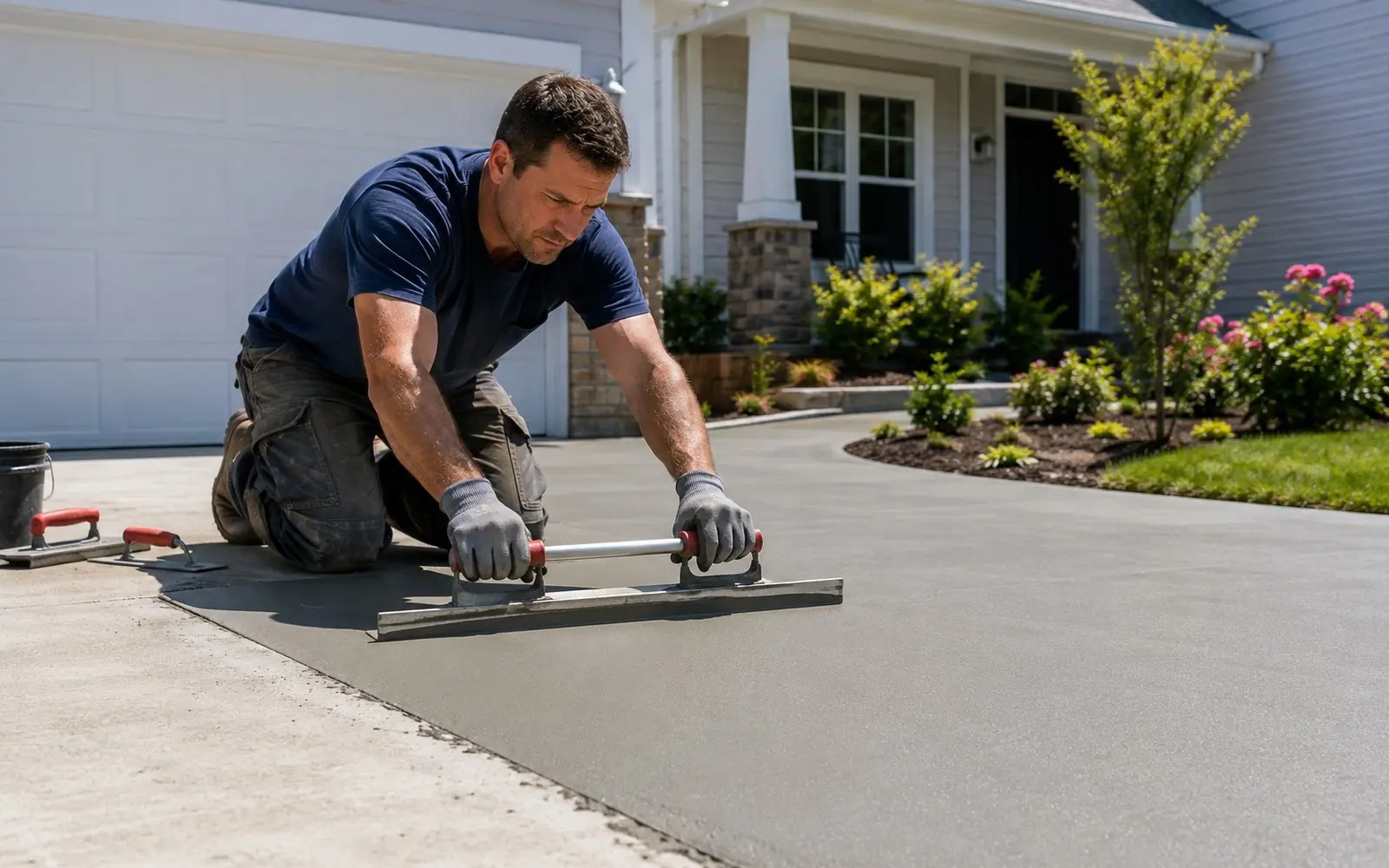
Resurfacing is the money-saver of the trio. A slab that is structurally sound but scaled, pitted or stained can take a polymer-modified overlay at a fraction of replacement cost, plain, colored or stamped. The honesty test is the substrate: overlays follow whatever the slab underneath does, so resurfacing a moving slab just relocates the disappointment.
The jobs in this trade
Heavy, loud, precise, and best left to crews with the gear.
Slab demolition and removal
Breaking, loading and hauling failed driveways, patios and steps. Priced by area and thickness; disposal weight drives the number.
Flat sawing
Straight, clean cuts in slabs for trenches, joints and partial removals. The right way to take out a section without wrecking the rest.
Wall sawing and openings
Cutting doorways, windows and egress openings in foundation walls, with engineering where structure changes. Licensed, insured work.
Core drilling
Precise round holes for plumbing, venting, railings and anchors. Fast, tidy and far cleaner than hammering oversized holes.
Resurfacing overlays
Polymer-modified toppings renew sound but ugly slabs, plain, broomed, colored or stamped, at a fraction of tear-out cost.
Grinding and leveling
Trip hazards ground flush and high spots milled. Sidewalk lip grinding is a routine, inexpensive liability fix.
What does it cost?
Commonly published ballparks: slab removal around $2 to $6 per square foot depending on thickness, reinforcement and access, which puts most patio and driveway tear-outs between $500 and $2,500. Resurfacing overlays commonly run $3 to $7 per square foot plain, more with color or stamping. Cutting and coring are typically priced per linear foot or per hole with minimum call-out fees.
Bundling removal with the replacement pour under one contractor usually beats hiring the phases separately, and puts slab warranty responsibility in one place.
Ballparks based on commonly published national averages, stated as assumptions, not measured local pricing. Your competing quotes set the real number for your home and ZIP.
How to hire for concrete cutting and resurfacing work
Who does the work
Concrete cutting and coring companies are their own specialty with the saws, rigs and dust control. Demolition is done by concrete contractors and demo crews. Resurfacing belongs to decorative concrete and coating contractors who prep with grinders, not just brooms.
What pros will ask
Slab dimensions and thickness if known, photos of the surface, access for equipment and trucks, and what is happening afterward: new pour, landscaping or an opening. For cutting, anything you know about embedded pipes, tension cables or wiring is safety-critical.
What to check before signing
That utility locates and any structural engineering for wall openings are handled before blades spin. That dust control and debris disposal are in the quote. And for resurfacing, that the contractor assesses slab soundness first and specifies the overlay product and prep method in writing.
Related searches homeowners make
Pulled from the same demand data behind our Concrete and Masonry category.
Concrete Cutting, Breaking and Resurfacing questions, answered straight
How much does it cost to remove a concrete driveway?
At commonly cited rates of $2 to $6 per square foot for breaking and hauling, a typical two-car driveway runs roughly $1,200 to $3,500 depending on thickness, rebar and access. Getting removal quoted with the replacement pour usually nets a better combined price.
Can my ugly concrete be resurfaced instead of replaced?
If the slab is structurally sound, drains properly and is not actively moving, yes: overlays renew the surface for a fraction of tear-out money. If it is heaving, settling or widely cracked, resurfacing only decorates the problem. A trustworthy contractor will tell you which one you have.
Is cutting into a foundation wall safe?
Done properly, yes; it is how egress windows and new doorways happen every day. The keys are engineering review where load paths change, utility scanning before cutting, and proper shoring and lintels. It is emphatically not a rental-saw weekend project.
Why hire a coring company instead of drilling myself?
Core rigs cut precise, clean holes through thick reinforced concrete in minutes without cracking the surrounding area, and operators scan for embedded lines first. Hammer-drilling oversized penetrations risks rebar, pipes and ragged holes that leak.
What happens to the old concrete debris?
Crews haul it to recyclers where it becomes crushed aggregate, and disposal fees ride on weight. Confirm haul-away and disposal are in your quote; a surprise debris pile is the classic corner-cut on cheap demolition bids.
Get quotes for your concrete cutting or resurfacing project
Free for homeowners. No obligation. Up to four local concrete and masonry pros compete.
Keep planning your concrete or masonry project
More guides from the Concrete and Masonry hub.