
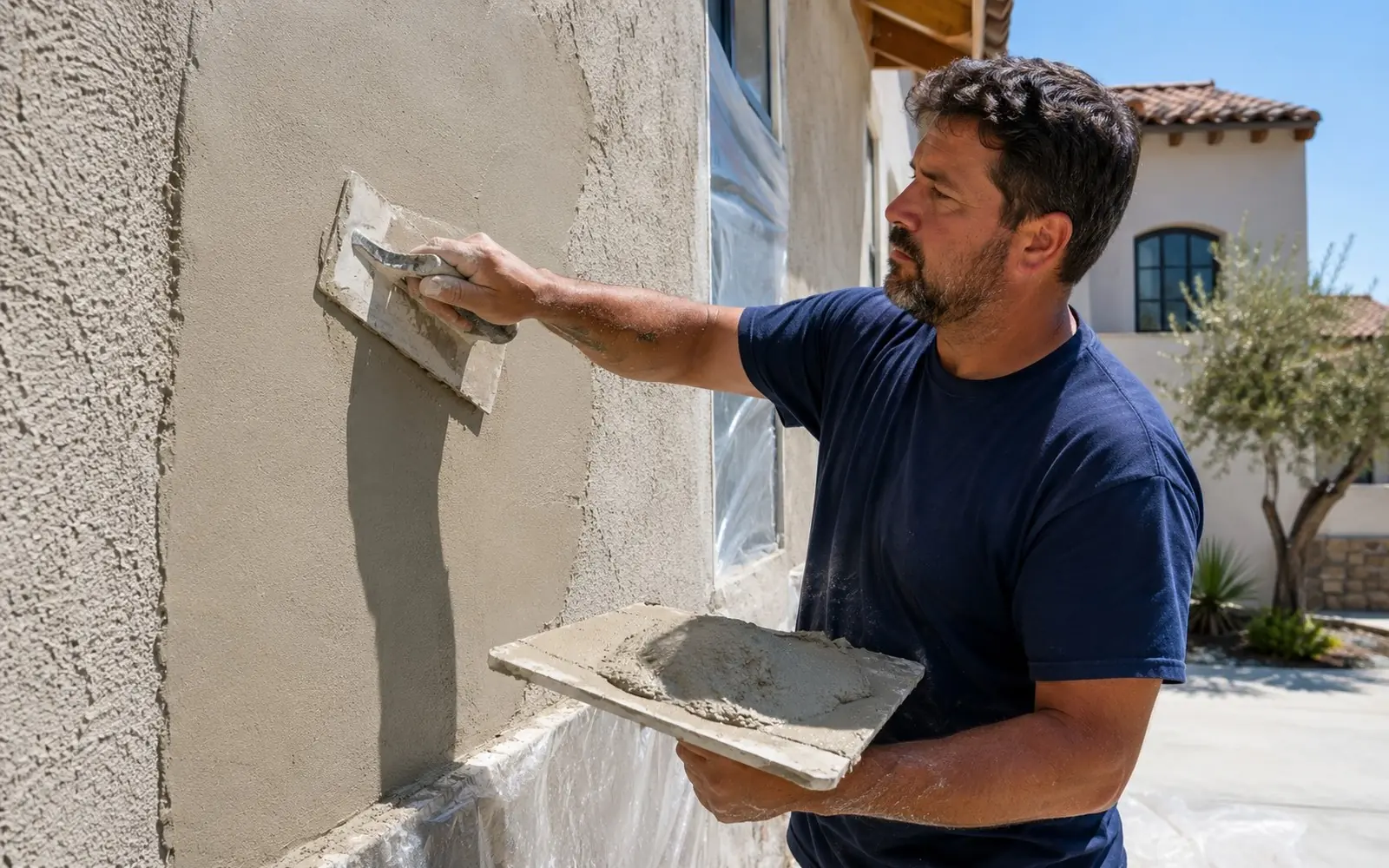
Stucco Installation and Repair
Fifteen thousand stucco searches in our data. A great wall system when detailed right, and an expensive lesson when it is not.
A wall system that lives or dies on details
Stucco draws over fifteen thousand tracked searches in our demand data, with stucco stone and stucco siding adding thousands more. As a cladding it has real virtues: fire resistance, durability measured in decades, seamless curves and colors, and a finish that suits everything from Spanish revival to modern boxes.
Know which system you are buying. Traditional three-coat stucco is cement plaster over lath, built up in scratch, brown and finish coats, heavy, hard and time-proven. One-coat systems shorten the process with fiber-reinforced mixes. EIFS, the synthetic foam-backed system, insulates well and molds crisp details, but early residential versions earned a reputation for trapping water, and modern drainable EIFS exists precisely because of it. All three live or die on flashing, weep screeds, control joints and sealant at every penetration.
Repair demand is mostly cracks and moisture. Hairline cracking is normal aging and gets flexible sealant or patch coats; widening cracks, bulges, soft spots and staining below windows are moisture signals that deserve investigation, sometimes with moisture meters or probes, before anyone smears patch material over the evidence.
Systems and services
Match the system to the climate and the crew to the system.
Three-coat stucco
The traditional cement plaster build-up over lath. Heavy, impact-resistant and long-lived, with the longest install schedule.
One-coat systems
Fiber-reinforced mixes that compress the schedule and cost. Fine when the manufacturer's details are followed exactly.
EIFS synthetic stucco
Foam-insulated, crisp-detailed and energy-efficient. Modern drainable assemblies fixed the old moisture reputation; detailing is everything.
Crack and patch repair
Hairline cracks seal with elastomeric products; patches blend texture and color. Matching aged finish is the visible skill.
Moisture remediation
Soft spots, stains and bulges get investigated, opened, dried and rebuilt with correct flashing. The expensive end of the trade.
Painting and refinishing
Elastomeric and breathable coatings renew color and bridge hairlines. Wrong paint traps moisture, so product choice is not cosmetic.
What does it cost?
Commonly published ballparks: new three-coat stucco around $7 to $12 per square foot of wall, EIFS in a similar band with insulation included, whole-house re-stucco projects commonly $10,000 to $25,000 depending on size and prep, and typical crack or patch repairs $500 to $2,500. Moisture remediation is scoped case by case and can run well beyond that.
Color-matched patches on weathered stucco are genuinely difficult; many owners schedule repairs alongside a full repaint so the wall reads as one surface.
Ballparks based on commonly published national averages, stated as assumptions, not measured local pricing. Your competing quotes set the real number for your home and ZIP.
How to hire for stucco work
Who does the work
Stucco and plastering contractors install and repair the traditional systems; EIFS work should go to installers trained and certified on the specific system. Moisture investigations sometimes warrant an independent building envelope inspector before repair money is spent.
What pros will ask
Wall area and height, system type if you know it, photos of damage, and the history: when cracks appeared, what water does in storms, and any past patches. For new work, climate drives the drainage details a bidder should volunteer without prompting.
What to check before signing
That the quote names the system and manufacturer, includes flashing, weep screed and control joint details, and specifies texture and color matching on repairs. On EIFS, ask for the installer's system certification. Vague stucco quotes produce expensive walls twice.
Related searches homeowners make
Pulled from the same demand data behind our Concrete and Masonry category.
Stucco Installation and Repair questions, answered straight
Are cracks in stucco a big deal?
Hairlines are normal aging on a cement finish and get sealed cosmetically. Take seriously: cracks that widen over seasons, diagonal cracks off window corners, bulges, soft spots and staining. Those suggest movement or trapped moisture and deserve investigation before patching.
What is the difference between stucco and EIFS?
Traditional stucco is cement plaster, hard and heavy. EIFS is a synthetic system over rigid foam, lighter, better insulating and crisper in detail. Early EIFS earned a bad name by trapping water; modern drainable EIFS resolved it when installed by trained crews. Inspections tell you which one a house wears.
Can you paint stucco?
Yes, with the right products: breathable masonry paints or elastomeric coatings that bridge hairlines while letting vapor escape. The wrong impermeable paint seals moisture into the wall. A repaint is also the natural moment to fold in crack and patch repairs invisibly.
How long does stucco last?
Well-detailed traditional stucco routinely runs 50 years or more with periodic sealing and paint. The lifespan killers are not the plaster but the details: missing flashing, clogged weep screeds and unsealed penetrations that let water behind the system.
Why did my stucco repair patch look different?
Texture and pigment on weathered walls are hard to match, and fresh patch always reads new against decades of sun. Skilled crews feather texture and tint close, but the reliable fix is repainting the full wall plane after repairs so everything ages together from one baseline.
Get quotes for your stucco project
Free for homeowners. No obligation. Up to four local concrete and masonry pros compete.
Keep planning your concrete or masonry project
More guides from the Concrete and Masonry hub.