
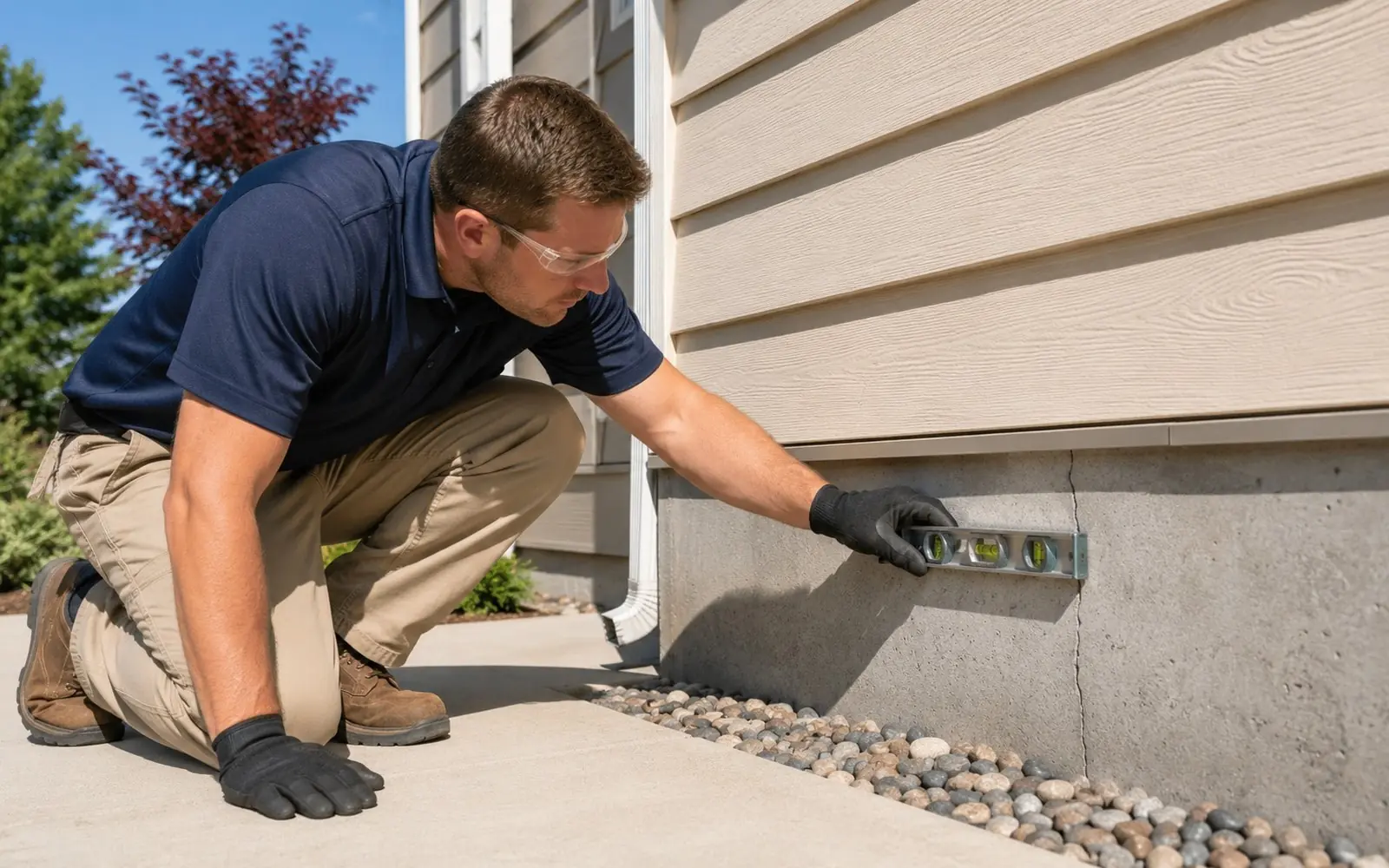
Concrete Foundation Repair
Five thousand searches for foundation raising and repair. The highest-stakes call in the concrete category, made calmly.
The repair no one should guess at
Foundation raise and repair terms draw over five thousand tracked searches in our demand data, with concrete foundation and concrete repair adding thousands more. It is the scariest search in the category, and the first honest thing to say is that most foundation cracks are not emergencies. Concrete shrinks as it cures, and hairline vertical cracks in poured walls are close to universal.
The real warning signs are about movement and pattern: horizontal cracks, stair-step cracks in block or brick, cracks wider than about a quarter inch or growing over time, doors and windows racking out of square, sloping floors and water intrusion. Those symptoms say the soil under or beside the foundation is moving, from expansive clay, poor drainage, or fill that was never compacted.
Fixes scale with the diagnosis. Epoxy and polyurethane injection seals non-structural cracks. Carbon fiber straps and wall anchors stabilize bowing basement walls. Slabjacking or polyurethane foam lifts settled slabs, and steel push or helical piers carry a settling footing down to load-bearing strata. The pattern to avoid is buying the fix from the person who sells only that fix; on big jobs an independent structural engineer's report is the best few hundred dollars in the process.
Repair methods, matched to symptoms
Diagnosis first. The method follows the cause, not the brochure.
Crack injection
Epoxy or polyurethane fills and seals non-moving cracks in poured walls, stopping water and restoring integrity. The routine end of the trade.
Carbon fiber and wall anchors
Bowing block walls from soil pressure get strapped or anchored before the bow grows. Far cheaper than rebuilding a wall later.
Slabjacking and foam lifting
Settled slabs, garage floors and stoops get drilled and lifted with grout or structural foam in hours. Cosmetic-to-moderate settlement only.
Push and helical piers
Steel piers driven or screwed to competent soil carry a settling footing permanently. The structural answer, priced per pier.
Drainage correction
Gutters, grading, downspout extensions and drain tile. Water management causes and cures more foundation trouble than anything else.
Engineering and monitoring
Crack gauges and an independent structural engineer's report turn fear into a scoped plan, and keep contractor claims honest.
What does it cost?
Commonly published ballparks: crack injection around $250 to $800 per crack, carbon fiber straps a few hundred to around a thousand each, slab lifting commonly $500 to $2,500 per area, and piering $1,000 to $3,000 per pier with most settling repairs using several. Whole-project numbers therefore run from a few hundred dollars to well into five figures.
An independent structural engineer's evaluation commonly runs a few hundred dollars and pays for itself the moment two contractor proposals disagree, which they will.
Ballparks based on commonly published national averages, stated as assumptions, not measured local pricing. Your competing quotes set the real number for your home and ZIP.
How to hire for foundation repair work
Who does the work
Foundation repair contractors install piers, anchors and lifting systems; waterproofing companies overlap on cracks and drainage. For anything structural, an independent structural engineer, one who sells reports rather than repairs, should define the scope the contractors bid against.
What pros will ask
Photos of cracks with a coin for scale, when you first noticed them and whether they grow, how doors and floors behave, and what water does around the house in storms. Age of the home and any past repairs round out the picture.
What to check before signing
That the proposal matches an engineer's scope, names the pier system and count or product specs, and includes a transferable warranty; the good ones convey to the next owner. Multiple bids are non-negotiable here, because method and price both vary widely.
Related searches homeowners make
Pulled from the same demand data behind our Concrete and Masonry category.
Concrete Foundation Repair questions, answered straight
Are cracks in my foundation normal?
Hairline vertical cracks in poured concrete are extremely common shrinkage artifacts and usually just get sealed. The ones deserving attention are horizontal, stair-stepped, wider than about a quarter inch, growing over time, or paired with sticking doors and sloping floors.
What causes a foundation to settle or heave?
Soil, almost always: expansive clays that swell wet and shrink dry, poorly compacted fill, and water mismanagement from short downspouts and flat grading. That is why competent repairs start with drainage and why fixing gutters sometimes halts movement by itself.
Does foundation repair ruin resale value?
Documented, warrantied repair generally reads better to buyers than mystery cracks. Piering with a transferable warranty and an engineer's sign-off turns a scary inspection line into a closed issue. Keep every document; the paper is worth real money at sale.
Is basement waterproofing the same as foundation repair?
They overlap but differ. Waterproofing manages water with sealing, drainage and sump systems; foundation repair addresses structure with piers and reinforcement. Water problems left alone become structural ones, which is why the same companies often do both.
How urgent is a bowing basement wall?
More urgent than a static crack. Bowing means lateral soil pressure is winning, and the fix gets more expensive with every inch of deflection: straps early, anchors later, excavation and rebuild at the end. Get it measured and monitored now rather than guessed at later.
Get quotes for your foundation repair project
Free for homeowners. No obligation. Up to four local concrete and masonry pros compete.
Keep planning your concrete or masonry project
More guides from the Concrete and Masonry hub.
Concrete Cutting, Breaking and Resurfacing
Demo, sawing, coring and the overlay alternative to tear-out.
Read the guideBrick and Stone Masonry
Veneer, garden walls, tuckpointing and mortar matching.
Read the guideStucco Installation and Repair
Three-coat vs EIFS, crack triage and repaint timing.
Read the guide