
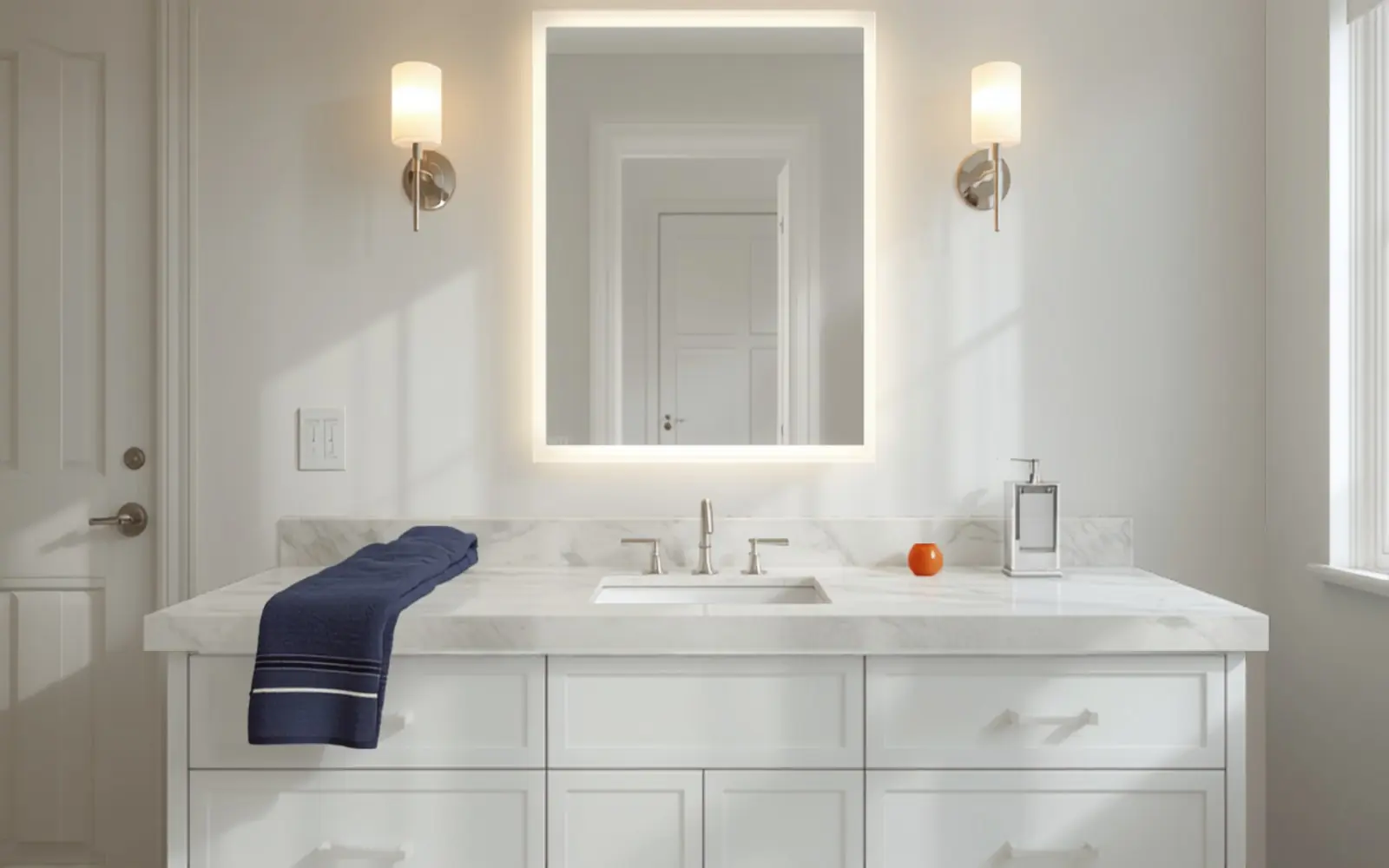
Bathroom Lighting and Mirrors
The difference between a bathroom that flatters and one that interrogates is about three fixtures.
Light the face, not the floor
Lighting and mirrors each carry five-figure search volume in our bathroom demand data, and they are usually upgraded together because they share the same wall and often the same wiring moment. The payoff is outsized: no other bathroom line item changes daily experience this much per dollar.
The classic mistake is one ceiling fixture that lights the top of your head and shadows your face. The fix is lighting at the mirror: sconces at roughly eye level flanking the glass, or a quality bar above it, ideally warm in color and strong enough for grooming. A ceiling or shower light then fills the room, and a dimmer earns its few dollars every single night.
Bathrooms are wet locations with rules. Fixtures over tubs and in showers must be rated for damp or wet locations, and circuits need GFCI protection. Swapping a fixture onto an existing box is light work; adding boxes, circuits or in-mirror lighting means an electrician and possibly a permit.
Lighting and mirror options worth weighing
Build in layers: mirror light first, general light second, accents last.
Vanity sconces and bars
Side-mounted sconces at eye level are the gold standard for even face light. A good bar above the mirror is the practical runner-up.
Lighted and smart mirrors
Integrated LED mirrors solve face light and looks in one piece. Check color temperature, brightness and whether they need a dedicated feed.
Ceiling and recessed lighting
General fill and shower cans rated for wet locations. Recessed over the shower is a small add during a remodel, a bigger one after.
Mirror sizing and medicine cabinets
Keep the mirror a few inches narrower than the vanity. Recessed medicine cabinets trade wall depth for storage without crowding the room.
Dimmers and night lighting
Dimmers on the main layer and a low night light circuit or motion toe-kick light are cheap comfort features to wire while walls are open.
Fan and light combos
One ceiling unit can handle ventilation and fill light. Fine in small baths, but do not let the combo replace real light at the mirror.
What does it cost?
Swapping a fixture on an existing box commonly runs one to a few hundred dollars each, installed. Adding new boxes, switches or a dedicated circuit for a lighted mirror moves the job into the high hundreds or low thousands depending on wall access.
Fixture price is the other lever: builder-grade bars cost tens of dollars, designer sconces and large LED mirrors run into the hundreds each. Labor per fixture drops when several are done in one visit.
Ballparks based on commonly published national averages, stated as assumptions, not measured local pricing. Your competing quotes set the real number for your home and ZIP.
How to hire for bathroom lighting work
Who does the work
A licensed electrician for anything beyond a like-for-like swap, and even swaps are electrician work in many jurisdictions. During a remodel, the bathroom contractor schedules the electrician at rough-in and again at trim-out.
What pros will ask
Photos of the vanity wall and existing switches, mirror and fixture sizes, whether boxes need to move, and your fixture picks. Whether the house has GFCI protection on bathroom circuits is the first thing a pro will check.
What to check before signing
That new work is permitted where required, that wet and damp location ratings match fixture placement, and that the quote states fixture supply versus labor only so you can shop the hardware yourself.
Related searches homeowners make
Pulled from the same demand data behind our Bathroom Remodeling category.
Bathroom Lighting and Mirrors questions, answered straight
What is the best lighting for a bathroom mirror?
Sconces at both sides of the mirror near eye level, giving even light across the face with no shadows. If the wall will not allow it, a wide bar above the mirror is the next best. Warm-to-neutral color around 2700K to 3500K flatters skin.
How big should the vanity mirror be?
A common rule: a few inches narrower than the vanity and tall enough that everyone in the house sees their head and shoulders. Oversizing toward the vanity width makes small bathrooms feel larger.
Do bathroom lights need special ratings?
Yes. Fixtures in shower or tub zones need damp or wet location ratings, and bathroom receptacle circuits need GFCI protection. This is exactly the kind of detail an electrician handles without drama.
Can I install a lighted mirror myself?
If it plugs into an existing outlet, perhaps. Hardwired models need a junction box at the right height and often a new switch leg, which is electrician territory and may need a permit.
Are LED mirrors worth it?
For grooming-heavy households, usually yes: even face light, defoggers and dimming in one unit. Buy from brands that publish brightness and color temperature, and check the warranty, since the LEDs are not replaceable on most models.
Get quotes for your bathroom lighting project
Free for homeowners. No obligation. Up to four local bathroom pros compete.
Keep planning your bathroom
More guides from the Bathroom Remodeling hub.