
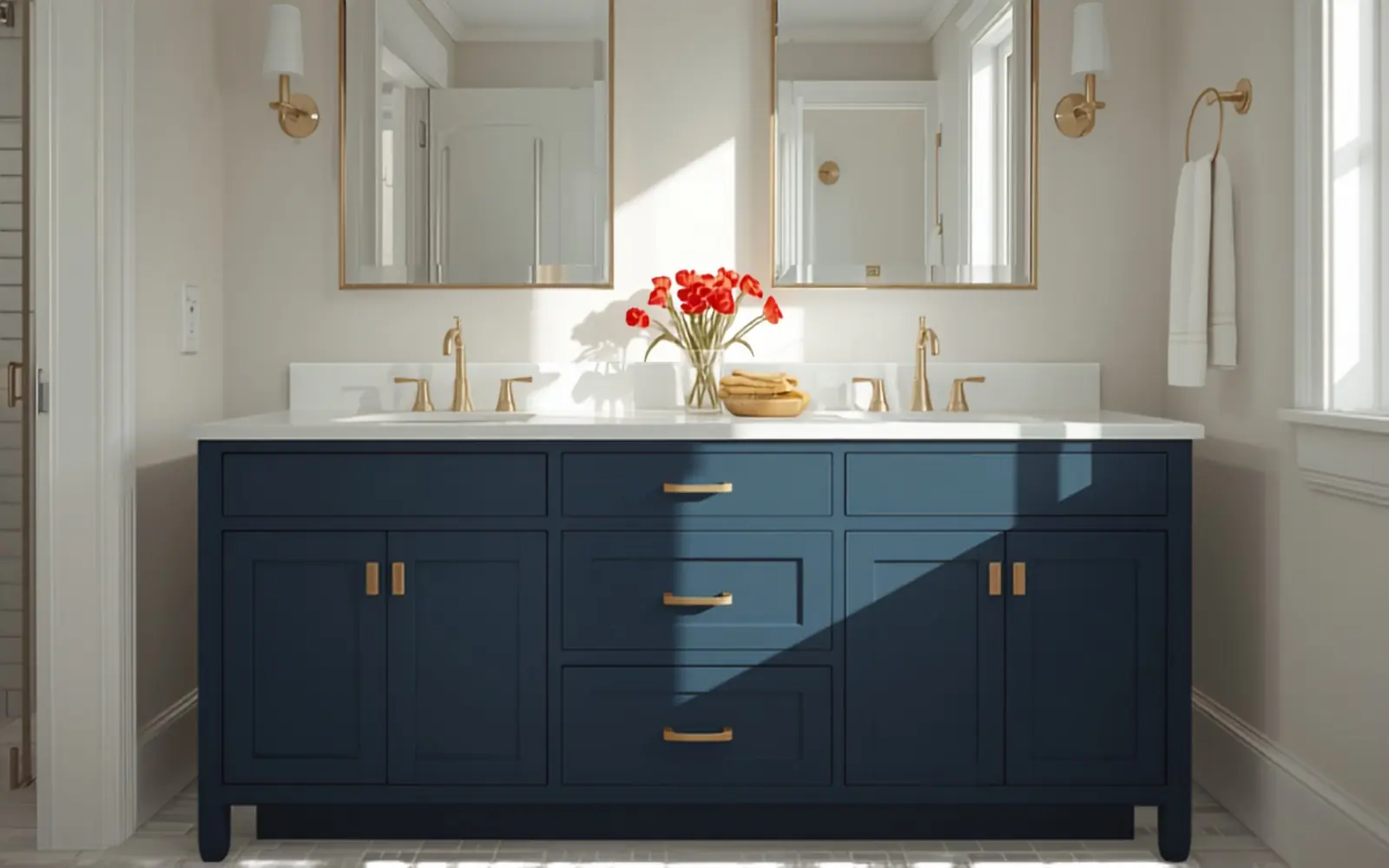
Bathroom Vanities
The piece of furniture that sets the tone for the whole room, and the single biggest search in our bathroom demand data.
The upgrade homeowners search for most
Vanities and medicine cabinets are the heaviest hitters in our bathroom demand data, out-searching even full remodels. That makes sense: swapping a dated vanity is the fastest way to change how a bathroom looks and works, and it can often be done without touching tile, tub or layout.
Fit comes first. Standard vanity widths run 24, 30, 36, 48 and 60 inches, with 60 inches the usual threshold for a true double sink. Measure wall to wall, then subtract for door swings, drawer clearance and the toilet beside it. Codes and common sense both want free space in front of fixtures, so a deeper vanity is not automatically a better one.
Then decide how the plumbing lines up. A same-size replacement that reuses the existing supply and drain locations is a half-day job for a pro. Moving from a single to a double sink, or shifting the vanity to another wall, adds plumbing work inside the wall and turns a swap into a small remodel.
Vanity types and choices worth weighing
Roughly in order of cost and complexity. Most bathrooms mix one cabinet decision with one top decision.
Stock vanities
Flat-packed or preassembled units in standard widths with a top included. Cheapest path, fastest install, limited finishes. Fine for guest baths and rentals.
Semi-custom and furniture style
Better boxes, soft-close hardware and more finishes, ordered in set sizes. The sweet spot for most primary bathrooms.
Custom built vanities
A cabinetmaker builds to your wall, your height and your storage. Costs the most and takes weeks, but solves odd sizes nothing stock will fit.
Single vs double sinks
Two sinks cost more in top, faucets and plumbing, and eat counter space. In widths under 60 inches, one sink with more counter usually lives better.
Vanity tops
Quartz and granite lead for durability, cultured marble and laminate save money, solid surface splits the difference. The top can rival the cabinet in price.
Medicine cabinets and storage
Recessed medicine cabinets add storage without stealing room. Pair the vanity decision with mirrors and lighting so the wall gets opened only once.
What does it cost?
A stock vanity with a basic top commonly runs a few hundred dollars plus a few hundred more for installation and faucet hookup. Semi-custom units with stone tops typically land in the low thousands installed. Custom double vanities with quartz tops and new plumbing can pass $6,000.
The big levers are cabinet grade, top material, and whether plumbing moves. A same-footprint swap keeps labor small; relocating drains or adding a second sink is where budgets jump.
Ballparks based on commonly published national averages, stated as assumptions, not measured local pricing. Your competing quotes set the real number for your home and ZIP.
How to hire for bathroom vanity work
Who does the work
A plumber or a handyman with plumbing experience handles a like-for-like swap. Moving plumbing, opening walls or adding a second sink calls for a bathroom remodeler who can coordinate plumbing, drywall and tile patching.
What pros will ask
The width and depth of the space, photos of the existing vanity and shutoffs, whether the drain and supplies stay put, and what top and faucet you have in mind. Exact measurements up front make quotes firm instead of fuzzy.
What to check before signing
That the quote separates cabinet, top, faucet and labor. That haul-away of the old unit is included. And that the installer, not you, is responsible for sealing the top and checking for leaks after hookup.
Related searches homeowners make
Pulled from the same demand data behind our Bathroom Remodeling category.
Bathroom Vanities questions, answered straight
What size vanity do I need?
Measure the wall, then check clearances: door and drawer swings, at least 15 inches from the toilet centerline to the vanity edge, and comfortable walking room. Standard widths are 24 to 72 inches, and 60 inches is the practical minimum for a double sink.
Can I replace a vanity without redoing the bathroom?
Usually yes. If the new unit covers the old footprint and uses the existing drain and supply locations, it is a straightforward swap. Flooring installed around the old vanity rather than under it is the most common surprise.
Is a double sink worth it?
In a shared primary bath with 60 inches or more of wall, most families use both sinks daily. In tighter rooms, one sink plus usable counter and storage usually wins. Resale value follows livability, not sink count.
What is the most durable vanity top?
Quartz is the usual answer: nonporous, hard to stain and low maintenance. Granite is close behind but wants periodic sealing. Cultured marble and laminate cost less and are fine in low-traffic baths.
Do I need a plumber to install a vanity?
For the faucet and drain hookup, a licensed plumber or an experienced installer is worth it. Most leaks that ruin vanity bases start at a rushed supply or trap connection. If plumbing moves inside the wall, permits often apply and a plumber is the right call.
Get quotes for your bathroom vanity project
Free for homeowners. No obligation. Up to four local bathroom pros compete.
Keep planning your bathroom
More guides from the Bathroom Remodeling hub.
Bathroom Sinks and Faucets
Mounts, materials, finishes and what plumbers charge to swap them.
Read the guideBathroom Lighting and Mirrors
Layered light, mirror sizing and when an electrician is required.
Read the guideBathroom Remodel Cost
Tiers, the budget split and the line items everyone forgets.
Read the guide