
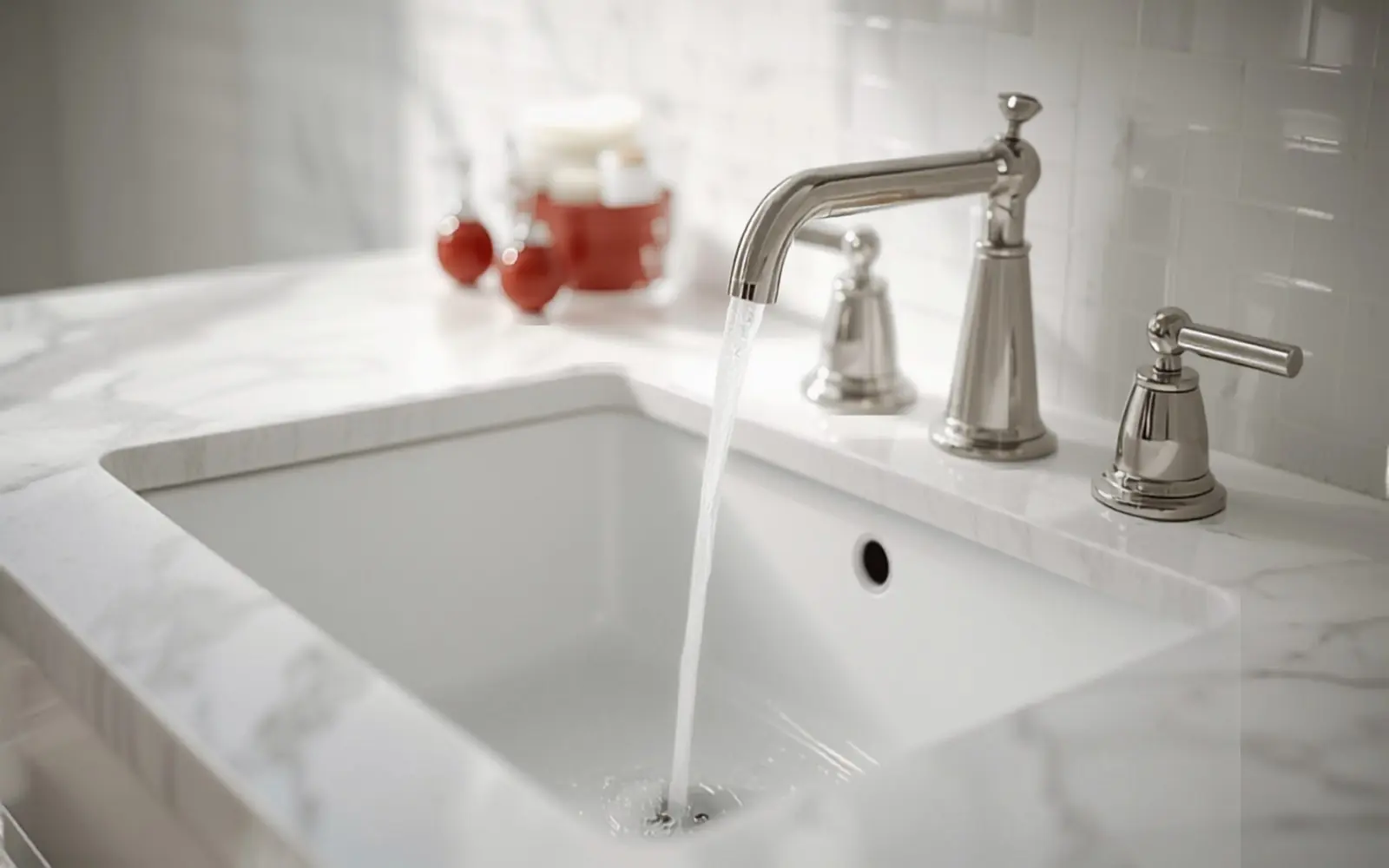
Bathroom Sinks and Faucets
Small fixtures, daily use. The right combination costs little more than the wrong one.
The highest-touch hardware in the house
Sinks and faucets pull heavy search volume in our bathroom demand data because they are the fixtures people touch every day and replace most often. A faucet gets used thousands of times a year, which is why cartridge quality and finish durability matter more than looks in the showroom.
Sink choice is really a counter decision. Undermounts need a solid-surface top like quartz or granite. Drop-ins forgive any counter and any budget. Vessels sit on top and look striking but splash more and clean harder. Pedestals and wall-hungs save floor space and give up every inch of storage.
Faucet spec has one hard rule: the faucet must match the sink's hole drilling. Centerset faucets fit 4-inch spreads, widespread faucets want 8 inches, and single-hole faucets need one hole or a deck plate. Sort that before you fall in love with anything.
Sink and faucet options worth weighing
Pick the sink style for the counter you have, then the faucet for the holes the sink provides.
Drop-in and undermount sinks
Drop-ins fit any top and budget. Undermounts clean easier and look cleaner but require stone or solid surface counters.
Vessel and console sinks
Sculptural and memorable. Expect more splash, taller faucets and more wiping. Best in powder rooms that show off.
Pedestal and wall-hung sinks
Space savers for small baths. No storage, and wall-hungs need blocking in the wall, so plan them during open-wall work.
Centerset and single-hole faucets
Compact, affordable and easy to install. The default for most vanities under 36 inches.
Widespread faucets
Three separate pieces on 8-inch spreads. A step up in looks and usually in build quality and price.
Finishes and cartridges
Brushed nickel and matte black hide spots; chrome is cheapest and timeless. Ceramic disc cartridges and metal internals outlast bargain builds.
What does it cost?
A faucet swap with the fixture in hand commonly runs one to a few hundred dollars in plumber labor. Sink plus faucet replacements typically land in the mid hundreds installed. Moving drains, cutting stone for a new sink shape, or fitting out a double vanity pushes into the low thousands.
The cost levers are fixture grade, whether the counter must be cut or replaced, and access. Corroded shutoff valves that need replacement are the most common small surprise on older homes.
Ballparks based on commonly published national averages, stated as assumptions, not measured local pricing. Your competing quotes set the real number for your home and ZIP.
How to hire for sink and faucet work
Who does the work
A licensed plumber or an experienced handyman handles swaps. Anything that moves supply or drain lines inside the wall, or pairs with a new counter, belongs with a plumber or a bathroom remodeler.
What pros will ask
Photos of the current sink, faucet and the shutoffs under it, the counter material, the faucet hole spread, and whether you already bought fixtures. Labor-only quotes are common and clean when you supply the hardware.
What to check before signing
That the quote includes new supply lines and a leak check, that old fixture haul-away is covered, and who is responsible if a seized shutoff valve or corroded drain needs replacing mid-job.
Related searches homeowners make
Pulled from the same demand data behind our Bathroom Remodeling category.
Bathroom Sinks and Faucets questions, answered straight
Can I replace just the faucet?
Yes, as long as the new faucet matches the sink's hole drilling: single hole, 4-inch centerset or 8-inch widespread. A deck plate can cover extra holes when downsizing. It is one of the cheapest visible upgrades a bathroom can get.
What is the difference between cheap and expensive faucets?
Mostly what is inside: ceramic disc cartridges, brass bodies and durable finish plating versus plastic internals and thin coatings. Midrange models from major brands hit the reliability sweet spot and keep spare parts available for years.
Do vessel sinks splash?
More than recessed sinks, yes. Shallow bowls and tall faucets aimed at the center of the drain make it worse. If the bathroom gets daily heavy use, an undermount or drop-in is the lower-maintenance choice.
How long does a swap take?
A straightforward faucet swap is about an hour or two; sink and faucet together, two to four. Seized shutoffs, corroded drains and cutting a new hole in stone are what stretch the visit.
Do I need a permit for sink work?
Like-for-like fixture swaps generally do not need one. Moving supply or drain lines inside walls usually does. Your plumber should know local rules and pull the permit when required.
Get quotes for your sink and faucet project
Free for homeowners. No obligation. Up to four local bathroom pros compete.
Keep planning your bathroom
More guides from the Bathroom Remodeling hub.