
Gutter Guards
Heavily advertised, heavily searched. Here is the version without a salesman in your kitchen.
What guards actually do, and what they never will
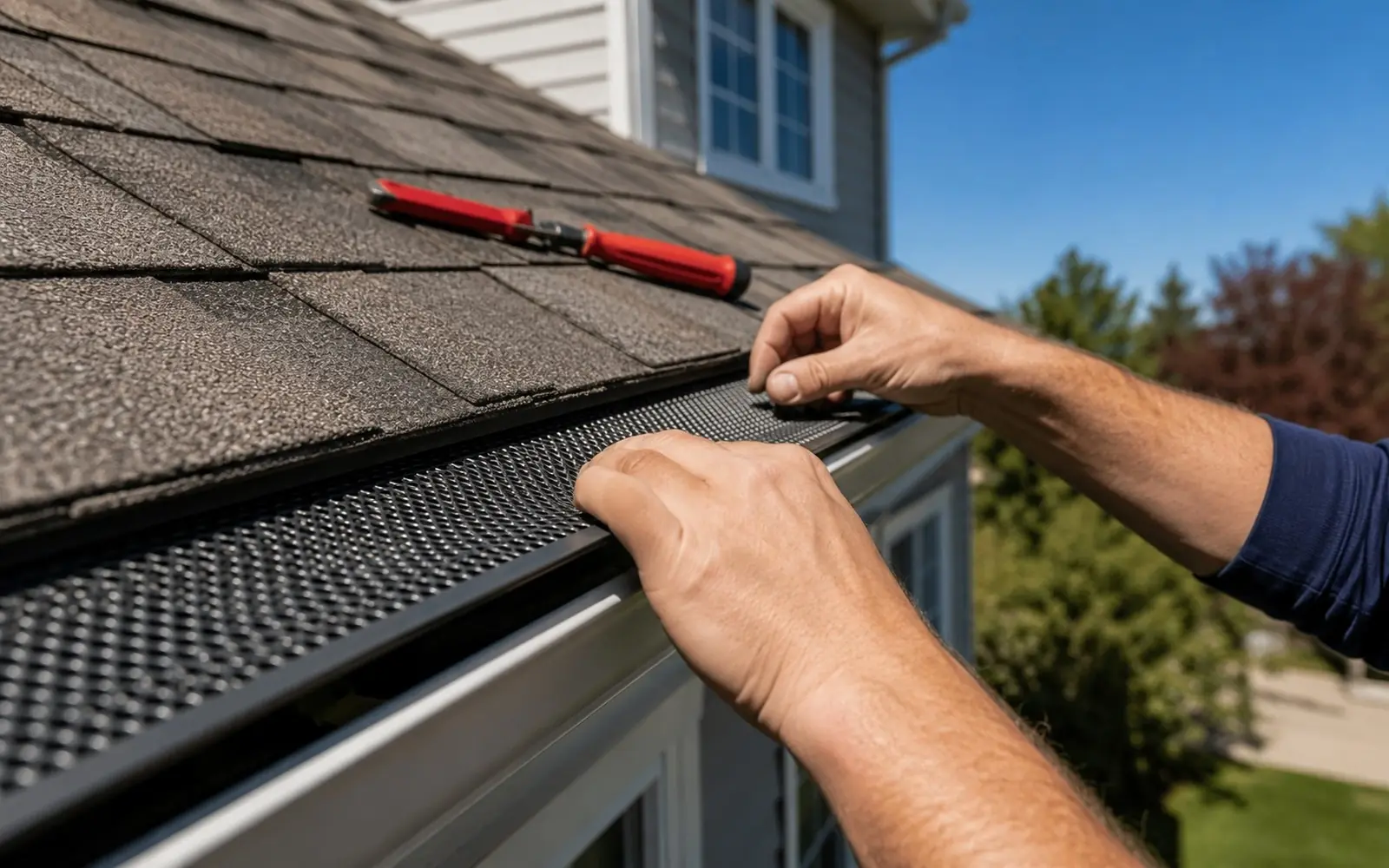
Gutter guards, covers and helmets pull five-figure search volume in our demand data, boosted by some of the most aggressive advertising in home improvement. The honest baseline: good guards dramatically reduce cleaning frequency and keep gutters flowing in leaf season. No guard eliminates maintenance forever, whatever the pitch says.
The product tiers are distinct. Micro-mesh stainless screens over a frame are the current top performer, blocking even shingle grit and pine needles. Simple metal or plastic screens are the budget tier: good against leaves, weaker against needles and seeds. Foam inserts and brushes are cheap and clog-prone. Reverse-curve helmets shed leaves well but can overshoot in downpours and usually cost the most.
The economics are a cleaning-frequency trade. Guards make sense where trees are heavy, ladders are risky, or roofs are tall enough that every cleaning is a paid visit. On a one-story house with two small trees, a twice-a-year cleaning habit may beat any guard on cost.
Guard types worth weighing
Ranked roughly by how they perform against fine debris, which is what actually clogs guarded gutters.
Micro-mesh systems
Stainless mesh on aluminum frames. Blocks needles and grit, sheds most debris, priced at the premium end of screens.
Metal and plastic screens
Snap-in or screw-down panels. Solid against leaves, cheaper per foot, and easy to lift for inspection.
Reverse-curve helmets
Solid hoods that shed leaves while water wraps into a slot. Effective, visible from the street, and priced like a small remodel.
Foam and brush inserts
Sit inside the gutter. Cheapest to buy, quickest to clog with seeds and grit, and often removed within a few seasons.
Integrated new-gutter systems
Guards built into a full gutter replacement. Best pricing moment if the gutters are due anyway.
No guard, scheduled cleaning
The honest alternative. In light-debris yards, paying for two cleanings a year can beat any product on lifetime cost.
What does it cost?
Commonly published ballparks run from a few dollars per foot for DIY screens to roughly $5 to $25 per installed foot for professional micro-mesh, with helmet-style systems at or beyond the top of that band. A typical home has 150 to 200 feet of gutter, so quotes range from several hundred dollars to several thousand.
The lever to watch is sales channel: identical performance tiers price very differently between in-home sales operations and local gutter companies. Competing quotes matter more here than in almost any other category.
Ballparks based on commonly published national averages, stated as assumptions, not measured local pricing. Your competing quotes set the real number for your home and ZIP.
How to hire for gutter guard work
Who does the work
Local gutter companies install most guard types and will quote from a photo set and measurements. National guard brands sell through dealers with in-home presentations; their product is fine, their first price is famously negotiable.
What pros will ask
Linear feet of gutter, tree types around the house (needles and maples are the hard cases), stories and roof pitch, gutter condition, and whether gutters need cleaning or repair before capping. Guards over failing gutters waste money.
What to check before signing
That the quote names the exact product and material, includes cleaning and re-sloping gutters first, states what the warranty covers (clog-free promises have fine print) and whether the roof warranty is affected by any fasteners near shingles.
Related searches homeowners make
Pulled from the same demand data behind our Roofing, Siding and Gutters category.
Gutter Guards questions, answered straight
Do gutter guards really work?
Quality guards genuinely cut cleaning frequency and prevent most leaf clogs. None are maintenance-free: fine debris accumulates on top of mesh and in valleys, so plan on occasional brushing or rinsing instead of digging out muck. That trade is still worth it for many homes.
Which gutter guard type is best?
Micro-mesh consistently tops independent comparisons for blocking needles and grit while flowing heavy rain. Simple screens are the value pick in leafy but needle-free yards. Foam inserts are the tier most often regretted.
Why are some gutter guard quotes so expensive?
In-home sales operations carry commissions and marketing that local installers do not. Materially similar mesh systems can differ by thousands between channels, and first quotes from presentation sellers routinely drop when you decline. Competing bids are the antidote.
Can I install gutter guards myself?
Snap-in screens on a one-story house are a reasonable DIY job. Micro-mesh systems that fasten under shingles or to fascia, and anything on a second story, are better installed by pros, both for safety and to keep warranties intact.
Do guards mean I never clean gutters again?
No, and reputable installers say so. Expect to rinse or brush guard surfaces occasionally and check downspout outlets each season. What disappears is the wet, heavy scooping, which is the part worth paying to lose.
Get quotes for your gutter guard project
Free for homeowners. No obligation. Up to four local gutter pros compete.
Keep planning your exterior
More guides from the Roofing, Siding and Gutters hub.