
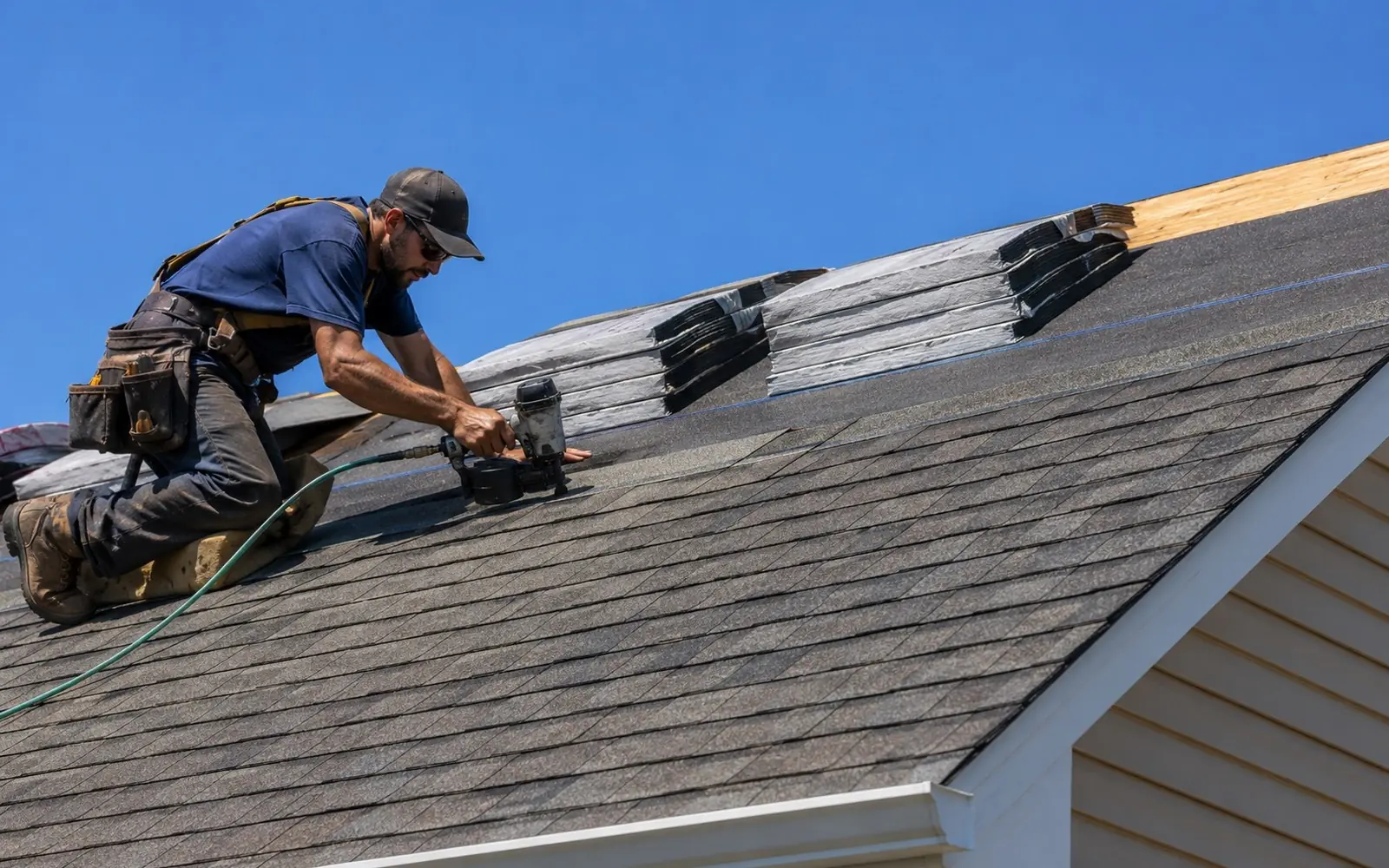
Roofing Shingles and Materials
The material decision sets the budget, the look and the next several decades. Compare before anyone measures.
What the roof is made of decides what the project costs
Roofing materials, shingles and supply form the biggest product-side section of our roofing demand data. Homeowners research materials before contractors, and they are right to: the material choice moves the total bid more than any other single decision.
Asphalt shingles cover the large majority of American homes for good reason: the best cost-to-service ratio available. Within asphalt there is a real spread. Basic three-tab shingles are the budget floor with shorter warranties and lower wind ratings. Architectural (laminated) shingles cost moderately more, look thicker, resist wind better and carry longer warranties, which is why most replacements land there. Premium designer shingles imitate slate and shake at a further step up.
Beyond asphalt the field opens: standing seam and metal shingle systems, concrete and clay tile, natural slate, wood shake, and synthetic composites that imitate all of the above. Each trades higher upfront cost for longevity, looks or weight considerations, and each needs an installer who actually works in that material.
Material options worth weighing
From budget floor to legacy roof. Climate and roof pitch shorten this list before taste does.
Three-tab asphalt
The budget option. Flat appearance, modest wind ratings, shortest warranties. Fine for rentals and short-horizon ownership.
Architectural asphalt
The mainstream choice: dimensional look, stronger wind ratings, long warranties, moderate premium over three-tab.
Designer and impact-rated asphalt
Slate and shake looks, plus class 4 impact ratings that can earn insurance discounts in hail country.
Metal systems
Standing seam and metal shingles: decades of expected service and snow-shedding, at a multiple of asphalt pricing.
Tile and slate
Clay, concrete and natural slate can outlast the mortgage but weigh enough that framing must be verified first.
Synthetics and flat-roof membranes
Composite slate and shake cut weight; EPDM and TPO membranes handle low-slope sections shingles cannot.
What does it cost?
As commonly published installed ballparks: asphalt shingle systems often run in the low-to-mid single digits per square foot, metal systems roughly two to four times asphalt, and tile and slate higher still with framing checks on top. Roofers quote in squares of 100 square feet, so translate accordingly.
Material is only part of the line: steep pitches, multiple stories, tear-off layers and complex flashing move labor as much as the shingle choice moves materials.
Ballparks based on commonly published national averages, stated as assumptions, not measured local pricing. Your competing quotes set the real number for your home and ZIP.
How to hire for roofing material work
Who does the work
A roofing contractor certified by the manufacturer of the system you want; certifications unlock the stronger warranty tiers. Tile, slate and standing seam are specialties, so ask specifically how many of that material they installed in the last year.
What pros will ask
Roof measurements or address for aerial measurement, pitch and stories, current material and layers, HOA or historic district rules, and whether hail or wind ratings matter for your insurance.
What to check before signing
That the bid names the exact shingle line and warranty tier, includes underlayment and flashing spec, and that samples were viewed on the roof in daylight rather than in a binder. Color and thickness read differently at height.
Related searches homeowners make
Pulled from the same demand data behind our Roofing, Siding and Gutters category.
Roofing Shingles and Materials questions, answered straight
Are architectural shingles worth it over three-tab?
For most owners, yes. The moderate price premium buys a thicker look, better wind ratings and meaningfully longer warranties. Three-tab still makes sense on tight budgets and short ownership horizons.
What do impact-rated shingles do?
Class 4 rated shingles resist hail damage better, and many insurers in hail-prone states offer premium discounts for them. Ask your insurer before buying; the discount math varies by state and carrier.
Can I put heavy tile on my existing roof?
Only if the framing is verified for the load. Concrete and clay tile weigh several times asphalt, and slate more again. A structural check is part of any honest tile or slate proposal on a house that had asphalt.
What goes under the shingles?
Underlayment across the deck, ice and water barrier at eaves and valleys in cold climates, drip edge at the perimeter and new flashing at penetrations. This hidden layer determines whether the roof actually keeps water out; make sure bids specify it.
Should I DIY shingle installation?
How-to searches are popular, but roofing is high-consequence work: heights, warranty terms that require correct installation, and leaks that show up months later. Small shed roofs are a fine project; the house roof rarely is.
Get quotes for your roofing project
Free for homeowners. No obligation. Up to four local roofing pros compete.
Keep planning your exterior
More guides from the Roofing, Siding and Gutters hub.