
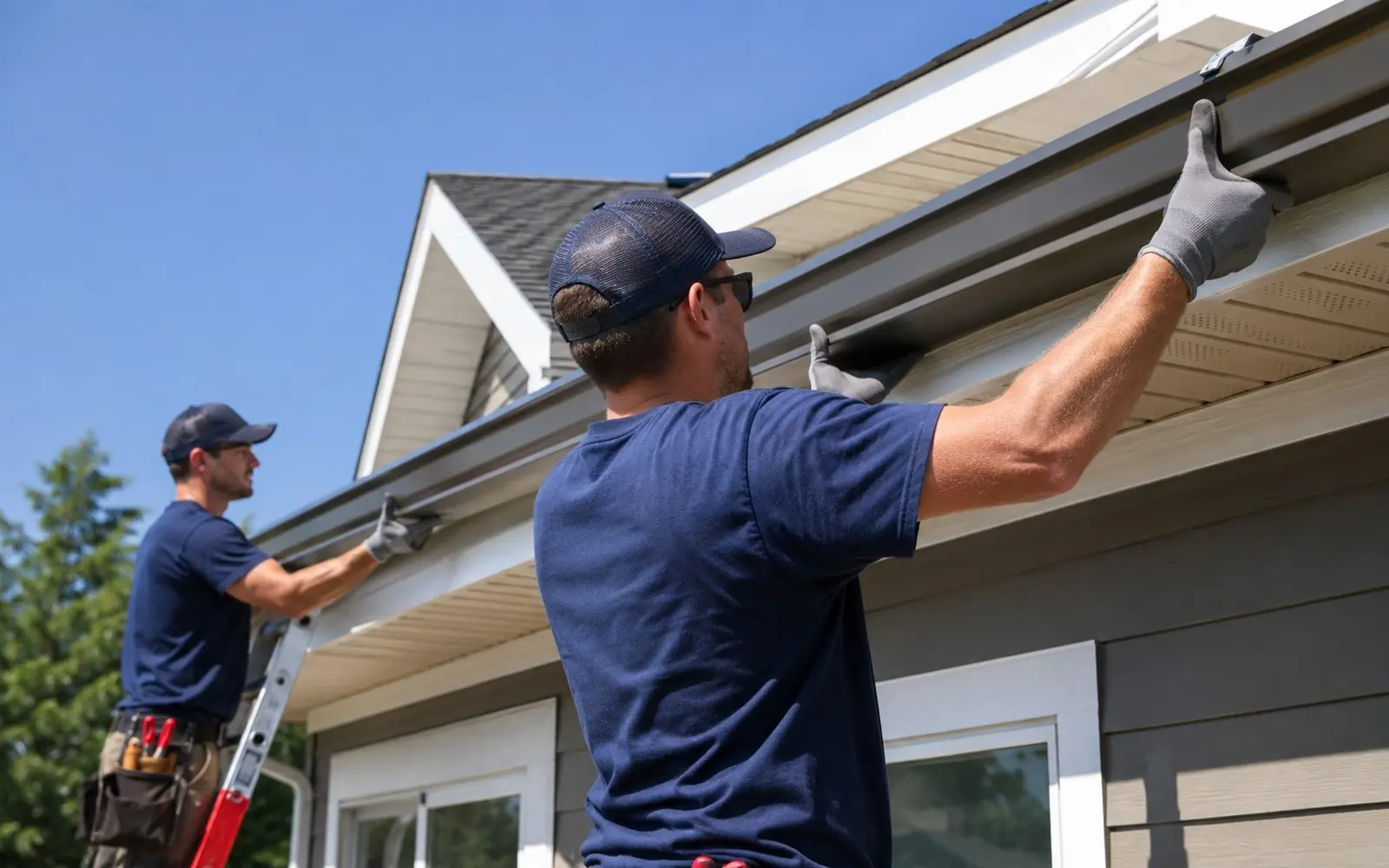
Gutter Installation
A few hundred feet of metal is all that stands between your roofline and your foundation.
The cheapest insurance a foundation can buy
Gutter searches add up to one of the steadiest demand blocks in this category: installation, guards and cleaning together rival siding. The stakes explain it. Gutters exist to move roof water away from the house, and when they fail, the bills show up as basement leaks, eroded grading, rotten fascia and stained siding.
Modern residential gutters are mostly seamless aluminum, roll-formed on site to the exact length of each run, which eliminates the mid-run joints that leak first on sectional systems. Standard K-style profiles come in 5 and 6 inch widths; 6 inch with oversized 3 by 4 inch downspouts is the common upgrade for big or steep roofs and heavy-rain regions.
Placement is engineering, not decoration: correct slope toward downspouts, enough downspouts for the roof area, hidden hangers spaced to hold snow load, and extensions that discharge water several feet from the foundation. A perfect gutter dumping at the foundation wall accomplishes nothing.
Gutter decisions worth weighing
Material first, then size, then the downspout plan nobody thinks about until the basement smells.
Seamless aluminum
The default: site-formed continuous runs, dozens of colors, decades of service, best value per foot.
5 inch vs 6 inch
Six inch K-style moves roughly 40 percent more water and clogs slower. The cheap upgrade for large, steep or debris-heavy roofs.
Copper and steel
Copper is the lifetime showpiece at several times aluminum pricing; galvanized and galvalume steel suit heavy snow and impact.
Vinyl sectional
The DIY hardware-store option. Cheapest to buy, first to sag and leak at joints. Rarely what pros install.
Downspouts and extensions
Count and size matter more than gutter brand. Water should exit several feet from the foundation, into pipe or splash blocks.
Fascia repair and drip edge
Installation day is when rotten fascia gets found and fixed, and when drip edge alignment gets corrected. Budget for the possibility.
What does it cost?
Commonly published ballparks put seamless aluminum at roughly $6 to $15 per linear foot installed, which lands most single-family homes in the $1,000 to $3,500 band including downspouts. Copper runs several times that; steel sits between.
Levers include stories and roof access, the number of downspouts, fascia repairs discovered at tear-off, and region. Guards added at install time price better than as a separate visit later.
Ballparks based on commonly published national averages, stated as assumptions, not measured local pricing. Your competing quotes set the real number for your home and ZIP.
How to hire for gutter installation work
Who does the work
Dedicated gutter companies with on-site roll-forming trucks handle most installs; roofers and exterior remodelers also offer gutters, often conveniently during roof replacement. Two-story and steep-access homes want crews with the right equipment, not the longest ladder.
What pros will ask
Linear feet of roofline if you know it, stories, photos of current gutters and problem corners, where water pools today, and whether you want guards included. Mention basement moisture; it changes the downspout plan.
What to check before signing
That the quote states gutter size, gauge and hanger spacing, the downspout count and discharge plan, fascia repair pricing, and haul-away of the old system. Slope should be checked with a level, not eyeballed from the truck.
Related searches homeowners make
Pulled from the same demand data behind our Roofing, Siding and Gutters category.
Gutter Installation questions, answered straight
How much do new gutters cost?
As a planning ballpark, seamless aluminum commonly runs $6 to $15 per installed linear foot, so a typical home with 150 to 200 feet of roofline often lands between $1,000 and $3,500 with downspouts. Copper and complex rooflines run well beyond.
Are seamless gutters worth it?
Yes, and they are the industry default. Joints are where sectional gutters leak and sag first; seamless runs only have seams at corners and outlets. The price difference from quality sectional work is small.
Do I need 5 inch or 6 inch gutters?
Five inch handles most moderate roofs. Choose 6 inch with oversized downspouts for large or steep roofs, metal roofs that shed fast, and regions with intense downpours. Upsizing at install time costs little.
How many downspouts should a house have?
A common rule is one downspout per 30 to 40 feet of gutter run, more where roof area concentrates. If gutters overflow in storms but are clean, the fix is usually more or bigger downspouts, not new gutters.
When should gutters be replaced instead of repaired?
Widespread rust, separated seams, pulling fascia, or slope that no longer drains are replacement signs. One sagging hanger or a single leaky corner is a repair. An honest gutter company will tell you which visit you need.
Get quotes for your gutter project
Free for homeowners. No obligation. Up to four local gutter pros compete.
Keep planning your exterior
More guides from the Roofing, Siding and Gutters hub.