
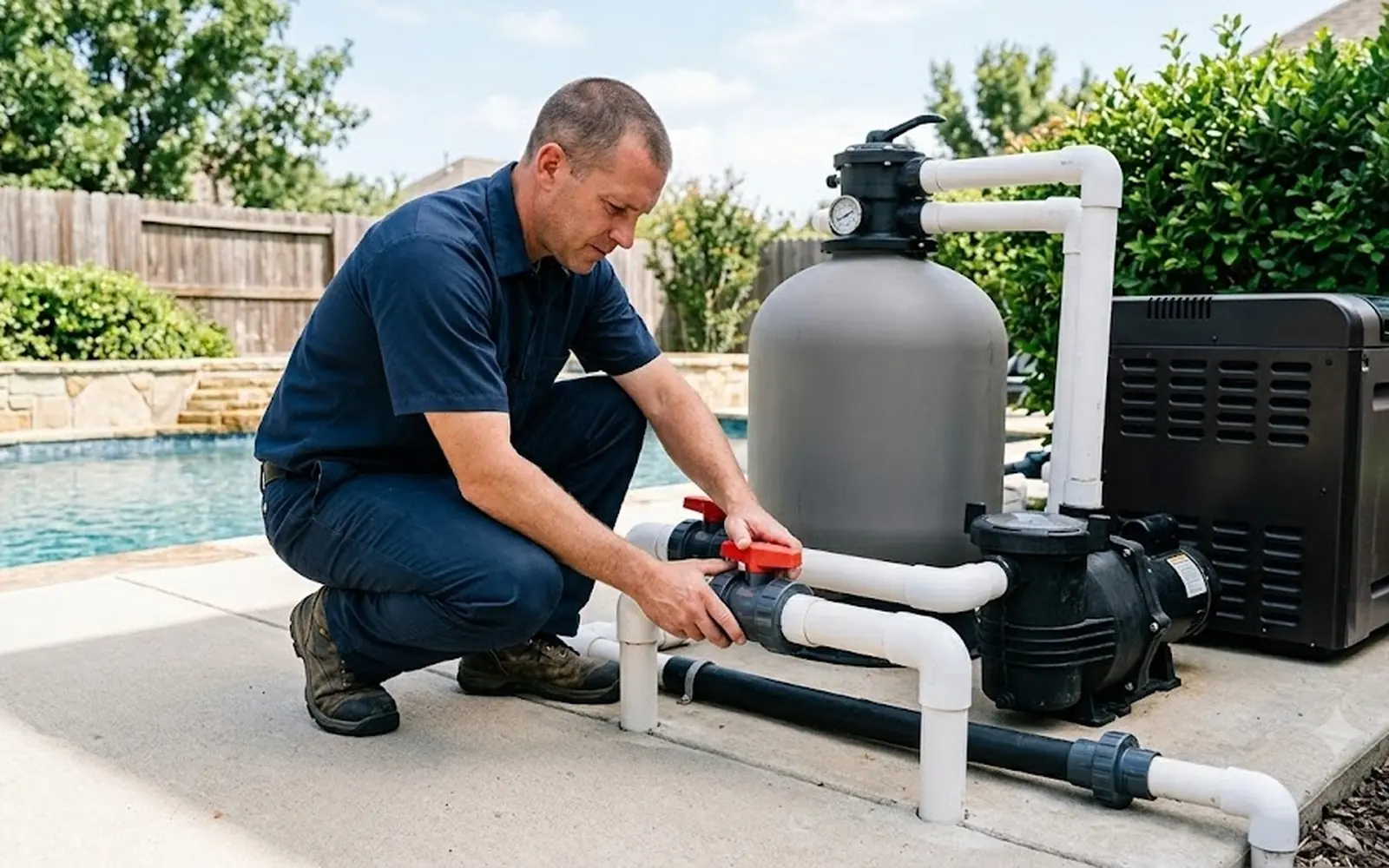
Pool Heaters, Pumps and Equipment
The equipment pad decides your comfort and your utility bill. Here is what each box does and what upgrades actually pay off.
Where pool comfort and operating cost are decided
Equipment terms run all through our pool demand data: heaters, pumps, filters, salt water systems and solar gear together account for thousands of tracked searches. It makes sense, because the equipment pad is where the two things owners complain about, cold water and high bills, actually get fixed.
Heating is the classic upgrade question. Gas heaters heat fast on demand, which suits weekend swimmers and spa combos. Electric heat pumps heat slowly but cheaply in warm air, ideal for keeping a pool at temperature all season in moderate climates. Solar thermal panels have the lowest running cost of all where sun and roof space allow, usually paired with a backup. A solar cover multiplies whichever choice you make by stopping evaporation losses.
The pump is the quiet money decision. Single speed pumps are cheap to buy and expensive to run; variable speed pumps cost more upfront and commonly cut pump electricity by well over half, which is why many utilities offer rebates and many codes now require them. Filters, salt chlorinators and automation round out the pad, each with its own replacement cycle.
The equipment pad, box by box
Each has a job, a lifespan and a right size for your gallons.
Gas pool heaters
Fast on-demand heat for weekend use and spa jumps. Highest running cost per session; needs a properly sized gas line and licensed hookup.
Heat pumps
Pull heat from the air at a fraction of gas running cost. Slower, climate-dependent and best for maintaining temperature over long seasons.
Solar heating
Roof or rack panels with the lowest operating cost available. Output tracks the weather, so most systems pair with a gas or electric backup.
Variable speed pumps
The efficiency upgrade with the fastest payback in most pools, commonly cutting pump energy by more than half versus single speed.
Filters: sand, cartridge, DE
Sand is simple, cartridges filter finer with easy service, DE filters finest with the most fuss. All fail slowly; pressure readings tell the story.
Salt systems and automation
Salt chlorinators generate sanitizer from mild salt water and cells last several seasons. Automation ties pumps, heat and lights to your phone.
What does it cost?
Commonly published ballparks: gas heaters around $2,000 to $4,000 installed, heat pumps $3,000 to $6,000, solar thermal systems $3,000 to $8,000, variable speed pumps roughly $700 to $1,500 installed, and salt chlorination systems about $1,000 to $2,500.
Sizing matters more than brand. An undersized heater runs constantly and disappoints; an oversized pump wastes power and can outrun the plumbing. Make every bidder show the sizing math for your gallons and pipe runs.
Ballparks based on commonly published national averages, stated as assumptions, not measured local pricing. Your competing quotes set the real number for your home and ZIP.
How to hire for pool equipment work
Who does the work
Pool service and equipment companies install most pad gear. Gas lines need a licensed plumber or gas fitter, and new circuits or bonding for heaters and pumps need a licensed electrician. Solar thermal installers are their own specialty.
What pros will ask
Pool volume in gallons, current equipment models and ages, pipe sizes at the pad, gas meter and panel capacity, and what you want fixed: a longer season, a lower bill or both. Photos of the pad get you accurate quotes fast.
What to check before signing
That heater and pump sizing is justified in writing for your pool, not copied from the last job. That permits cover gas and electrical work. And that old equipment removal and disposal is in the price.
Related searches homeowners make
Pulled from the same demand data behind our Swimming Pools, Spas and Hot Tubs category.
Pool Heaters, Pumps and Equipment questions, answered straight
Gas heater or heat pump: which should I buy?
Gas wins for fast, on-demand heating and cold-climate shoulder seasons; heat pumps win on running cost when they have warm air to work with and time to maintain temperature. Weekend swimmers usually favor gas, everyday swimmers in moderate climates favor heat pumps.
Are variable speed pool pumps worth it?
For most pools, yes, and clearly. Running at low speed for long hours moves the same water for a fraction of the electricity of a single speed pump, with commonly reported savings well over half. Rebates in many areas shorten the payback further.
What does a salt water pool actually mean?
It is still a chlorine pool; a salt cell simply generates the chlorine from mildly salty water. Owners like the softer feel and steadier sanitation. Budget for cell replacement every few seasons and keep an eye on salt-sensitive stone and metal around the pool.
How long does pool equipment last?
Rules of thumb: pumps around 8 to 12 years, gas heaters 7 to 12, heat pumps around 10 to 15, filters longer with periodic media changes, salt cells 3 to 7. Past those windows, replacement usually beats repair, especially with efficiency gains.
Can I install pool equipment myself?
Swapping a cartridge or a pressure gauge, sure. Anything touching gas, 240 volt circuits or bonding is licensed-trade work almost everywhere, and unpermitted hookups surface at insurance claims and home sales. The labor line is small compared to the risk.
Get quotes for your pool heater or equipment project
Free for homeowners. No obligation. Up to four local pool and spa pros compete.
Keep planning your pool or spa project
More guides from the Swimming Pools, Spas and Hot Tubs hub.
Inground Pools
Vinyl, fiberglass and gunite compared, with honest build budgets.
Read the guideAbove Ground Pools
Kits, pro installs, decks and the level-base rule that saves warranties.
Read the guideHot Tubs and Home Spas
Portable vs in-ground, wiring, covers and delivery-day reality.
Read the guide