
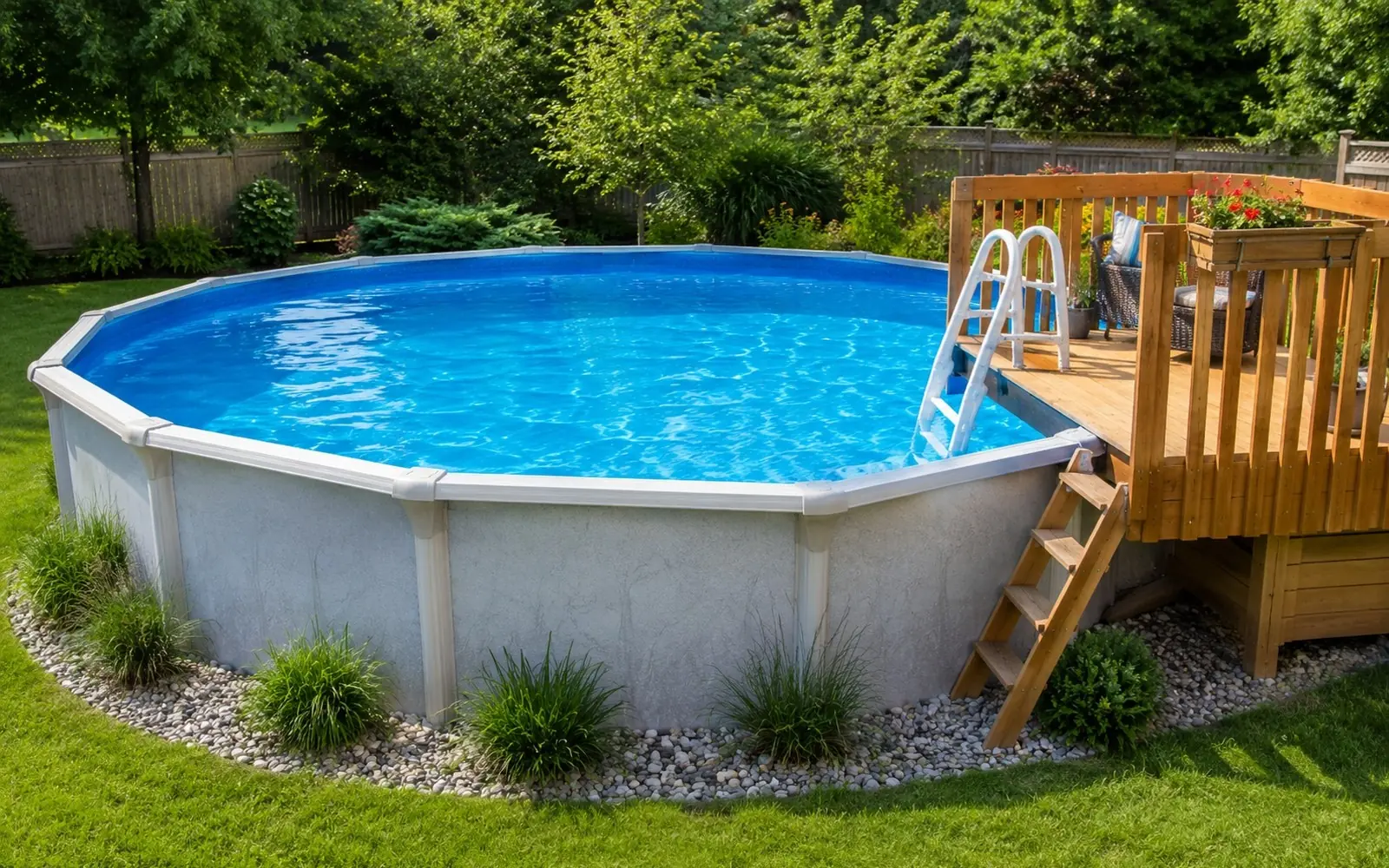
Above Ground Pools
Real swimming at a fraction of inground money. The trick is a level base, a solid install and a deck that ties it together.
The highest-demand pool type in our data
Above ground pools actually out-pull inground pools in our contractor demand data, with nearly twenty thousand tracked searches plus heavy long-tail interest in decks, liners, heaters, covers and installation. The appeal is simple: a family-size pool for a small fraction of inground cost, installed in days instead of months, and removable if you move or change your mind.
Quality varies enormously. Soft-sided inflatable and frame pools from big-box stores are a season-to-season purchase. Proper steel, resin or hybrid wall pools from pool dealers are engineered structures that last fifteen years or more when installed on a truly level, compacted base. That base is the whole game: an out-of-level install stresses the wall, wrinkles the liner and voids most warranties.
The searches for above ground pool decks tell the rest of the story. A well-built deck turns a utilitarian tank into something that lives like an inground pool, and it is usually a separate project with its own permit, built by a deck contractor rather than the pool installer.
Formats and add-ons homeowners weigh
From weekend purchase to multi-year backyard setup.
Steel wall pools
The classic and usually the least expensive rigid option. Galvanized and coated walls resist rust for years; coastal air and salt systems shorten their life.
Resin and hybrid pools
Plastic components will not rust or get hot in the sun. They cost more than steel and are the common recommendation where salt chlorination is planned.
Oval and buttress-free pools
Ovals give real swim lanes but need bracing that eats yard space unless you pay for buttress-free engineering. Confirm the true footprint before ordering.
Semi-inground installs
Some pools are rated to be sunk partially into a slope. It looks far more built-in, but only pools engineered for burial can do it safely.
Decks and surrounds
From a small entry platform to a full wraparound deck. Usually a separate permitted project by a deck builder, and often as expensive as the pool itself.
Liners, heaters and covers
Replacement liners, solar or electric heaters and winter covers dominate the accessory searches. Budget for a liner change roughly every 6 to 10 years.
What does it cost?
Commonly published ballparks run from around $1,500 for a basic kit you assemble yourself to $15,000 for a large resin pool professionally installed with site prep. Professional installation on a prepared, level base is typically a four-figure line worth every dollar.
A full wraparound deck can match or exceed the pool price, which is why many owners phase it: pool and small platform the first season, full deck the next.
Ballparks based on commonly published national averages, stated as assumptions, not measured local pricing. Your competing quotes set the real number for your home and ZIP.
How to hire for above ground pool work
Who does the work
Pool dealers usually offer installation through their own crews or subcontracted installers. Site leveling can involve an excavation or landscaping contractor, the electrical hookup for the pump needs a licensed electrician, and a deck means a deck builder with a permit.
What pros will ask
Yard slope, soil type, access for a skid steer, distance to the electrical panel, and the pool size and wall type you want. A photo of the site and a rough slope estimate separates realistic quotes from guesses.
What to check before signing
That site prep is in the quote, in writing, including hauling away spoil. That the installer, not just the store, warrants the assembly. And that local rules are covered; many towns require permits and fencing for any pool over a couple feet deep.
Related searches homeowners make
Pulled from the same demand data behind our Swimming Pools, Spas and Hot Tubs category.
Above Ground Pools questions, answered straight
Are above ground pools worth it?
For most families weighing cost against swim time, yes. You get real swimming for a small fraction of inground money, and a quality wall pool on a proper base lasts fifteen years or more. The compromise is depth, looks and resale contribution, not function.
Do I need a permit for an above ground pool?
Very often, yes. Many jurisdictions require permits and barrier rules for pools deeper than about two feet, and the electrical circuit for the pump almost always needs one. Check before the truck arrives, not after.
Can I install an above ground pool myself?
Kits are designed for capable DIY assembly, but the base is unforgiving: it must be dead level and compacted. If your yard slopes more than a few inches across the footprint, pay a pro to cut and level the site. Most warranty claims trace back to bad bases.
How long do above ground pools last?
A quality steel or resin pool commonly runs 10 to 20 years. Liners are the wear item, typically replaced every 6 to 10 years for a few hundred dollars in material plus installation.
Can an above ground pool be heated?
Yes. Solar covers and solar heaters are the cheap first step, and electric heat pumps sized for above ground volumes are common. Searches for above ground pool heaters are heavy in our data; just size the unit to the gallons or it will run constantly.
Get quotes for your above ground pool project
Free for homeowners. No obligation. Up to four local pool and spa pros compete.
Keep planning your pool or spa project
More guides from the Swimming Pools, Spas and Hot Tubs hub.