
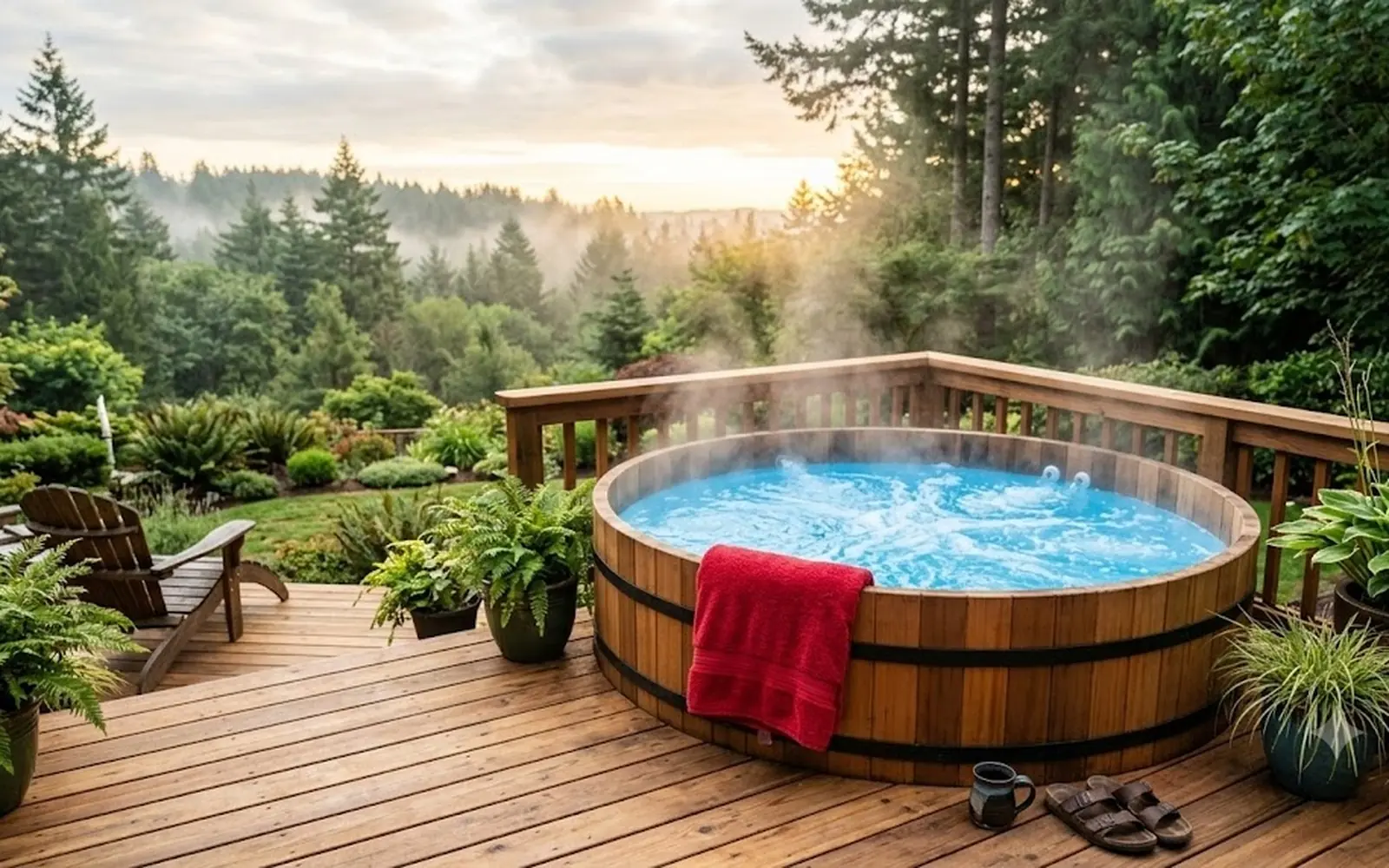
Hot Tubs and Home Spas
The single most searched purchase in this category. Here is how to buy the tub and set up the site properly.
More demand than any pool term we track
Hot tub searches dwarf everything else on the contractor side of this category, with over two hundred thousand tracked queries plus deep long-tail demand for covers, parts, wiring, enclosures and installation. A hot tub is the fastest route to the backyard resort feeling: delivered in a day, usable year round, and priced like a nice appliance rather than a construction project.
Most buyers choose a portable spa, which is a self-contained acrylic shell with pumps and heater built in. Plug-and-play models run on a standard 120 volt outlet and heat slowly; full-size tubs want a dedicated 240 volt circuit with a disconnect, which is licensed electrician territory and typically a few hundred to over a thousand dollars of site work. In-ground spas, built like a small gunite pool, are the custom top of the market and usually part of a pool project.
The unglamorous details decide long-term happiness: a flat structural base such as a reinforced pad or rated deck, a quality insulating cover, and honest attention to ongoing water care. Wet weight of a filled six-person tub can exceed two tons, so the base is not the place to improvise.
Spa types and site decisions
From plug-in convenience to built-in construction.
Plug-and-play tubs
Run on a regular outlet, no electrician needed. Cheaper and portable, but slower to heat and less powerful. A sensible first tub for testing the habit.
Full-size 240V portable spas
The mainstream choice: faster heating, stronger jets, better insulation. Requires a dedicated circuit, GFCI disconnect and licensed electrical work.
Swim spas
Long tanks with a swim current, doubling as compact lap pools. Priced between a premium tub and an above ground pool, and heavy enough to demand engineered support.
In-ground and custom spas
Gunite spas built into patios or attached to pools. Full design freedom, pool-level budgets, and a pool contractor rather than a dealer runs the job.
Covers and enclosures
Cover searches are among the biggest in our data for good reason: a tight insulating cover is the difference between modest and painful electric bills. Gazebos and enclosures extend the season.
Pads, decks and placement
A filled tub can weigh over 4,000 pounds. Plan a reinforced concrete pad or a deck rated for the load, with drainage and service access on all sides.
What does it cost?
Commonly published ballparks put entry plug-and-play tubs around $3,000 to $6,000, mainstream 240 volt spas around $6,000 to $12,000, and premium or swim spa models well beyond that. In-ground gunite spas price like small pools.
Add site costs: the pad or deck reinforcement, the electrical run, and a quality cover if one is not bundled. Running costs vary with climate and insulation; a well-covered modern tub is commonly reported in the tens of dollars per month of electricity.
Ballparks based on commonly published national averages, stated as assumptions, not measured local pricing. Your competing quotes set the real number for your home and ZIP.
How to hire for hot tub and spa work
Who does the work
The dealer handles delivery and placement. A licensed electrician runs the 240 volt circuit and GFCI disconnect. A concrete contractor or deck builder handles the base, and in-ground spas are a licensed pool contractor's job start to finish.
What pros will ask
Where the tub will sit, the path from the street including gate widths and turns, distance to the electrical panel, and how many people you realistically want to seat. Crane delivery is a real line item when access is tight.
What to check before signing
That electrical work is permitted and done by a licensed electrician; insurers care. That delivery includes placement on your prepared base, not curbside drop. And that the quote names the cover, steps and startup chemicals rather than leaving them as surprise add-ons.
Related searches homeowners make
Pulled from the same demand data behind our Swimming Pools, Spas and Hot Tubs category.
Hot Tubs and Home Spas questions, answered straight
Do I need an electrician for a hot tub?
For a full-size 240 volt spa, yes: it needs a dedicated circuit with a GFCI disconnect, installed to code and usually permitted. Only plug-and-play 120 volt models avoid this, at the cost of slower heating and weaker jets.
Can I put a hot tub on my deck?
Only if the deck can carry it. A filled six-person tub with occupants can exceed two tons over a small footprint. Have a deck builder or engineer verify framing before delivery; reinforcing an existing deck is a routine, quotable job.
How much does a hot tub cost to run?
It depends on climate, insulation and cover quality. Owners of modern, well-covered tubs commonly report electricity in the tens of dollars per month, with cold climates and tired covers pushing it higher. The cover is the cheapest efficiency upgrade there is.
What maintenance does a hot tub need?
Test and balance the water a couple times a week, rinse filters monthly, and drain and refill roughly every three to four months. Local dealers and service companies offer valet plans if you would rather pay than fiddle.
Hot tub vs swim spa: which one?
Buy a hot tub for soaking and a swim spa if you genuinely want exercise. Swim spas cost two to four times more, need more space and structure, and are wasted money if the current never gets used. Wet test both before deciding.
Get quotes for your hot tub or spa project
Free for homeowners. No obligation. Up to four local pool and spa pros compete.
Keep planning your pool or spa project
More guides from the Swimming Pools, Spas and Hot Tubs hub.
Home Saunas
Infrared vs traditional, barrel builds and basement rules.
Read the guidePool Covers, Fences and Safety
Safety covers, auto covers, fencing codes and alarm layers.
Read the guidePool Repair and Maintenance
Leaks, liners, winterizing and what weekly service really includes.
Read the guide