
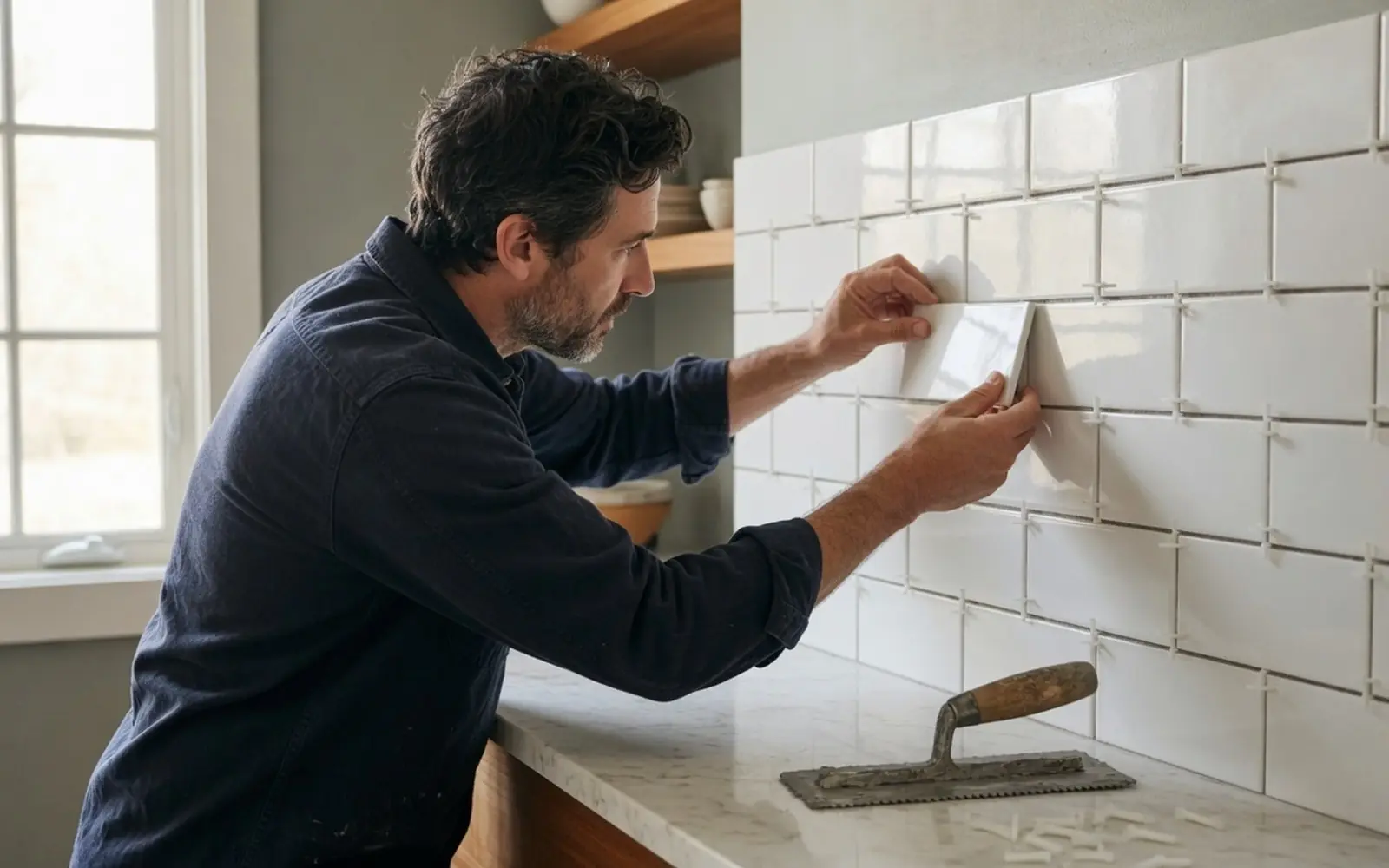
Kitchen Backsplash
Twenty square feet of wall that defines the whole room. Small area, outsized style decision.
The highest style-per-dollar surface in the kitchen
Backsplash and tile searches form one of the stronger demand blocks in our kitchen data, and it is easy to see why: the backsplash is a small area, usually 20 to 40 square feet, that sits at eye level and sets the personality of the room. It is also the most approachable of the kitchen trades to buy, since a typical job is one to three days and does not disturb plumbing or cabinets.
Function first: the backsplash exists to make the wall behind the counters and range washable. Anything glazed or sealed does that job. The decisions that actually matter are material, layout and grout, roughly in that order of cost and exactly the reverse order of how much people think about them.
Grout deserves a paragraph. Grout color changes the look of the same tile completely: matching grout makes the wall read as one surface, contrasting grout turns the layout into graphics. And grout type changes the maintenance: modern urethane or epoxy grouts resist staining far better than cementitious grout near a range. Ask every bidder which grout is in the quote.
Materials and layouts, priced honestly
Installed ballparks per square foot including labor, stated as assumptions. A typical backsplash covers 20 to 40 square feet.
Ceramic subway tile
Roughly $10 to $25 installed. The evergreen choice. Running bond, stacked, vertical or herringbone layouts get four different rooms from one cheap tile.
Porcelain and larger-format tile
Roughly $15 to $30 installed. Fewer grout lines, more contemporary. Large formats punish wavy walls, so prep matters.
Glass and mosaic sheets
Roughly $20 to $50 installed. Mesh-backed sheets install fast but read busy; glass shows adhesive sins and wants an experienced setter.
Natural stone and zellige
Roughly $25 to $60 installed. Marble, travertine and handmade zellige bring depth and variation; all want sealing and a setter who has laid them before.
Slab backsplash
Roughly $50 to $100+ installed. The counter material running up the wall. Seamless, dramatic, priced like countertop because it is countertop.
Peel-and-stick and panels
Roughly $5 to $15 DIY. Legitimate for rentals and quick refreshes; nobody will mistake it for tile at arm's length, and heat near the range is a check-the-spec item.
What does it cost?
For a typical 30 square foot splash: ceramic subway commonly lands between $600 and $1,200 installed, stone and mosaic work between $1,000 and $2,500, and slab installations above that. Minimum job charges mean tiny backsplashes do not get proportionally tiny prices.
Cost levers: tile price, layout complexity (herringbone costs more labor than running bond), outlets and window cuts, wall condition behind the old splash, and whether removal of existing tile is included. Demo surprises live behind old tile, so a small contingency is honest budgeting.
Ballparks based on commonly published national averages, stated as assumptions, not measured local pricing. Your competing quotes set the real number for your home and ZIP.
How to hire for kitchen backsplash work
Who does the work
Tile setters and remodelers; countertop fabricators handle slab splashes. This is also the most DIY-attempted kitchen trade, and the difference shows at the outlets and edges, which is exactly where eyes go.
What pros will ask
Linear feet of counter and height to cabinets, photos of the wall including outlets and windows, whether old tile comes off, and your tile choice. Buy 10 to 15 percent extra tile for cuts and the future repair box.
What to check before signing
Which grout type and color is included, how outlet extensions are handled (tile thickness moves outlets), edge trim details like metal profiles or bullnose, and whether caulk, not grout, is specified where tile meets counter.
Related searches homeowners make
Pulled from the same demand data behind our Kitchen Remodeling category.
Kitchen Backsplash questions, answered straight
How much does a kitchen backsplash cost?
A typical 30 square foot ceramic tile backsplash commonly runs $600 to $1,200 installed; stone, mosaic and complex layouts run $1,000 to $2,500; slab splashes more. These are national ballparks stated as assumptions, and small jobs carry minimum charges.
How high should the backsplash go?
Standard is counter to the bottom of the upper cabinets, about 18 inches. Behind the range, running to the hood looks intentional. Full-height splashes on open walls are the current designer default when budget allows.
What grout should I ask for?
Near cooking zones, urethane or epoxy-based grouts resist grease and stain dramatically better than standard cement grout. Color-wise, matching grout makes the wall calm, contrasting grout makes the pattern loud. Ask for the grout spec in writing.
Can a backsplash go over existing tile or paint?
Over sound painted drywall, yes, with proper prep. Over existing tile, sometimes, but added thickness crowds outlets and edges, so most pros prefer removal. Removal occasionally opens drywall repairs, which honest quotes flag as a contingency.
Is peel-and-stick backsplash worth it?
As a rental refresh or a bridge until the real remodel, yes. As a substitute for tile, no. Check heat ratings near ranges, and expect visible seams up close. The good news: it comes down without a demo bill.
Get quotes for your kitchen backsplash project
Free for homeowners. No obligation. Up to four local kitchen pros compete.
Keep planning your kitchen
More guides from the Kitchen Remodeling hub.