
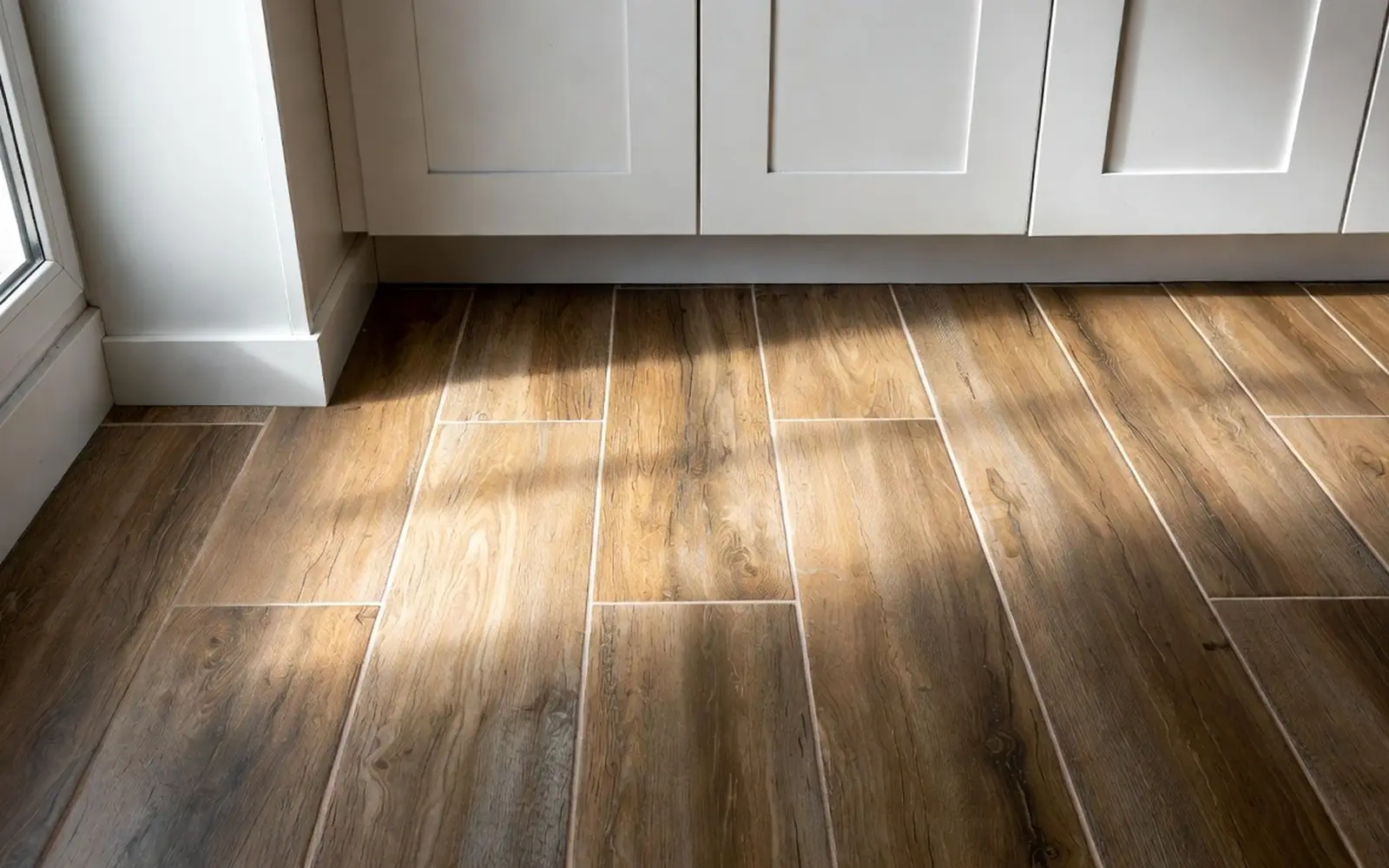
Kitchen Flooring
Water, dropped pans and the most foot traffic in the house. The floor has the hardest job in the kitchen.
The surface that has to survive everything
Kitchen floors live a harder life than any other floor in the house: standing water at the sink, dropped cast iron, chair scrapes and constant traffic. The material question is therefore mostly a durability and water question, and it is worth deciding early because flooring interacts with everything else in a remodel.
The sequencing question comes up on every project: floors before or after cabinets? The modern default is floating floors (luxury vinyl, laminate) stop at the cabinets, while glue-down or nail-down floors and tile often run under them. Your installer and cabinet installer need to agree on this before either starts, because it changes floor heights, toe kick reveals and appliance fit, especially the dishwasher.
Height matters more than people expect. A new floor over an old one can raise the surface enough to trap the dishwasher under the counter and create trip steps at doorways. Good installers measure this; quotes that skip the question deserve suspicion.
Materials that make sense in kitchens
Installed ballparks per square foot, published national ranges stated as assumptions. A typical kitchen floor runs 150 to 250 square feet.
Luxury vinyl plank and tile (LVP/LVT)
Roughly $3 to $8 installed. Waterproof, warm underfoot, convincing wood looks. The current kitchen default for good reasons.
Porcelain and ceramic tile
Roughly $10 to $25 installed. The durability king, fully waterproof, cold and hard underfoot. Grout is the maintenance item.
Hardwood
Roughly $8 to $15 installed. Beautiful and refinishable, tolerates kitchens if spills are wiped, hates standing water. Site-finished beats prefinished for sealing.
Engineered wood
Roughly $7 to $13 installed. Real wood face over a stable core, better with humidity swings than solid, limited refinishes.
Laminate
Roughly $4 to $8 installed. Modern water-resistant laminates are fine in kitchens; older laminate swells at the seams. Check the water rating, not the brand.
Sheet vinyl and linoleum
Roughly $2 to $6 installed. Seamless, waterproof, budget-friendly. Linoleum is the natural-material comeback story of the category.
What does it cost?
For a typical 150 to 250 square foot kitchen: sheet vinyl or laminate can come in under $1,500 installed, LVP commonly lands $1,000 to $2,500, hardwood $2,000 to $4,500, and porcelain tile $2,500 to $6,000. Tear-out of old flooring, subfloor repair and floor leveling are the usual surprise lines.
If the kitchen remodel includes cabinets, coordinate the flooring scope with the remodeler rather than hiring separately; the sequencing and height questions above are where separately hired trades point fingers at each other.
Ballparks based on commonly published national averages, stated as assumptions, not measured local pricing. Your competing quotes set the real number for your home and ZIP.
How to hire for kitchen flooring work
Who does the work
Flooring installers and tile setters, or the remodeler's subs in a full renovation. Tile is its own craft; a great LVP crew is not automatically a great tile crew.
What pros will ask
Square footage, what the existing floor is and whether it comes up, subfloor condition and material, whether cabinets are staying, and appliance heights. Photos of doorway transitions help.
What to check before signing
Whether tear-out, disposal, underlayment and transitions are in the price, how appliance removal and reinstall is handled, and who owns the dishwasher-fits-back-in problem. Get finished floor height in writing.
Related searches homeowners make
Pulled from the same demand data behind our Kitchen Remodeling category.
Kitchen Flooring questions, answered straight
What is the best floor for a kitchen?
For most homes today, luxury vinyl plank: waterproof, durable, comfortable and mid-priced. Porcelain tile wins on pure durability, hardwood wins on looks and resale continuity with adjoining rooms. There is no single right answer, only the right trade for your house.
Do floors go in before or after cabinets?
Floating floors typically stop at the cabinets; nail-down, glue-down and tile floors often run under them. Either can be correct, but your flooring and cabinet installers must agree in advance because the choice changes heights and dishwasher fit.
Can I put new flooring over the old floor?
Sometimes. LVP and laminate often float over sound existing floors. The risks are added height trapping appliances and telegraphing of old damage. An installer who measures heights at the dishwasher and doorways is showing you they have done this before.
Is hardwood a mistake in a kitchen?
No, millions of kitchens have it and it looks wonderful, but it demands discipline: wipe spills promptly and expect refinishing over the years. If the household is hard on floors or the sink area stays wet, porcelain or LVP will age better.
How long does a kitchen floor install take?
LVP or laminate in an emptied kitchen is commonly 1 to 2 days. Tile runs 3 to 5 days with cure times. Add time for tear-out, subfloor repairs, and moving appliances out and back.
Get quotes for your kitchen flooring project
Free for homeowners. No obligation. Up to four local kitchen pros compete.
Keep planning your kitchen
More guides from the Kitchen Remodeling hub.