
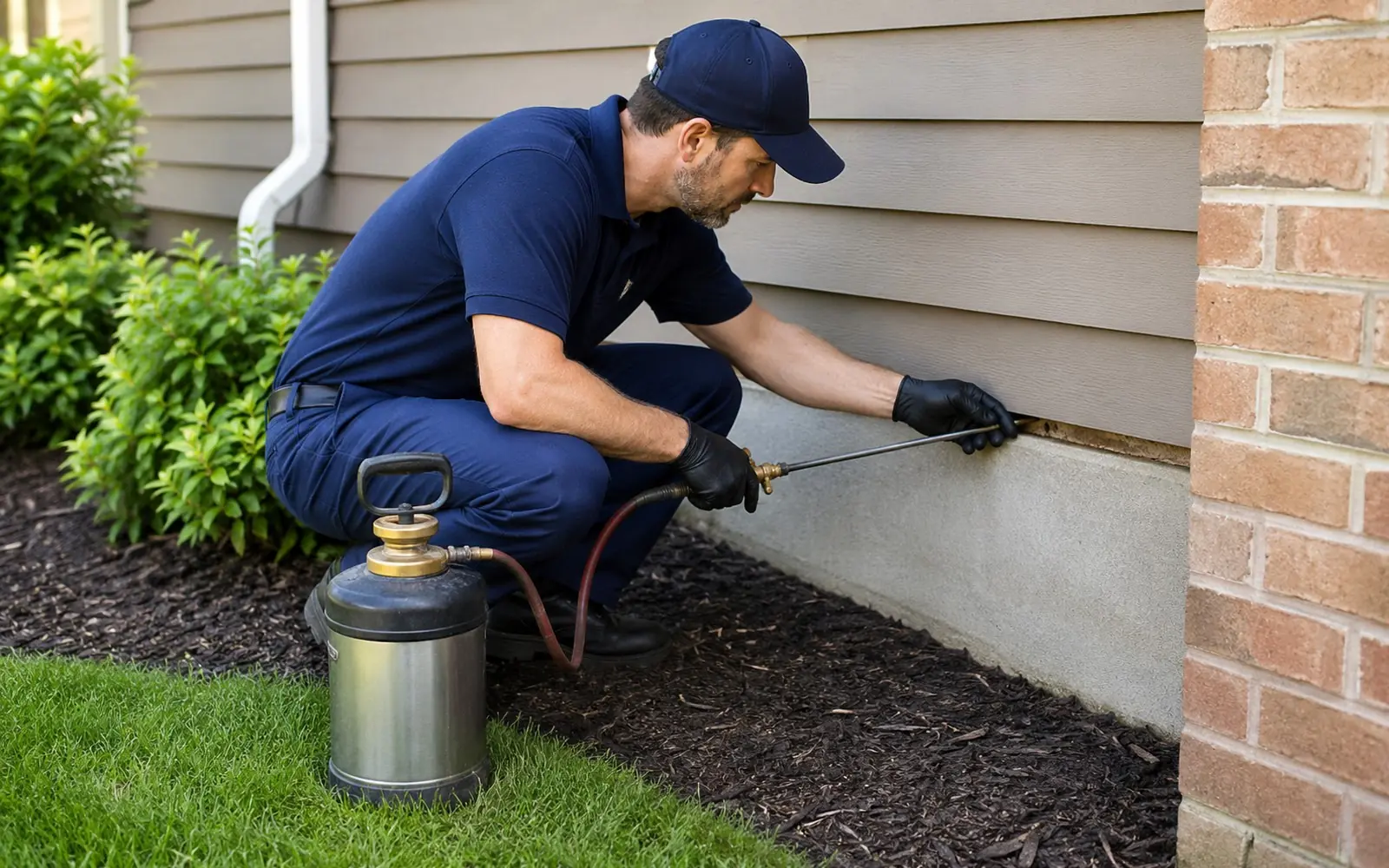
Termite Control and Inspection
Twenty six thousand termite searches, plus a long tail of city-by-city demand. The pest that eats houses, handled methodically.
The highest-stakes pest in the category
Termites draw about twenty six thousand tracked searches in our demand data, with termite control, inspection and treatment terms adding thousands more, and a striking long tail of town-by-town termite searches showing how local the worry runs. The concern is rational: termites work silently inside structures, and damage is typically excluded from homeowners insurance because it is considered preventable maintenance.
Species determines strategy. Subterranean termites, the most widespread and destructive group, live in soil and commute into structures through mud tubes; they are fought with liquid soil barriers and in-ground bait systems. Drywood termites, common in warm coastal regions, live entirely inside wood; localized infestations get spot treatments while widespread ones lead to structure fumigation. A licensed inspector identifies which problem you have before anyone sells you a method.
The buying pattern that serves homeowners best: an annual inspection habit, competing quotes on any treatment plan, and a written contract with a renewal and re-treatment guarantee. Termite work is also central to real estate: wood-destroying organism reports are standard in home sales across much of the country, and a transferable termite bond is genuine resale paper.
Inspection and treatment options
Method follows species and construction, not the salesperson's inventory.
Annual inspections
A licensed inspector checks foundations, crawl spaces and moisture zones for tubes, galleries and frass. Cheap, often free, and the habit that catches problems early.
Liquid soil treatments
A treated zone in the soil around and under the foundation that eliminates subterranean colonies contacting it. The conventional standard, lasting years.
Bait station systems
In-ground stations that colonies feed on and carry home. Less invasive than trenching, monitored on a service schedule, strong where drilling is impractical.
Spot and localized treatment
Targeted wood injection and treatment for contained drywood infestations, verified by inspection rather than hope.
Structural fumigation
Whole-structure tenting for widespread drywood termites, common in warm coastal markets. Days out of the house and real money, decisively effective.
Prevention and moisture control
Wood-to-soil contact removed, grades and gutters fixed, crawl spaces dried. The unglamorous work that makes structures boring to termites.
What does it cost?
Commonly published ballparks: inspections free to around $150, with formal real estate reports at set local fees; liquid soil treatments around $1,200 to $3,000 for typical homes; bait systems $1,500 to $3,500 installed plus annual monitoring; spot treatments in the hundreds; and structure fumigation commonly $2,000 to $8,000 depending on size.
Annual renewal contracts, commonly a few hundred dollars a year, keep the guarantee alive and are what makes a termite bond transferable at sale.
Ballparks based on commonly published national averages, stated as assumptions, not measured local pricing. Your competing quotes set the real number for your home and ZIP.
How to hire for termite control work
Who does the work
Termite work is licensed pest control territory, often under a specific wood-destroying organism category; verify the license and insurance. Real estate transactions typically require reports from licensed inspectors, and repairs of damaged framing bring in carpenters or contractors.
What pros will ask
Construction type, slab or crawl space, any evidence you have seen: mud tubes, swarms, hollow wood or discarded wings, plus moisture history and past treatments. For sales, the closing date drives the report and treatment schedule.
What to check before signing
That the proposal names the species, method, treated area and product. That the guarantee is written: renewal terms, re-treatment coverage and whether damage repair is included or excluded. And that you get competing quotes, because methods and prices vary more here than almost anywhere in pest control.
Related searches homeowners make
Pulled from the same demand data behind our Pest Control category.
Termite Control and Inspection questions, answered straight
How do I know if I have termites?
Classic signs: pencil-wide mud tubes on foundations and crawl space piers, wood that sounds hollow or crushes at pressure, discarded wings on sills after a spring swarm, and blistered or bubbling paint over galleries. Any one of them justifies a professional inspection, which is cheap or free.
Does homeowners insurance cover termite damage?
Almost never: insurers classify termite damage as preventable maintenance rather than sudden loss. That is exactly why annual inspections and a maintained treatment guarantee matter; the protection you buy from a pest company is effectively the insurance policy for this risk.
Liquid treatment or bait stations: which is better?
Both work when properly applied; they trade differently. Liquid barriers act fast and last years but involve trenching and sometimes drilling. Baits are minimally invasive and kill colonies at the source but work over months and require monitoring service. Construction, soil and your patience decide it, and honest companies offer both.
What is a termite bond and is it worth it?
A service contract, renewed annually, under which the company re-inspects and re-treats as needed, sometimes covering repair of new damage. In termite-heavy regions it is standard homeownership equipment, and a transferable bond is genuinely valuable paper when selling.
Do termites mean my house is falling down?
Almost never at the point of discovery. Termites work slowly, and typical infestations caught by inspection involve treatable damage. The catastrophes come from decades of no inspection. Treat, repair the affected members, keep the renewal active and move on.
Get quotes for your termite control project
Free for homeowners. No obligation. Up to four local pest control pros compete.
Keep planning your pest control project
More guides from the Pest Control hub.