
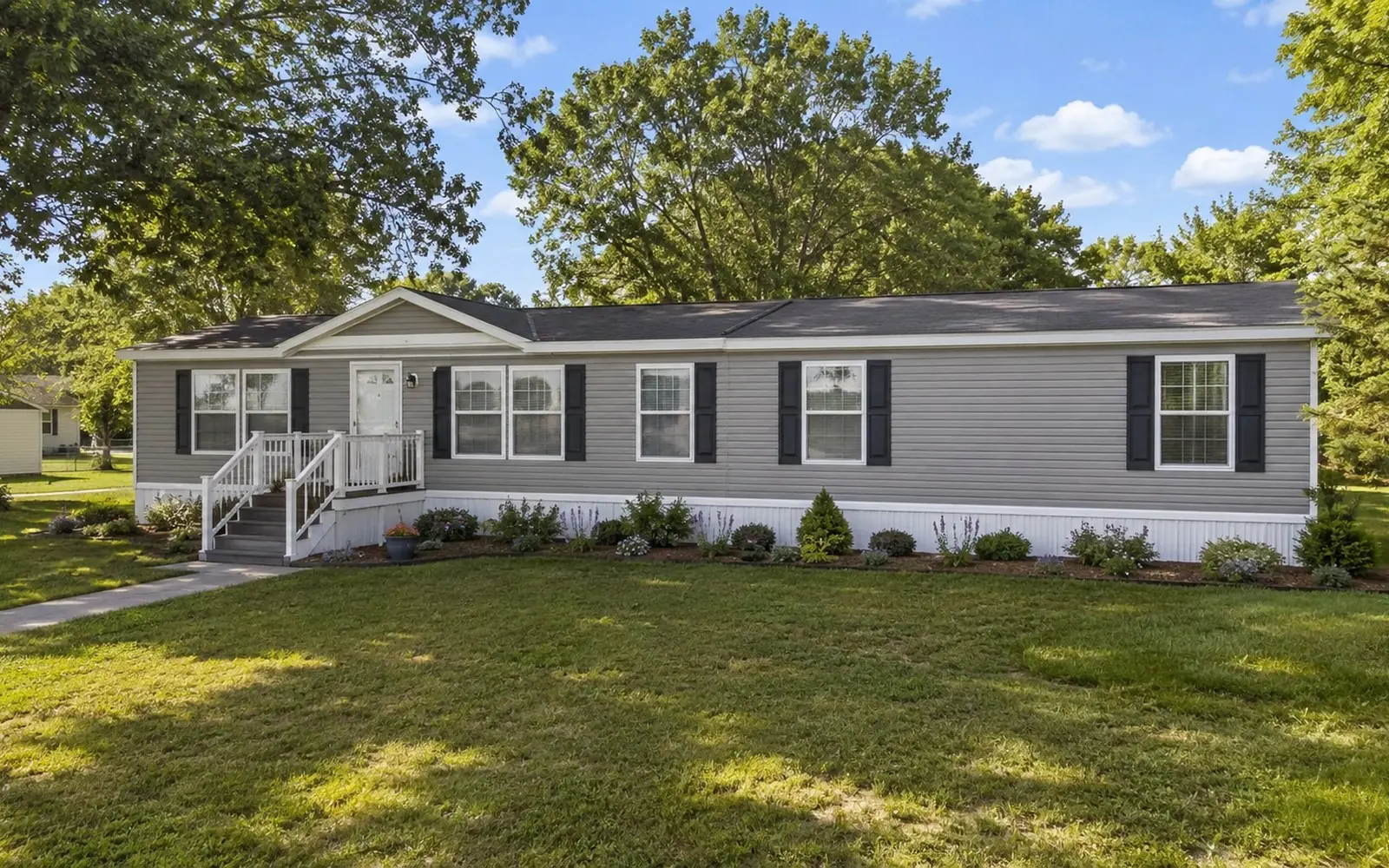
Manufactured vs Modular vs Mobile
Three words, three legal categories. Which code applies, which one carries a HUD label, and why the difference follows the home for life.
Three words, three legal categories, and only one federal code
Manufactured, modular and mobile are not interchangeable. They are three separate legal categories, and the one in front of you decides which building code applies, how the home gets titled, and what sort of loan a lender will write. The line that separates two of them is a date: June 15, 1976.
A manufactured home is built to a federal code, 24 CFR Part 3280, the Manufactured Home Construction and Safety Standards2. A modular home is also built in a factory, but it has to comply with the same regional, state or local codes as a site-built house1. A mobile home is the pre-1976 article. It was built before the federal code took effect and does not meet those standards1. HUD puts the rule plainly: every manufactured home built in the United States after June 15, 1976 must be certified by its manufacturer as built to the Standards3.
The scale of the three is very different. There are roughly 6.7 million occupied manufactured homes in the country, about six percent of the housing stock, and 13 percent of occupied homes in rural and small town communities1. Modular is far smaller. Of 1,005,000 new single-family homes completed in 2025, Census counted 975,000 site-built, 14,000 modular and 16,000 panelized or precut, so modular is about 1 percent4. That share has shrunk, not grown: in 1992 modular was 33,000 out of 964,000 completions, or 3 percent4.
The six labels you will see on a lot or a loan file
Retailers, lenders and county assessors all use these terms, sometimes loosely. Here is what each one actually means.
Manufactured home
The federal definition is specific. A structure transportable in one or more sections that is 8 body feet or more wide, or 40 body feet or more long, in the traveling mode, or 320 or more square feet when erected on site, built on a permanent chassis and designed to be used as a dwelling2.
Mobile home
Factory-built housing constructed before June 15, 1976. It predates the federal standards and does not meet them1. The term survives in everyday speech and in some local ordinances, but on a title, an insurance binder or a loan application it points at a genuinely different and older class of home.
Modular home
Sections are built in a factory, like a manufactured home, but they must comply with the same regional, state or local codes as a traditional site-built house rather than the national HUD Code1. There is no HUD label on a modular home, because the federal manufactured housing standards do not apply to it.
Panelized and precut
Census tracks a third factory category alongside site-built and modular in its Survey of Construction, footnoted as including panelized and precut units4. In 2025 that group was 16,000 of 1,005,000 completions, slightly larger than modular4. These homes are finished on site under local code.
RVs and park models
The regulatory definition of a manufactured home expressly excludes any self-propelled recreational vehicle2. CFPB adds that RVs and park-model homes are generally treated as motor vehicles rather than housing1. That treatment changes the title, the tax and the lending entirely, so do not assume housing rules apply.
Single-section and multi-section
Within the manufactured category, size is the biggest variable. Of 103,314 units shipped in 2024, 45,063 were single-section and 58,251 multi-section7. Average floor area in 2025 was 1,073 square feet for single-section homes and 1,766 for double-section, with a national average of 1,4716.
What does it cost?
For manufactured homes there is a real federal number. The Census Bureau's Manufactured Housing Survey, sponsored by HUD, puts the 2025 average sales price of a new manufactured home at $127,200 overall, $85,600 for a single-section home and $157,100 for a double-section5. Those are sale prices for the home. They do not include land, site preparation, foundation work, delivery or installation.
For modular homes there is no comparable figure at all. Census records modular as a construction method in the Survey of Construction but publishes no price series for it4, and the Manufactured Housing Survey covers only HUD Code homes5. No federal agency publishes a national modular home price. Anyone quoting one is quoting an estimate, not a survey. The honest answer is that modular pricing has to come from local builder bids.
Prices are from the Census Bureau Manufactured Housing Survey, 2025 annual data, and cover the home only. They exclude land, site work, foundation, delivery and installation, and no source publishes those.
How to buy in the right category
Who does the work
Manufactured homes come from a HUD-regulated factory through a retailer. HUD enforces the standards directly and through state agencies, inspects factories and retailer lots, regulates installation, administers dispute resolution, collects a fee for each home built, and authorizes the certification label for each compliant section8. Modular homes are inspected by state and local officials instead.
What pros will ask
Expect three questions before anyone quotes you. Will you own the land, or is the home going into a land-leased community. Is the home going to be titled as personal property or as real estate. And which wind zone and roof load zone is the site in, because the home must be designed for the zone it lands in, and that is printed on the data plate2.
What to check before signing
On a manufactured home, look for a permanent label on each transportable section, roughly 2 inches by 4 inches, etched on aluminum and riveted on2. Then find the data plate near the main electrical panel and read the serial number, model, date of manufacture, and the roof load and wind load zones the home was designed for2. A modular home will have neither.
Related searches homeowners make
Pulled from the same demand data behind our Mobile & Modular Homes category.
Manufactured, modular and mobile questions, answered straight
Is a mobile home the same thing as a manufactured home?
No, and the difference is a date. Mobile homes and trailers are factory-built housing constructed before June 15, 1976 and they do not meet the HUD standards for manufactured housing1. Manufactured homes are the ones built after that date to HUD's Manufactured Home Construction and Safety Standards, published at 24 CFR Part 32803. The words get used interchangeably in conversation, but a lender, an insurer and a county assessor will treat the two very differently, so use the right one on paperwork.
Does a modular home have a HUD tag?
No. A modular home is built in a factory, but it complies with the same regional, state or local codes that a site-built house does, not with the national HUD Code1. The HUD certification label is the manufacturer's certification that a home section was built to the federal Manufactured Home Construction and Safety Standards3, so it only appears on homes those standards govern. If a seller tells you a modular home has a HUD tag, something is wrong with the description.
How small can a manufactured home be?
The regulation sets thresholds rather than a single number. A manufactured home is transportable in one or more sections and is 8 body feet or more in width, or 40 body feet or more in length, in the traveling mode, or 320 or more square feet when erected on site2. HUD's plain-language version says manufactured homes are dwelling units of at least 320 square feet with a permanent chassis3. Square footage is measured at the largest horizontal projections and includes expandable rooms and cabinets, but not bay windows2.
Which is more common, modular or manufactured?
Manufactured, by a wide margin. Manufactured home shipments were 102,700 units in 20259, and in 2024 manufactured homes were 9 percent of new single-family units, 103,000 against 1,013,000 site-built starts7. Modular completions were 14,000 in 2025, roughly 1 percent of the 1,005,000 single-family homes completed4. Manufactured housing also holds a much larger share of the existing stock, at about 6.7 million occupied homes1.
Can my state apply its own building code to a manufactured home?
Not to anything the federal standards already cover. The rule says no state manufactured home standard covering aspects governed by the federal standards may be established or stay in effect unless it is identical to the federal standards10. A state also may not require a certified home to undergo state inspection for compliance with a covered aspect, or require a state label certifying conformance10. These regulations are described as the exclusive system for enforcing the federal standards10.
Where these facts came from
Every figure on this page was read out of the page linked below. We do not cite cost aggregators.
- CFPB, Manufactured Housing Finance: New Insights from the HMDA Data, May 2021
- 24 CFR Part 3280, Manufactured Home Construction and Safety Standards
- HUD, Manufactured Home Resources
- Census Bureau, Characteristics of New Housing, construction method
- Census Bureau, Manufactured Housing Survey, average sales price by state
- Census Bureau, Manufactured Housing Survey, square feet of floor area
- Census Bureau and HUD, cost and size comparison, manufactured and site-built
- HUD, Manufactured Housing Program
- Census Bureau, shipments of new manufactured homes
- 24 CFR Part 3282, procedural and enforcement regulations
Get quotes for your manufactured vs modular vs mobile project
Free for homeowners. No obligation. Up to four local pros compete.
Keep planning
More guides from the Mobile & Modular Homes hub.
The HUD Code Explained
24 CFR Part 3280 is a federal building code that overrides your state's. Here is what it covers and what it puts on the home itself.
Read the guideChattel Loans vs Mortgages
Most manufactured homes are financed as personal property, not real estate. Federal data shows what that costs in rate, term and approval odds.
Read the guideManufactured Home Prices
The Census Bureau publishes an actual average sales price by size and region. Here it is, and here is exactly what it leaves out.
Read the guide