
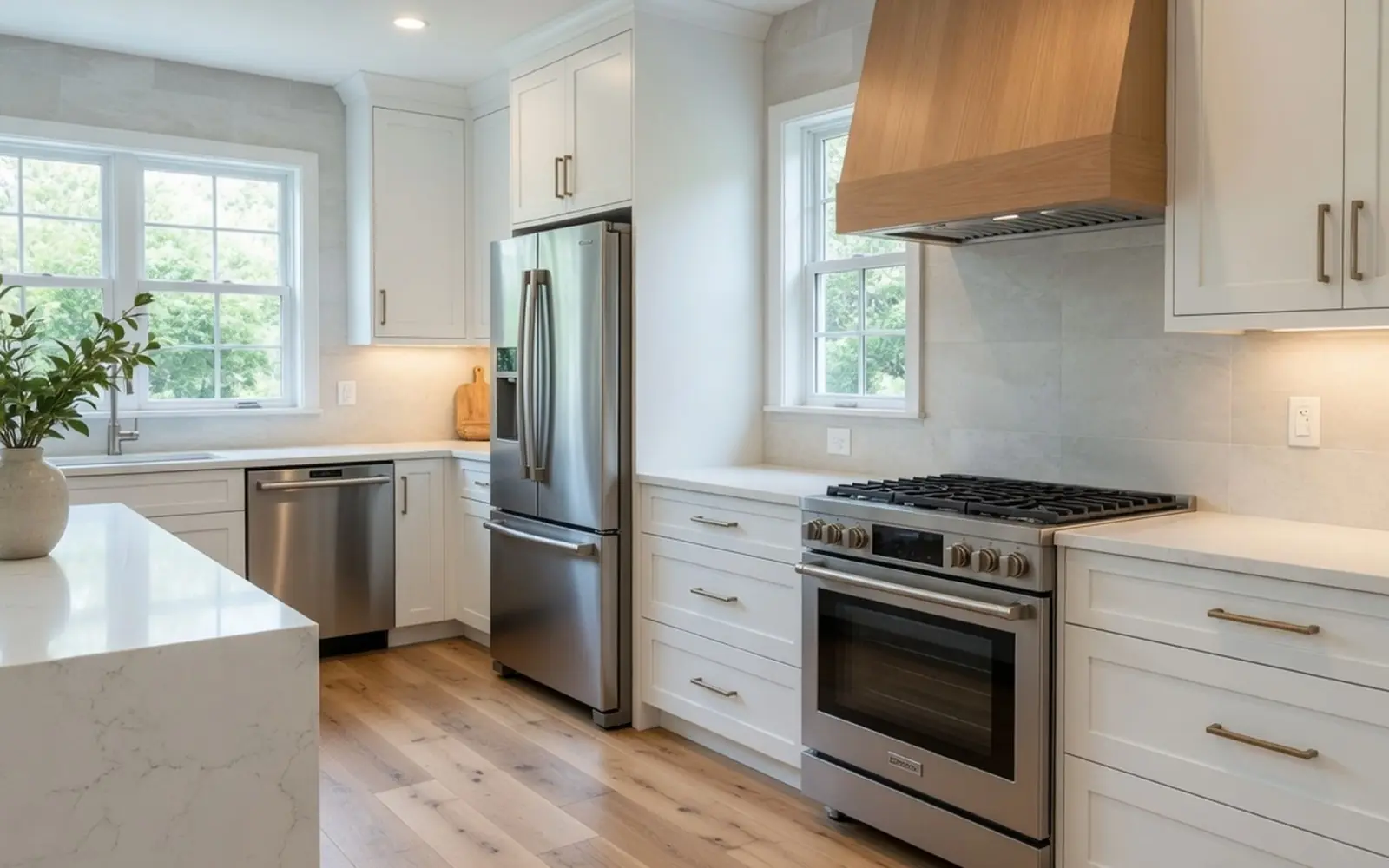
Kitchen Appliances
Five machines, one budget line, and delivery dates that can make or break the remodel schedule.
Plan the package, not the purchases
Appliance demand in our kitchen data is large and brand-heavy; a major mixer and appliance brand alone accounts for tens of thousands of monthly searches. When homeowners plan a remodel, though, the useful unit is not the single appliance but the package: range, refrigerator, dishwasher, hood and microwave, decided together.
Deciding together matters for three reasons. Sizes lock the cabinet plan: a 36-inch range versus a 30-inch, or a standard-depth fridge versus counter-depth, changes the cabinet order. Finishes want to match across the room, which is easier bought as a suite. And delivery dates gate the schedule; a remodel that is done except for a back-ordered fridge is not done.
Fuel is the era-defining choice. Induction cooking has moved from curiosity to the default recommendation in much of the industry: faster than gas, no combustion in the house, easy cleanup, with cookware compatibility as the one honest caveat. Gas remains beloved and legitimate where lines exist. Switching either direction is an electrician or plumber line item, not just an appliance swap.
The package, piece by piece
Prices below are typical retail ballparks per unit before installation. Budget the package first, then allocate; one splurge piece per kitchen is a sane rule.
Ranges and cooktops
Roughly $600 to $3,500 for mainstream units; pro-style far beyond. Induction, gas or electric is the decision that can pull an electrician into the job.
Refrigerators
Roughly $800 to $4,000 mainstream. Counter-depth models cost more per cubic foot and buy back walkway; measure doorways before you fall for a wide unit.
Dishwashers
Roughly $400 to $1,500. Pay for quiet (under about 45 dB) and racks, not screens. In open-plan homes, the decibel spec is the quality spec.
Ventilation hoods
Roughly $200 to $1,500 plus install. The most skipped and most regretted item; ducted beats recirculating whenever the routing allows.
Microwaves and ovens
Over-the-range units save space but vent poorly; microwave drawers and built-ins cost more and look it. Wall ovens free the range decision entirely.
Installation and hookup
Roughly $100 to $500 per appliance for standard hookups; gas conversions, new circuits and built-in trim kits are their own line items.
What does it cost?
As ballparks: a solid budget package runs $2,500 to $5,000, the mid-range sweet spot lands $5,000 to $12,000, and premium or pro-style suites run $15,000 to $40,000 and up. Installation across a full package commonly adds $500 to $2,000 depending on hookups.
Where to spend: the appliance you use hardest, usually the range or dishwasher. Where to save: features that duplicate a phone, screens on refrigerators and app-connected everything, which add price and failure modes faster than they add cooking.
Ballparks based on commonly published national averages, stated as assumptions, not measured local pricing. Your competing quotes set the real number for your home and ZIP.
How to hire for kitchen appliances work
Who does the work
Retailer delivery teams handle standard hookups; plumbers and electricians handle gas conversions, new circuits and water lines; remodelers coordinate built-ins and panel-ready integration with the cabinet plan.
What pros will ask
Model numbers and spec sheets, cabinet opening sizes, fuel available at each location, panel capacity for induction or wall ovens, and delivery timing relative to the construction schedule.
What to check before signing
Who uninstalls and hauls away the old units, whether anti-tip brackets and vent duct runs are in scope, that spec sheets went to the cabinet maker before ordering, and delivery dates in writing against the remodel calendar.
Related searches homeowners make
Pulled from the same demand data behind our Kitchen Remodeling category.
Kitchen Appliances questions, answered straight
How much should I budget for kitchen appliances?
Package ballparks: $2,500 to $5,000 budget, $5,000 to $12,000 mid-range, $15,000 and up for premium suites, plus roughly $500 to $2,000 of installation across the set. In a full remodel, appliances commonly take 10 to 20 percent of the total.
Is induction really better than gas?
For most cooks, yes: faster boils, precise control, cool surface, no combustion byproducts indoors. The honest caveats are cookware (magnetic only) and possibly a new 240V circuit. Gas remains a fine choice where lines exist and preferences are strong.
When in the remodel should I buy appliances?
Pick models before cabinets are ordered, because cabinet openings are cut to appliance specs. Schedule delivery near install time rather than early; a garage full of boxed appliances during demolition is risk, not progress.
Are appliance suites worth buying together?
Usually. Finishes match, package discounts are real, and one delivery simplifies the schedule. The exception: when one category has a clearly better maker for your needs, mixing brands costs only a slight finish mismatch.
What is the most commonly regretted appliance decision?
Weak ventilation. An underpowered or recirculating hood over a serious range means grease and smoke in the house daily. Duct it outside if routing allows, size it to the cooktop, and treat it as part of the cooking budget, not an accessory.
Get quotes for your kitchen appliances project
Free for homeowners. No obligation. Up to four local kitchen pros compete.
Keep planning your kitchen
More guides from the Kitchen Remodeling hub.