
Home Security Alarm Systems
What the panel, the sensors and the paperwork each have to do, and which parts a published standard or a federal rule actually governs.
The panel standard exists to stop your alarm crying wolf
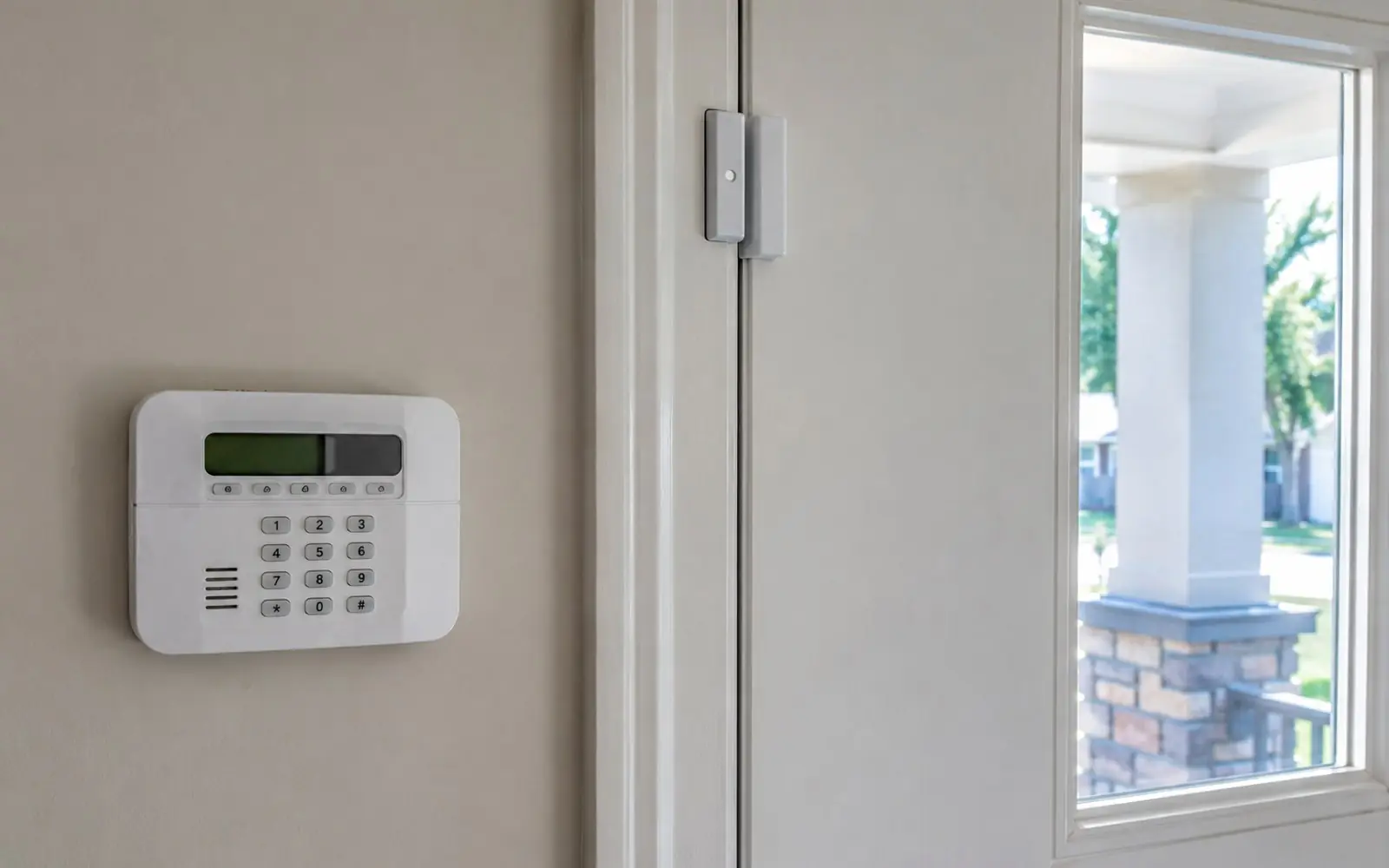
An alarm system is three things bolted together: a control panel, a set of sensors, and a path out of the house to somebody who will act on the signal. The part with a published national standard is the panel. ANSI/SIA CP-01-2019 is titled "Control Panel Standard: Features for False Alarm Reduction", and it "details recommended design features for security system control panels and their associated arming and disarming devices to reduce the incidence of false alarms"1.
That standard is the closest thing this category has to a quality floor you can check yourself. A panel built and tested to it by a nationally recognized testing organization carries a specific marking: "Design evaluated in accordance with SIA CP-01 Control Panel Standard features for false alarm reduction"2. Look for that sentence on the spec sheet. It is a fact about the hardware rather than a claim by the person selling it.
Everything else about an alarm system is governed by contract law and by your city ordinance, not by a hardware standard. That is why the paperwork deserves as much attention as the sensor count. A federal rule controls how a doorstep sale can be closed and cancelled6, and the FTC publishes a specific list of what your contract package must contain3.
The six parts of an alarm system worth arguing about
Sensor counts are easy to compare and rarely the thing that goes wrong. These six are where systems actually differ.
The control panel
This is the only component with a false alarm standard written for it. ANSI/SIA CP-01-2019 applies "to both residential and commercial properties protected by an electronic security system", and its stated audience includes installers, central station operators, manufacturers and local authorities1. Ask whether the panel you are quoted carries the CP-01 marking.
Door and window contacts
Entry sensors generate most dispatch requests, and most dispatch requests in this category turn out to be wrong. Seattle reports that in 2002 more than 98 percent of dispatched alarm calls for police response were deemed false7. Your sensor layout and your arming habits drive that number more than the brand does.
Panic and hold-up buttons
These are billed on a separate and much harsher schedule in many cities, because a panic signal pulls a different police response. In Houston a false panic alarm escalates from $140.09 for the second, to $280.20, $420.29 and $560.39, while false burglar alarms start at $50 after three free ones8.
The siren
A local sounder that never stops is its own offence in some places. Concord, North Carolina prohibits an alarm that "can sound continually for more than ten minutes during any individual alarm incident" and fines violations $200.00 per occurrence2. Ask what the siren cutoff timer is set to, and confirm it is enabled.
The path to a monitoring station
A siren nobody hears does nothing. UL 827 describes systems in which protection circuits are "signaled automatically to, recorded in, and supervised from a central-station or residential monitoring station having trained operators on duty at all times"10. Ask which station receives your signals, and what backup path exists.
The contract package
The FTC lists what should come with a home security system: the installation price, the monitoring fee, the contract period, any discounts, a written warranty, the owner's manual, an explanation of your right to cancel, and cancellation forms3. If any of those eight is missing, the package is incomplete.
What does it cost?
There is no honest equipment price to give you here. Every starter kit price tested was injected by JavaScript and absent from the page as served, so no verified hardware figure exists for any major brand. No government body, trade association or manufacturer publishes an average whole-system installation cost either. The one installation figure readable from a provider's own page is Ring's, listed as "Pricing starts at $129.99 per device (billed separately)"11. Anyone quoting you a national average for an installed alarm system is quoting a number with no published source behind it.
What moves the number is checkable even when the total is not. The count of protected openings, whether the panel is CP-01 marked1, whether you buy the hardware outright or it is bundled into a monitoring term, and your local permit and false alarm exposure. California attaches two dollar figures to the contract itself: a down payment "may not exceed $1,000 or 10 percent of the contract price, excluding finance charges ... whichever is less", and any contract over $250 must include a payment schedule and information about local permit fees4. Ask for that same breakdown wherever you live.
Figures here come from Ring's own plans page as fetched on 7 August 2026 and from California's Department of Consumer Affairs, and they exclude equipment, monitoring, taxes and municipal alarm permit fees.
How to hire for an alarm system installation
Who does the work
In licensed states this is a regulated trade with its own credential. Texas licenses the individual alarm installer and alarm system monitor at $37 for an original or renewal, and licenses the company separately, with a Class B business licence at $412, on a fee schedule revised in September 201912. Ask for both, the company licence and the installer's, and check them before anyone drills a hole.
What pros will ask
Expect a walk of every exterior door and ground floor window, questions about pets, and questions about who else needs a code. A good installer will also ask whether your city requires a permit, because the answer changes the paperwork. Dallas requires the alarm company under contract with you to train you in proper use and to hand over a complete set of written operating instructions9.
What to check before signing
If you are signing at your kitchen table, the seller must print the cancellation statement next to your signature "in bold face type of a minimum size of 10 points"6. Check it is there and readable. Then check the eight contract items the FTC lists3, the initial term, and whether the panel model written on the order matches the one you were shown.
Related searches homeowners make
Pulled from the same demand data behind our Home Security category.
Alarm system questions, answered straight
Can I cancel an alarm contract I signed at my front door?
Usually yes. The Cooling-Off Rule covers sales personally solicited at your residence with a purchase price of $25 or more, which is essentially every doorstep alarm sale5. You have until midnight of the third business day, and the rule defines "Business Day" to exclude Sundays and federal holidays, so a Friday signature can run the clock to Wednesday5. The FTC states the right survives installation: "You have a right to change your mind, even if the equipment has already been installed"3.
What is a CP-01 panel, and does my city require one?
CP-01 is the ANSI approved Security Industry Association control panel standard for false alarm reduction features1. On whether cities require it, be careful. The one full alarm ordinance reviewed for this guide, Concord, North Carolina, defines CP-01 precisely and quotes its marking language, but only says alarm companies "shall be encouraged, on all new installations, to use only alarm control panel(s) which meet SIA Control Panel Standard CP-01"2. Encouraged is not required. Read your own ordinance rather than assuming either way.
Is the free equipment offer real?
The FTC calls it a lie and explains the mechanism. Its guidance says scammers and dishonest businesses "might try to get you to sign a contract right away by telling you that the equipment will be free if you do (a lie)", and that to get the so-called free alarm "you may have to sign a long-term and expensive system monitoring contract"3. Free hardware is priced into the monitoring term. Ask what the total is across the full contract period, then compare that figure between sellers.
Who is responsible for teaching me to use the system?
In some cities it is the alarm company, by ordinance. Dallas states that "The alarm company that has a contract with you is required by Dallas City Code to train you in the proper use of the alarm system as well as provide you with a complete set of written operating instructions"9. That is a Dallas rule, not a national one, so check your own city. Either way, insist on the training session and the manual before the installer leaves your house.
What happens if I cancel after the equipment is already on the wall?
The rule sets both sides of the clock. On receipt of your cancellation notice the seller must return your payments and any negotiable instrument "within TEN BUSINESS DAYS", and any security interest arising out of the transaction is cancelled6. If you make the equipment available and the seller does not pick it up within 20 days of the date of your notice, you "may retain or dispose of the goods without any further obligation"6. Keep proof of the postmark.
Where these facts came from
Every figure on this page was read out of the page linked below. We do not cite cost aggregators.
- Security Industry Association, ANSI/SIA CP-01-2019 control panel standard
- City of Concord, North Carolina, alarm ordinance Chapter 36
- FTC, how to avoid scams when you shop for a home security system
- California Department of Consumer Affairs, alarm companies
- eCFR, 16 CFR 429.0, Cooling-Off Rule definitions
- eCFR, 16 CFR 429.1, Cooling-Off Rule requirements
- Seattle, alarm system monitoring regulations
- City of Houston, burglar alarm permit application and fee schedule
- City of Dallas, security alarm information
- UL Standards, UL 827 Central-Station Alarm Services
- Ring, plans and pricing
- Texas Department of Public Safety, private security fee schedule
Get quotes for your home security alarm systems project
Free for homeowners. No obligation. Up to four local pros compete.
Keep planning
More guides from the Home Security hub.
Home Security Cameras
What camera subscriptions really cost per camera, what video does and does not do for police response, and where the privacy risk sits.
Read the guideWireless Home Security
What cellular backup and no-contract plans actually buy you, and which city rules apply to a self-installed wireless system anyway.
Read the guideHome Security Advice, Tips and Reviews
How to judge a home security company on records that cannot be bought: licences, federal enforcement actions, and prices the company publishes itself.
Read the guide