
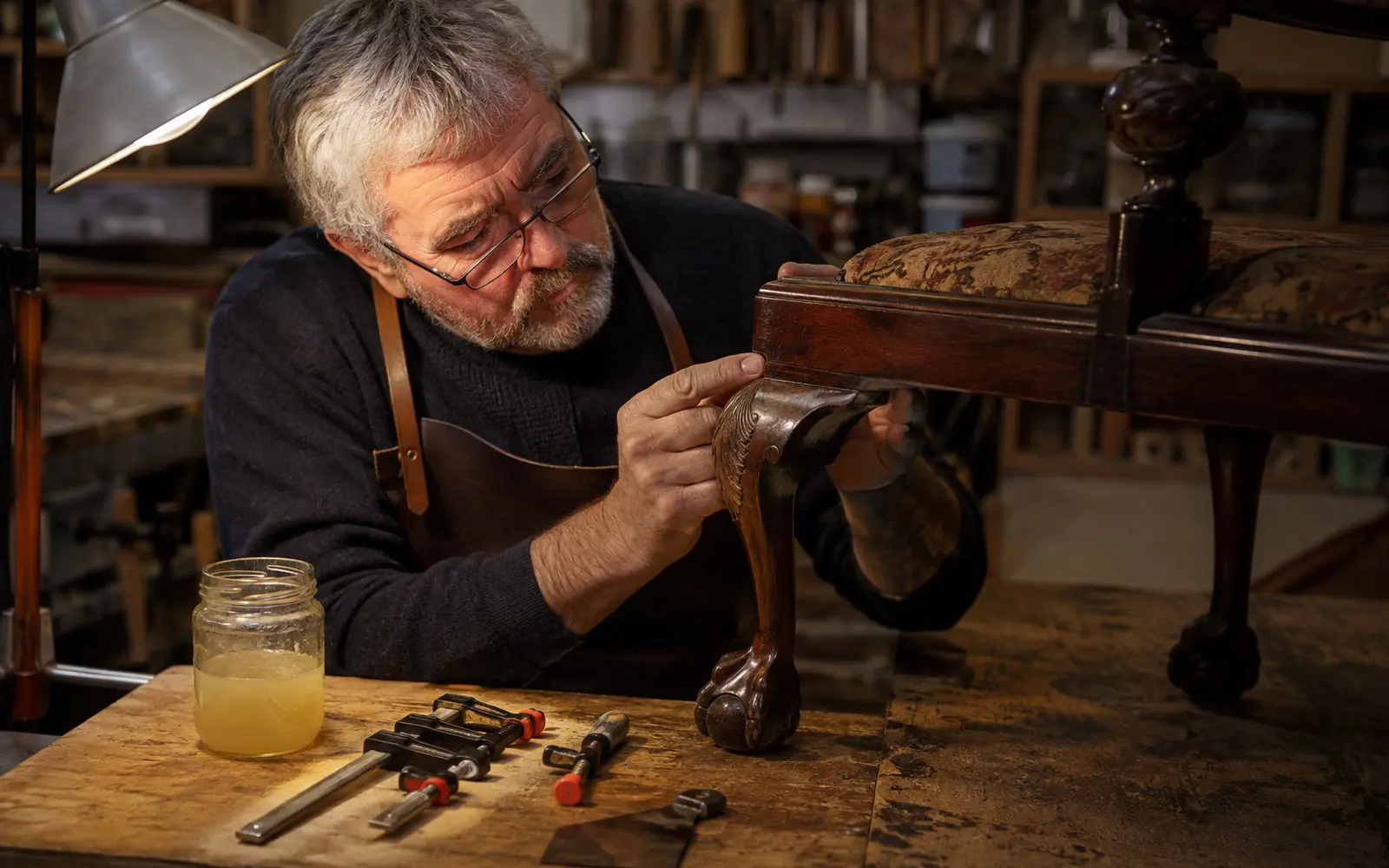
Antique Furniture Restoration
Old furniture sits outside the lead paint ban, inside a narrow EPA exemption, and under a modern standard the moment you recover it.
Three federal rules land differently on an antique than on new furniture
The federal ban on lead-containing paint on furniture articles applies to products manufactured after February 27, 19781. Read that as a customer: almost everything that arrives at a shop as an antique predates the ban and may be lead painted. The rule names beds, bookcases, chairs, chests, tables, dressers, desks and sofas as furniture articles1, and sets the limit in excess of 0.06 percent, reduced to 0.009 percent effective August 14, 20091.
The second rule is the one written with your piece in mind. When EPA restricted methylene chloride, one of only three carve-outs it left is for refinishing wooden furniture, decorative pieces and architectural fixtures of artistic, cultural, or historic significance, and that carve-out ends after May 8, 20292. Federal chemical law now has a category that means, roughly, antiques. It is a narrow one and it has an expiry date.
The third catches people out entirely. Recover an antique chair and it falls under a modern standard on the day the work is done. 16 CFR 1640.1(b) covers all upholstered furniture manufactured, imported, or reupholstered on or after the effective date, which 16 CFR 1640.2(a) sets at June 25, 20213. Two hundred years of age gives no exemption from a smoulder resistance requirement written in this decade.
Six decisions that separate restoration from ordinary refinishing
Settle each of these with the shop in advance, because most of them cannot be undone afterwards.
Conserve or restore
Keeping the original surface and stabilising it is a different job from stripping back to bare wood and building a new finish. Decide which you are buying before anyone opens a can. Get the answer written into the scope, in the shop's words, describing what will be kept rather than what will be removed.
The lead question
Anything painted before February 27, 1978 sits outside the federal ban on lead-containing paint1, and stripping or sanding is what turns that finish into airborne dust. Tell the shop the age of the piece at the first conversation, not when you drop it off. It changes how the work is done.
Whether the exemption applies
EPA's methylene chloride carve-out covers pieces of artistic, cultural, or historic significance and nothing broader2. Your shop has to be able to justify that in writing for your specific piece. If it cannot, expect a different stripping chemistry, and expect the working method and the hours to be different too.
Recovering the seat
Reupholstery pulls an antique under the current standard, which requires compliance with California Technical Bulletin 117-2013 for smoulder resistance3. That covers seating with an upholstered seat, back or arm that is stuffed or filled, and it explicitly includes furniture intended for use by a child3.
Original labels and provenance
California law labels tell you what is inside a piece: white for new material, red for secondhand, green for the consumer's own material4. Labels must be at least 2 by 3 inches, in black ink, with type at least an eighth of an inch4. Ask what happens to any label already on the piece.
Frame, joinery and hardware
Loose joints, split rails, failed old glue and replaced hardware are structural questions, not finish questions, and they are usually the reason a piece is unusable rather than merely tired. Ask whether the shop does this in house or sends it out, because that changes your timeline substantially.
What does it cost?
No authoritative source publishes a price for restoring an antique, and given how much the answer depends on the individual piece, it is doubtful a meaningful average could exist. What is published is the labour input in the two trades that do the work. In the 2025 OEWS annual estimates, the median upholsterer earns $22.28 an hour and the median furniture finisher $21.4156. Those are wages paid to employees, not rates billed to a customer, and they exclude premises, insurance, materials, markup and margin.
The real drivers are scarcity and compliance. There are 20,140 upholsterers and 14,480 furniture finishers in the entire country, 34,620 people in total78, so the queue is short of people rather than of work. On top of that, a shop stripping your piece under the EPA exemption must run a regulated area, local exhaust ventilation and supplied-air respiratory protection, and must document each job, keeping the record at least five years2. None of that is cheap, and no manufacturer price for that equipment could be sourced either.
Wages are the 2025 OEWS annual estimates read from the BLS public data API and are employee earnings rather than shop rates; no installed restoration price appears here because no authoritative source publishes one, and none has been estimated.
How to hire an antique furniture restorer
Who does the work
Two small trades, 34,620 people between them78, and restoration usually needs both. No state licence for restoration or conservation turned up in this research. California does license the upholstery half: a Custom Upholsterer licence costs $420 per location for two years, with no examination, education or experience required9. It proves registration, not craftsmanship.
What pros will ask
When the piece was made and what you know about its history. Whether it has ever been refinished, repainted or reupholstered before, and by whom. Whether there is a maker's mark, stamp or original label anywhere on it. Whether you want originality preserved over appearance. And whether the piece has any documented provenance, which affects the stripping options.
What to check before signing
Get a written scope stating what will be kept, not just what will be done. Ask what they strip with. If they use the EPA exemption, your name and a written explanation of the piece's value goes into a record retained at least five years2. If the seat is being recovered, confirm the piece returns with the required compliance label3 and the correct law label colour4.
Related searches homeowners make
Pulled from the same demand data behind our Furniture Repair category.
Antique restoration questions, answered straight
Will refinishing an antique destroy its value?
We found no authoritative source publishing data on valuation effects, so we will not put a number or a rule of thumb on it. What is documented is that federal chemical law itself treats artistic, cultural or historic significance as a real category, and requires a shop stripping under that exemption to write down an explanation of your piece's value for the record2. If the value is the point, get it appraised before you commission any work, not after.
Does my antique have lead in its paint?
It might, and the dates tell you why. The federal ban on lead-containing paint on furniture articles applies to products manufactured after February 27, 19781, so anything older is outside the rule entirely. The threshold the rule sets is in excess of 0.06 percent, reduced to 0.009 percent effective August 14, 20091, and it lists chairs, chests, tables, dressers and desks among furniture articles1. Raise it before any sanding starts.
Can an antique still be stripped with methylene chloride?
For now, under conditions, and not indefinitely. The exemption covers refinishing wooden furniture, decorative pieces and architectural fixtures of artistic, cultural, or historic significance, and ends after May 8, 20292. Since July 8, 2024 the shop must also run a regulated area, local exhaust ventilation and supplied-air or self-contained respiratory protection2. Nothing published states how EPA applies the significance threshold in practice, so a shop that answers instantly either way is worth a second question.
Does reupholstering an antique chair trigger modern rules?
Yes. 16 CFR 1640.1(b) applies to upholstered furniture manufactured, imported, or reupholstered on or after the effective date, and 16 CFR 1640.2(a) puts that at June 25, 20213. The definition turns on seating with an upholstered seat, back or arm that is stuffed or filled, and it includes furniture intended for a child3. Mattresses, foundations and bedding products are excluded, as is furniture used exclusively for exercise3.
What are the labels on my piece, and will I get a new one?
California requires a law label identifying the manufacturer, their location and the filling materials, colour coded: white for new material, red for secondhand, green for the consumer's own material4. Minimum size is 2 by 3 inches, black ink, type at least an eighth of an inch4. Separately, 16 CFR 1640.4(b) requires a permanent label stating the piece complies with U.S. CPSC requirements for upholstered furniture flammability3.
Where these facts came from
Every figure on this page was read out of the page linked below. We do not cite cost aggregators.
- 16 CFR Part 1303, ban on lead-containing paint and furniture articles bearing it
- 40 CFR Part 751 Subpart B, EPA methylene chloride restrictions under TSCA
- 16 CFR Part 1640, safety standard for the flammability of upholstered furniture
- California BHGS, furniture and bedding law label flyer
- BLS OEWS, Upholsterers, median hourly wage, 2025 annual
- BLS OEWS, Furniture Finishers, median hourly wage, 2025 annual
- BLS OEWS, Upholsterers (SOC 51-6093), national employment, 2025 annual
- BLS OEWS, Furniture Finishers (SOC 51-7021), national employment, 2025 annual
- California Bureau of Household Goods and Services, licensing FAQ and fee table
Get quotes for your antique furniture restoration project
Free for homeowners. No obligation. Up to four local pros compete.
Keep planning
More guides from the Furniture Repair hub.
Furniture Repair and Refinishing Services
Furniture repair is two small trades with different rules. Who does what, what the law requires, and what nobody publishes.
Read the guideUpholstery and Leather Repair Services
Reupholstery is named in a federal safety standard. What that means for your fabric, your labels, and the questions to ask a shop.
Read the guideLeather Repair Kits
No supplier publishes leather pricing and no standard governs the kits. What can be verified, and how to match the fix to the damage.
Read the guide