
Color in Interior Design
Color is the cheapest transformation in design and the most reversed. Here is how professionals get it right the first time.
Palettes are systems, not favorite colors
Color searches run deep in our interior design demand data because color is where everyone starts and where most regret lives. The professional difference is structural: designers build palettes as systems, a dominant neutral doing most of the walls, a secondary tone for depth, and accents in controlled doses, the familiar 60-30-10 rhythm, rather than choosing one beloved color and hoping.
Undertones are the technical heart of it. Every neutral leans, gray toward blue or green or violet, white toward yellow or pink, beige toward orange, and clashing undertones are why a lovely gray turns lavender against your sofa. Designers read undertones by comparing chips against pure white and against the room's fixed finishes, floors, counters, tile, which were chosen by someone else years ago and are not moving.
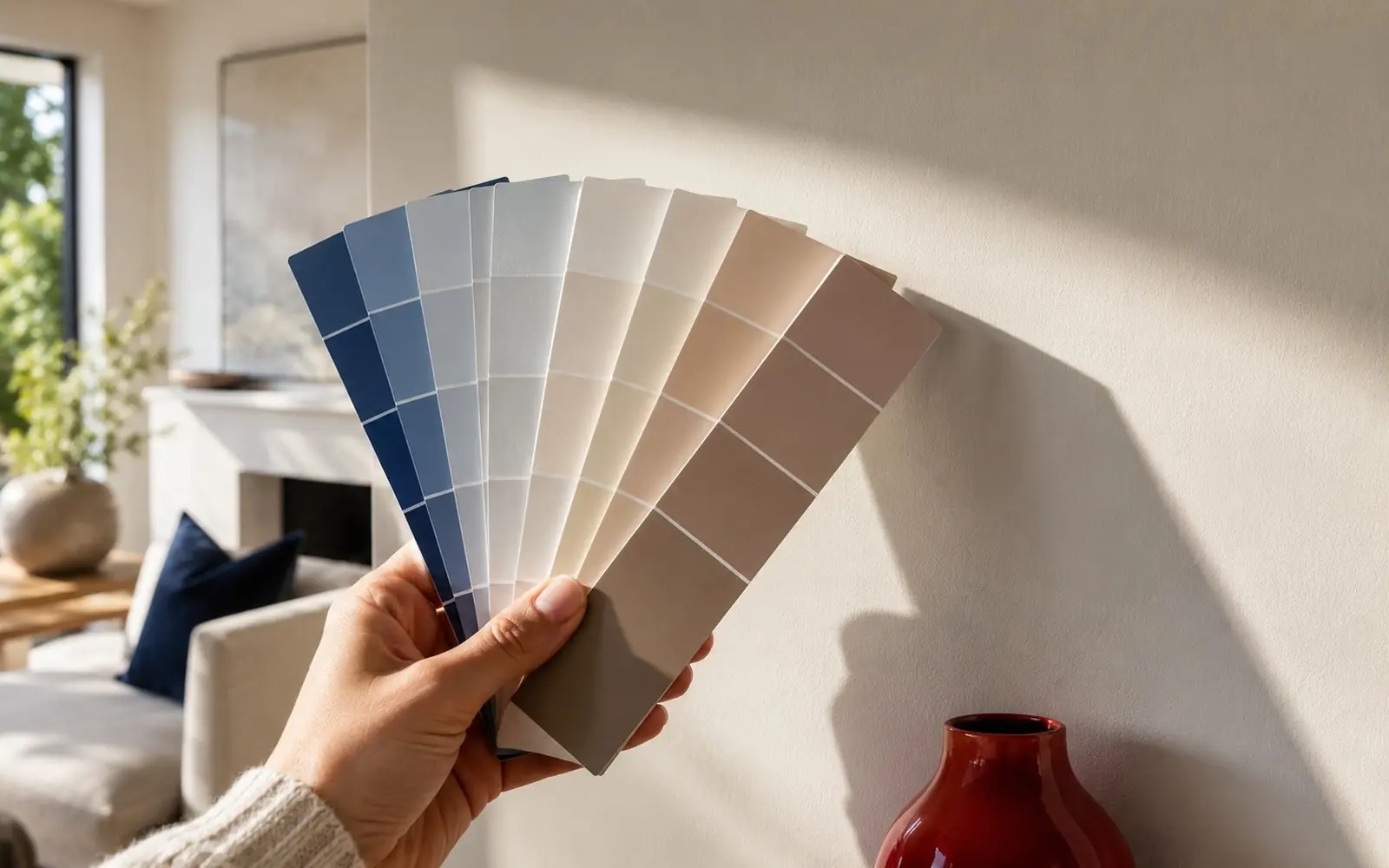
Then light has its say. The same paint reads differently facing north or south, at noon and at lamp-time, under warm bulbs and cool ones. The professional habit worth stealing: large swatches or sample boards, moved around the actual room, viewed at morning, afternoon and night before anything is purchased. Two sample quarts are the cheapest insurance in the entire field.
The palette decisions in order
How a room's colors actually get chosen, sequenced like a pro.
Fixed finishes first
Floors, counters, tile and big furniture set the undertone rules before paint enters. Palettes are built around what will not move.
The dominant neutral
The wall workhorse, chosen against the fixed finishes in your real light. Ninety percent of color regret is skipping the sample stage here.
Secondary and accent tones
Depth via cabinetry, textiles or a moodier wall, then accents in small repeated doses. Repetition, not quantity, is what reads as intentional.
Whole-home flow
Adjacent rooms sharing undertones and a repeated thread let a house change mood room to room without changing personality at every doorway.
Finish and sheen
Matte hides walls' sins, satin and semi-gloss survive kitchens, baths and trim. Sheen changes color perception, so sample in the finish you will buy.
Dark, bold and ceiling moves
Deep colors succeed in bedrooms, offices and dining rooms when lighting is layered for it. Test bigger and longer before committing a whole room.
What does getting color right cost?
Almost nothing, compared to getting it wrong: a few sample quarts and a weekend of looking, or a one-hour color consultation from a designer or paint-brand specialist who reads your light and fixed finishes on sight. Repainting a whole room because the gray went purple costs many times either.
If professional painting is in the plan anyway, lock colors before quoting so the bids include exactly the walls, ceilings and trim in the final scheme.
Ballparks based on commonly published national averages, stated as assumptions, not measured local pricing. Your competing quotes set the real number for your home and ZIP.
How to choose colors that survive
Inventory the fixed finishes
Floors, counters, tile, big furniture: note whether each leans warm or cool. The palette must agree with this list, because this list is not repainting.
Sample large, judge slowly
Two or three candidates as big swatches on two walls each, viewed morning, evening and lamplight across several days. The winner is obvious by day three.
Deploy as a system
Dominant neutral, secondary, accents in the 60-30-10 rhythm, with undertones repeating room to room. Write the scheme down; future-you is buying a chair someday.
Related searches homeowners make
Pulled from the same demand data behind our Interior Design category.
Color in Interior Design questions, answered straight
How do designers pick paint colors so confidently?
Method, not magic: fixed finishes first, undertones compared deliberately, large samples in the room's real light. The confidence is the sequence, and the sequence is learnable.
Why did my gray walls turn blue or purple?
Undertones. Most grays lean, and your lighting plus large nearby surfaces amplified the lean. Testing large swatches against the actual sofa and floor at night as well as noon catches it before the roller does.
Should the whole house be one color?
One undertone family and a repeated thread, yes; one identical color everywhere, rarely. Shared undertones give flow while letting bedrooms, baths and dens carry their own mood.
Are dark colors a mistake in small rooms?
No, small dark rooms can be the best rooms in the house when lighting is layered and finishes chosen well. What fails is dark paint under one dim ceiling fixture; the lighting plan is the real decision.
What paint finish should I use where?
A common map: matte or eggshell for living spaces, satin for kids' rooms and hallways, semi-gloss for kitchens, baths and trim. Higher sheen means more durability and more visible wall flaws; sample in the finish you intend to buy.
Ready to put color on walls?
Free for homeowners. No obligation. Up to four local pros compete.
Keep planning your design project
More guides from the Interior Design hub.
Ideas and Styles
Turning saved images into a brief a professional can execute.
Read the guideHiring a Designer
Designer vs decorator, portfolios, fee models and the brief that gets results.
Read the guideInterior Design Cost
Hourly, flat fee and percentage pricing decoded, with honest budget bands.
Read the guide