
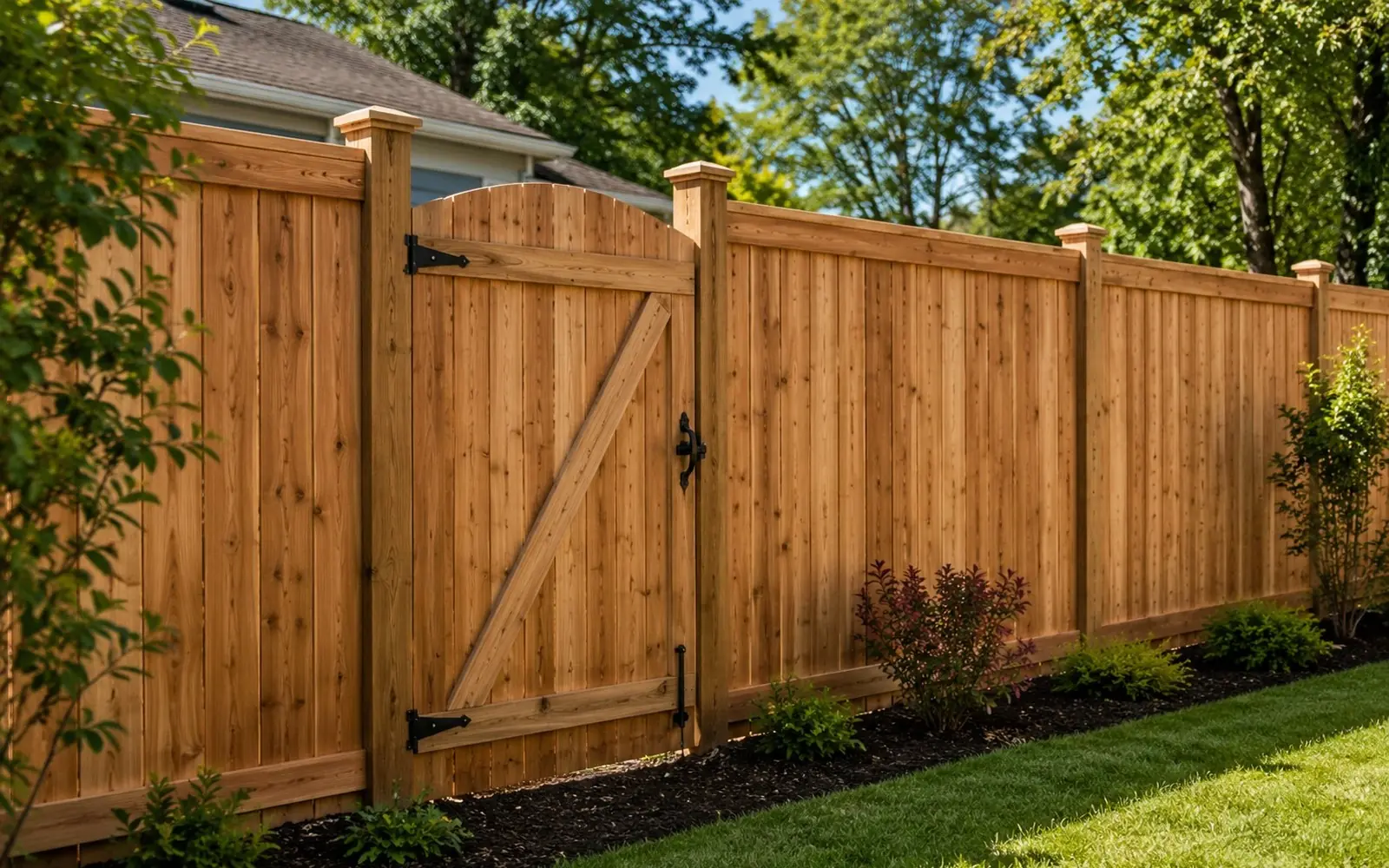
Wood and Privacy Fences
Nearly thirteen thousand wood fence searches, plus picket and privacy demand right behind. The classic fence, done properly.
The most searched fence material in our data
Wood fence draws close to thirteen thousand tracked searches in our demand data, with picket fence and privacy fence each above five thousand and cedar close behind. Wood remains the default because it does everything: six-foot privacy panels for the backyard, four-foot pickets out front, and every style between, at a price vinyl and metal struggle to match upfront.
Species and build quality decide lifespan. Pressure-treated pine is the budget standard for posts and rails; cedar resists rot and insects naturally and holds its looks longer as pickets. The construction details matter more than the wood: posts set below frost depth in concrete, rails sized to the span, ring-shank or coated fasteners, and a few inches of ground clearance so pickets do not wick moisture.
Before anyone digs, settle the boring questions: exactly where the property line is, what height your zoning allows, which side faces the neighbor, and whether your HOA has opinions. Fence disputes are neighbor disputes, and a survey costs far less than moving a fence.
Styles and build choices
Height and style are zoning questions before they are taste questions.
Solid privacy fences
Six-foot board-on-rail panels, the backyard standard. Board-on-board and tongue-and-groove variants close the gaps that flat panels open as wood shrinks.
Picket fences
Three to four feet of curb appeal and pet containment out front. Cheaper per foot, and where zoning usually caps front-yard height.
Shadowbox and good-neighbor
Alternating boards on both faces look finished from either side and let breezes through. A common HOA requirement between lots.
Horizontal and modern styles
Clean lines and premium pricing: horizontal runs need better lumber and tighter post spacing to stay straight over time.
Cedar vs pressure-treated
Cedar pickets resist rot and look better longer; treated pine costs less and takes stain once dry. Many builds mix treated posts with cedar boards.
Gates and hardware
Gates fail before fences do. Steel frames, quality hinges and a drop rod on double gates are cheap insurance against the sag.
What does it cost?
Commonly published ballparks run about $15 to $35 per linear foot installed depending on height, style and species, which puts a typical 150 foot backyard enclosure in the $2,000 to $5,000 band. Gates add $150 to $600 or more each, and slopes, rock and old fence removal add real labor.
Cedar upgrades commonly add a few dollars per foot over treated pine and pay it back in lifespan and looks. Staining a new fence after it dries extends life further.
Ballparks based on commonly published national averages, stated as assumptions, not measured local pricing. Your competing quotes set the real number for your home and ZIP.
How to hire for wood fence work
Who does the work
Fence contractors do this all day and price by the foot; carpenters and landscapers also build fences at smaller scale. Utility locating before digging is mandatory nearly everywhere, and the contractor should call it in, not you.
What pros will ask
The run length, height and style you want, gate count and widths, slope and soil, and whether the old fence needs removal. A plot plan or survey answers the property line question every good bidder will ask.
What to check before signing
That posts are set in concrete below local frost depth and the spec appears in writing. That the line placement is based on a survey or documented agreement with neighbors. And that the quote separates materials, labor, gates and haul-away so bids compare cleanly.
Related searches homeowners make
Pulled from the same demand data behind our Decks, Fences and Patios category.
Wood and Privacy Fences questions, answered straight
How long does a wood fence last?
Commonly 15 to 20 years for treated pine and 20 to 30 for cedar, with post failure usually ending things. Posts set properly in concrete below frost depth, plus a stain or sealer every few years, push every number toward the high end.
How tall can my fence be?
Typical zoning allows six feet in back and side yards and three to four feet in front yards, but rules vary by town and corner lots have sightline restrictions. HOAs often layer on style rules. Confirm before ordering material; variances take longer than fences.
Do I need my neighbor's permission to build a fence?
On your own side of the line, generally no, but you must know precisely where the line is. Some states have fence statutes about shared costs and finished sides. A quick conversation and a survey prevent the classic dispute where a finished fence sits a foot into the wrong yard.
Should I stain a new wood fence?
Yes, after it dries out, typically a few months for treated pine and sooner for cedar. A penetrating stain or sealer slows the graying, checking and moisture cycling that age wood fences. Repeat every two to four years for maximum lifespan.
Why is my quote higher than the per-foot averages?
Slopes, rocky digging, old fence removal, extra gates and premium styles like board-on-board or horizontal all add labor beyond the flat-yard average. Ask each bidder to itemize those lines; the spread between quotes usually lives there.
Get quotes for your wood fence project
Free for homeowners. No obligation. Up to four local deck, fence and patio pros compete.
Keep planning your outdoor project
More guides from the Decks, Fences and Patios hub.
Vinyl, Aluminum and Chain Link Fences
Vinyl privacy, aluminum, iron and chain link by the foot.
Read the guidePet and Invisible Fences
Wired, wireless and GPS systems, plus the training truth.
Read the guideFence Installation, Gates and Repair
Quotes by the foot, gate sag fixes and storm claim basics.
Read the guide