
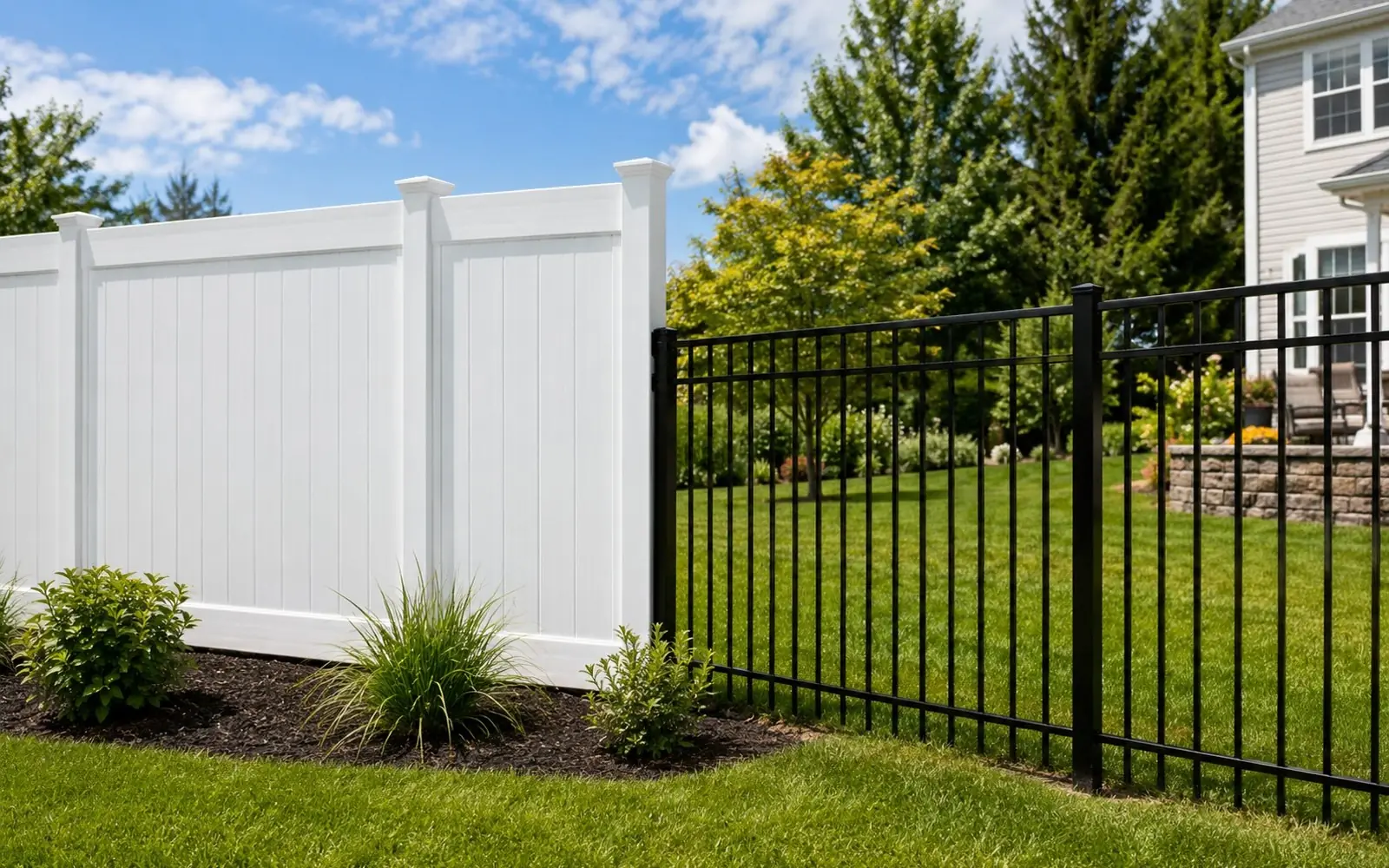
Vinyl, Aluminum and Chain Link Fences
The low-maintenance side of the fence market: vinyl leads our demand data at over fifteen thousand searches, chain link and aluminum close behind.
Three materials, three different jobs
Vinyl fence draws over fifteen thousand tracked searches in our demand data, with chain link near nine thousand, aluminum above eight thousand and wrought iron in the thousands. These materials share one selling point wood cannot match: the maintenance calendar is essentially empty. No staining, no rot, no repainting on a schedule.
They serve different purposes. Vinyl is the privacy player, delivering solid six-foot panels in white, tan and woodgrain textures that wash clean with a hose; its weaknesses are brittleness in extreme cold and a panel-replacement dependency on the manufacturer. Ornamental aluminum handles the decorative and pool-code duty that wrought iron used to own, without the rust, and true wrought iron survives as a premium custom product. Chain link remains the value king for containment: kids, dogs and property definition at the lowest cost per foot, dressed up with black coating and privacy slats when looks matter.
Installation quality still decides everything. Posts set to depth in concrete, correct post spacing for wind load on solid vinyl panels, and properly tensioned mesh on chain link are the difference between a twenty-five year fence and a leaning one.
Options across the three families
Match the material to the job before comparing prices.
Vinyl privacy panels
Solid six-foot privacy without the stain cycle. Quality varies by wall thickness; cheap thin panels chalk, sag and crack years sooner.
Vinyl picket and ranch rail
The white picket look and open horse-country rail styles in the same wash-and-done material. Popular for front yards and acreage lines.
Ornamental aluminum
Powder-coated panels that read as iron from the street. Rust-proof, pool-code compliant options, and far lighter on the budget than true iron.
Wrought iron
The genuine article: heavy, custom, beautiful and priced accordingly. Needs periodic repainting to stay ahead of rust. Ideal for historic homes.
Chain link
The least expensive containment per foot, galvanized or black vinyl-coated. Privacy slats and windscreen fabric upgrade looks and screening.
Pool-code fencing
Aluminum and mesh systems built to barrier codes: minimum heights, self-closing gates and no climbable rails. Confirm your local spec before quoting.
What does it cost?
Commonly published ballparks: chain link around $10 to $20 per linear foot installed, vinyl privacy roughly $20 to $40, ornamental aluminum about $25 to $40, and custom wrought iron well beyond that. Gates, slopes and removal of old fencing add to every material.
Lifespans commonly cited: vinyl and aluminum 25 years plus, galvanized chain link 20 plus, wrought iron indefinitely with paint upkeep. The upfront premium over wood buys those empty maintenance years.
Ballparks based on commonly published national averages, stated as assumptions, not measured local pricing. Your competing quotes set the real number for your home and ZIP.
How to hire for vinyl or metal fence work
Who does the work
The same fence contractors install all three families, but panel systems are brand-specific: ask whether your installer stocks the line, because future repairs need matching panels. Utility locates before digging are the contractor's responsibility.
What pros will ask
Run length, height, gate count, slope and what the fence must do: privacy, pets, pool code or curb appeal. For vinyl, ask about wind exposure; solid panels act like sails and need tighter post spacing in open yards.
What to check before signing
That post depth and concrete are specified in writing, that vinyl panel brand and wall thickness are named, and that pool fencing is quoted against your town's actual barrier code. On chain link, confirm gauge and coating rather than accepting the thinnest mesh.
Related searches homeowners make
Pulled from the same demand data behind our Decks, Fences and Patios category.
Vinyl, Aluminum and Chain Link Fences questions, answered straight
Is vinyl fencing better than wood?
It is different money. Vinyl costs more upfront and then asks nothing of you for decades: no stain, no rot, no repaint. Wood costs less on day one and bills you every couple of years. Over 20 years the totals converge; pick based on cash now versus chores later.
Does vinyl fence get brittle and crack?
Quality panels handle normal climates well, but severe cold makes any vinyl more impact-brittle, and cheap thin-walled product cracks first. Buy a recognized line through an installer who stocks replacement panels, and vinyl is a decades-long fence.
Is aluminum as strong as wrought iron?
No, and it does not need to be for residential duty. Powder-coated aluminum resists rust better, costs a fraction as much and satisfies pool codes. Reserve true iron for security applications or historic looks where its heft is the point.
Can chain link be made to look decent?
Black vinyl-coated mesh with matching posts reads far more refined than bare galvanized and costs only modestly more. Privacy slats or windscreen add screening. It will never be vinyl privacy, but it is the best value in pure function.
What fence do pool codes require?
Rules commonly specify a minimum barrier height, self-closing and self-latching gates, and designs that resist climbing, with exact numbers varying by state and town. Ornamental aluminum and removable mesh systems are built for this. Have the installer quote to your local code by name.
Get quotes for your vinyl or metal fence project
Free for homeowners. No obligation. Up to four local deck, fence and patio pros compete.
Keep planning your outdoor project
More guides from the Decks, Fences and Patios hub.
Pet and Invisible Fences
Wired, wireless and GPS systems, plus the training truth.
Read the guideFence Installation, Gates and Repair
Quotes by the foot, gate sag fixes and storm claim basics.
Read the guidePatios, Pavers and Patio Covers
Slab vs pavers vs stone, plus pergolas and enclosed rooms.
Read the guide