
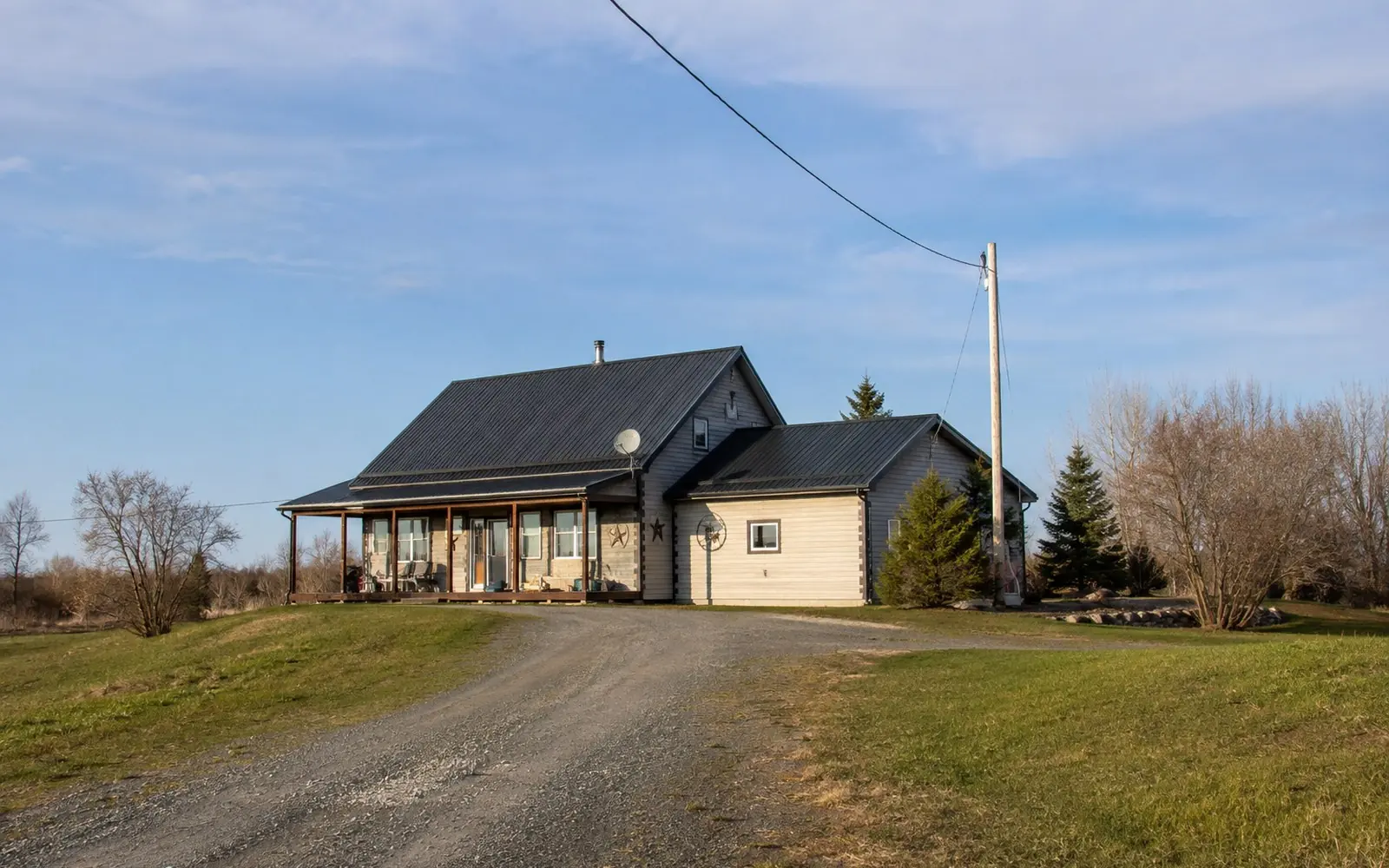
Rural Internet Options
What federal data says about rural availability, what satellite actually publishes, and the disclosures that work even when you buy by phone.
About 28% of rural residents lack the federal broadband floor
Rural broadband shopping starts from a different place, and the federal government has measured how different. The FCC's 2024 Section 706 Report found that 100/20 Mbps terrestrial fixed broadband has not been physically deployed to approximately 7% of Americans, with approximately 28% of people living in rural areas and approximately 23% of people living on Tribal lands lacking access1.
That 100/20 figure is the yardstick, not an aspiration. The Commission raised the fixed broadband speed benchmark from 25/3 Mbps to 100/20 Mbps and found that advanced telecommunications capability for fixed broadband requires download speeds of at least 100 Mbps and upload speeds of at least 20 Mbps1. It also adopted a long-term goal of 1,000 Mbps down paired with 500 Mbps up1.
The practical consequence is that a rural buyer is often choosing between an option that clears the federal bar and one that does not. That is a legitimate choice to make. It is not a legitimate thing for a salesperson to leave unsaid, and the disclosure rules exist to stop them.
Six things that shape a rural connection
Availability, technology and subsidy conditions do more to determine your options than any provider's marketing does.
Availability is the first constraint
Roughly 28% of rural residents and 23% of people on Tribal lands have no 100/20 Mbps terrestrial fixed broadband physically deployed to them, against about 7% of Americans overall1. Before comparing plans, establish which technologies actually reach your address, because that list is usually shorter than the advertising suggests.
Know the bar you are measuring against
The federal fixed broadband benchmark is 100 Mbps down paired with 20 Mbps up, raised from 25/3 Mbps1. The notation is literal: the first number is download speed and the second is upload speed1. Hold every rural offer against both numbers rather than the download figure alone.
Older copper lines trail on consistency
In the FCC's Thirteenth Measuring Broadband America Fixed Report, the lowest performing technology on the 80/80 measure was DSL, at 63% to 72% of advertised speed4. That metric asks what speed at least 80% of subscribers get at least 80% of the time during peak hours4.
Satellite publishes two prices, not one
Viasat's own footnote, read 6 August 2026, states that its Essentials plan starts at $39.99 a month with promotion and $69.99 thereafter, and that you must mention the offer when ordering service over the phone3. Treat the second number as the real one and the first as a temporary condition.
Federally subsidized carriers carry allowance floors
For carriers receiving Rural Digital Opportunity Fund support, the minimum usage allowance is either the greater of 250 GB or the average usage calculated by the Bureau for the Minimum and Baseline tiers, or 2 terabytes for the Above-Baseline and Gigabit tiers2. Ask whether the provider takes RDOF support.
The label rule follows you onto the phone
This matters where there is no storefront. Point of sale is defined to include a provider's website and any alternate sales channels, including a provider-owned retail location, a third-party retail location and over the phone, and it also covers the time you begin investigating offerings at your location5.
What does it cost?
The federal government publishes ceilings for remote service, and the gap in its own table is instructive. For 2026 the reasonable comparability benchmark for a 100/20 Mbps plan with unlimited capacity is $96.46 in the United States and $127.49 in Alaska, and for 1000/100 Mbps it is $123.15 against $154.432. Even the old 25/3 tier runs $106.66 against $127.672. These are caps that subsidized carriers may not exceed, not averages and not typical bills, and the Commission sets a distinctly higher ceiling in every Alaska row than in the matching U.S. row.
On the retail side, one satellite price could be sourced. Viasat publishes $39.99 a month promotional and $69.99 thereafter for its Essentials plan, read 6 August 20263. Starlink's residential pages carry no dollar figure in their served source, HughesNet's plans page carries no plan price, and no satellite hardware or equipment cost could be obtained from any of them. No national average rural internet bill is published by the FCC in any document reachable for this guide, so none appears here.
The benchmark figures are FCC ceilings for subsidized carriers rather than retail averages, the Viasat figures are that company's own published rates on 6 August 2026, and no hardware cost is quoted because none could be sourced.
How to buy internet outside the footprint
Who does the work
Whoever has facilities at your address sets your menu, and the federal deployment figures show how thin that menu can be rurally1. Satellite providers sell nationally by phone, which is squarely inside the rule: point of sale includes over the phone as well as websites and retail locations5. So a phone-only sale is not an excuse for skipping the disclosures.
What pros will ask
Your address first, since availability decides everything else. Who your current provider is, because Viasat's $300 reward card applies only to subscribers switching from a provider that is not fiber or cable, on a specific plan, within a stated ordering window3. And how much data your household moves, which is where the federal 800 GB monthly forecast for 2026 is a useful check2.
What to check before signing
Compare the label's typical download and upload speeds against 100 Mbps and 20 Mbps1. Find the data allowance and what happens past it, since the rule requires disclosure of charges or reductions in service for excess data plus the increment it is sold in6. Then find the post-promotional rate, because on satellite that is where the number moves most3.
Related searches homeowners make
Pulled from the same demand data behind our Broadband & Connectivity category.
Rural connectivity questions, answered straight
How much worse is rural availability, really?
Measurably worse, and the FCC quantifies it. Its 2024 Section 706 Report found 100/20 Mbps terrestrial fixed broadband has not been physically deployed to approximately 7% of Americans, and that rural areas and Tribal lands significantly trail more urban areas, with approximately 28% of people living in rural areas and approximately 23% of people living on Tribal lands lacking access to 100/20 Mbps fixed broadband1. Those are deployment figures, meaning the service is not physically there to buy.
Is satellite my only choice if cable and fiber do not reach me?
It depends entirely on your address, and that is not evasion. The deployment data shows how much rural territory has no 100/20 Mbps fixed service at all1, while older copper lines that do reach many rural homes came last on the FCC's consistency measure, with DSL providers achieving 63% to 72% of advertised speed on the 80/80 test4. Establish which technologies physically reach you, then compare their labels rather than their advertising.
What should I watch for in a satellite offer?
The second price and the strings on any bonus. Viasat states its Essentials plan starts at $39.99 a month with promotion and $69.99 thereafter3. Its $300 reward card applies to new residential subscribers switching from a provider that is not fiber or cable, on the Unleashed plan, ordered within a stated window, with the redemption request due within 60 days of the emailed offer and the card expiring six months from issue3. Each of those conditions can void the incentive on its own.
Does federal subsidy money guarantee me anything?
It attaches conditions to the carriers that take it. For Rural Digital Opportunity Fund recipients, the minimum usage allowance is either the greater of 250 GB or the average usage the Bureau calculates for the Minimum and Baseline tiers, or 2 terabytes for the Above-Baseline and Gigabit tiers2. Separately, the FCC sets reasonable comparability benchmarks that cap what subsidized carriers may charge, including a distinct and higher set of figures for Alaska2.
Can I make them give me the same disclosures over the phone?
Yes, and this is the single most useful thing to know when there is no local office. The rule defines point of sale to mean a provider's website and any alternate sales channels through which service is sold, including a provider-owned retail location, a third-party retail location and over the phone, and also the time a consumer begins investigating and comparing broadband offerings available at their location5. Ask for the label before you give anyone a card number.
Where these facts came from
Every figure on this page was read out of the page linked below. We do not cite cost aggregators.
- FCC 24-27, 2024 Section 706 Report, speed benchmark and rural deployment
- FCC Public Notice DA 25-1088, 2026 benchmarks, Alaska rates and RDOF allowances
- Viasat internet page, plan pricing and switch offer read 6 August 2026
- FCC Thirteenth Measuring Broadband America Fixed Broadband Report
- 47 CFR 8.1, broadband consumer label rule, point of sale definition
- FCC Report and Order on broadband labels, 87 FR 76959, 16 December 2022
Get quotes for your rural internet options project
Free for homeowners. No obligation. Up to four local pros compete.
Keep planning
More guides from the Broadband & Connectivity hub.
Broadband Consumer Labels
What federal rules force every internet provider to disclose before you sign, and how to make them hand it over.
Read the guideInternet Speeds Explained
What 100/20 means, why the upload number matters, and how close providers came to their advertised speeds when the FCC measured.
Read the guideCable vs Fiber vs Satellite
What each technology actually publishes about price and speed, and why the television half of a bundle follows different rules.
Read the guide