
Window Treatments: Blinds, Shades and Curtains
Seventy thousand searches across blinds, shades and curtains. The layer that finishes every window, chosen without the showroom fog.
The biggest soft category in window demand
Window treatments account for roughly seventy two thousand tracked searches in our demand data, with window blinds alone near forty one thousand, curtains above sixteen thousand and shades above fourteen thousand. It is a purchase every household makes repeatedly, and the professional measure-and-install end of it is what separates crisp results from stapled bedsheets.
The functional questions sort the wall of options fast. Light control: blackout cellular shades and lined drapery own bedrooms; light-filtering fabrics keep living rooms bright but private. Insulation: cellular honeycomb shades measurably cut window heat loss, the efficiency pick of the category. Moisture: faux wood blinds beat real wood in baths and kitchens. Kids and pets: cordless and motorized operation is now the safety standard, and cords are regulated out of most new products.
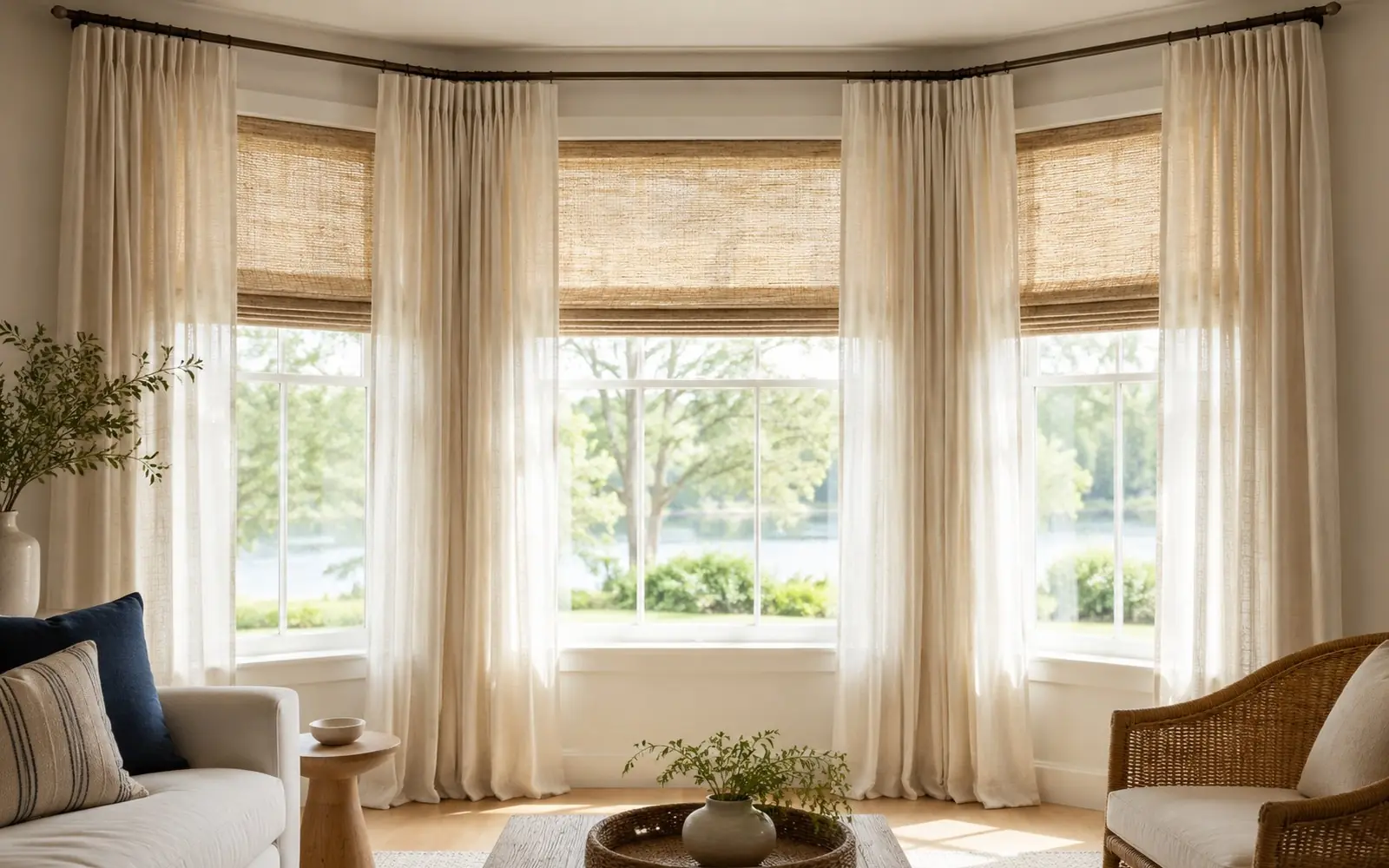
Motorization moved from luxury to mainstream: battery and hardwired motors with app and voice control now price within reach, and they solve the tall-window and skylight problem outright. Layering finishes the design: a functional shade at the glass plus drapery panels for softness is the decorator formula, and it lets you spend where each layer earns it.
The treatment families
Function first, then fabric. Every family has a budget and a premium tier.
Horizontal blinds
Wood, faux wood and aluminum slats with tilt control. Faux wood dominates wet rooms; real wood carries the living spaces.
Cellular and roller shades
Honeycomb cells insulate best in the category; rollers deliver clean minimalism from sheer to blackout. The volume sellers.
Roman and woven shades
Fabric and natural-fiber softness that raises like a shade and reads like drapery. Mid to premium pricing by textile.
Drapery and curtains
Panels and rods from ready-made to workroom-sewn. Lining choices set light control; hardware quality sets how it hangs.
Vertical and slider solutions
Verticals, panel tracks and sliding cellulars cover patio doors and walls of glass that stump standard formats.
Motorized systems
Battery or wired motors with app, remote and voice control. The default for tall windows, skylights and cord-free child safety.
What does it cost?
Commonly published ballparks: quality blinds and shades around $50 to $200 per window installed, designer fabrics and romans $200 to $600, motorized shades commonly $300 to $1,000 per window, and custom drapery from a few hundred per opening into serious four figures with workroom fabrics.
Whole-house packages through a measure-and-install dealer usually beat piecemeal buying, and professional measuring removes the single most common failure: shades ordered a half inch proud of the frame.
Ballparks based on commonly published national averages, stated as assumptions, not measured local pricing. Your competing quotes set the real number for your home and ZIP.
How to hire for window treatment work
Who does the work
Window treatment dealers and design studios measure, order and install; big-box installs cover the basics, and drapery workrooms handle custom soft goods. Motorization crossing into hardwired power needs an electrician for the supply.
What pros will ask
Room-by-room goals: blackout, privacy, insulation, moisture, pets and kids. Window count and photos, inside or outside mount preference, and whether motorization or smart-home integration is on the table. Budget bands per room keep the catalog honest.
What to check before signing
That measures and fit are the installer's responsibility in writing. That cord safety and mount type are specified per window. And that motorized quotes name the power method, hub compatibility and warranty, because motor support is where cheap systems get expensive.
Related searches homeowners make
Pulled from the same demand data behind our Windows and Glass category.
Window Treatments: Blinds, Shades and Curtains questions, answered straight
What is the most energy-efficient window treatment?
Cellular honeycomb shades, by common testing and industry consensus: the air pockets meaningfully cut heat loss through glass in winter and heat gain in summer. Snug inside mounts and side tracks improve the effect. Lined drapery layered over any shade helps further.
Are motorized blinds worth it?
For tall windows, skylights, walls of glass and cord-free child safety, clearly yes; for a reachable bedroom window it is a comfort call. Battery motors with app control have brought per-window costs down substantially, and dealers bundle motorization discounts on whole-house orders.
Inside or outside mount?
Inside mounts sit within the frame for a built-in look and need adequate depth plus square openings. Outside mounts cover the frame, hide out-of-square windows and block more light around the edges. The installer's measure decides it window by window, which is the point of professional measuring.
What should bedrooms use for real darkness?
Blackout cellular or roller shades tight to the glass, plus side channels or an outside mount to kill the halo, plus lined drapery if you want silence and softness too. That two-layer formula is the standard answer for shift workers and nurseries.
Real wood or faux wood blinds?
Faux wood for baths, kitchens and any window that sweats: it will not warp or yellow. Real wood for large living-space windows where weight and finish matter. Price differences have narrowed, so the room's moisture usually makes the call.
Get quotes for your window treatment project
Free for homeowners. No obligation. Up to four local window and glass pros compete.
Keep planning your window project
More guides from the Windows and Glass hub.