
Window Repair
Forty five thousand window repair searches. Half of them belong to a repair tech, not a replacement salesperson. Here is how to tell which half.
The forgotten alternative to replacement
Window repair draws nearly forty five thousand tracked searches in our demand data, spanning stuck sashes, broken hardware, failed seals, torn screens and rotted trim. It is a category the replacement industry would prefer you skip, because a competent repair visit routinely solves for hundreds what a sales visit solves for thousands.
The repairable list is long: sashes that will not stay up have broken balances or cords, swappable in under an hour; crank operators, locks and latches on casements are catalog parts; fogged double-pane glass takes a new sealed unit inside the same sash; rattling old single-panes want new glazing and weatherstripping; and rot caught early yields to epoxy consolidants and a painter. Old-growth wood windows in pre-war homes are especially worth saving, since the wood outclasses anything in a modern budget frame.
The replacement signal is systemic failure: frames rotted through, sashes racked out of square, chronic condensation between panes across many windows, or single-pane units in a climate that punishes them. The practical rule of thumb: when a repair estimate passes about half the cost of a comparable replacement, or the same windows generate repeat calls, stop patching.
What a repair tech can actually fix
More than the replacement ad suggested.
Balances and sash cords
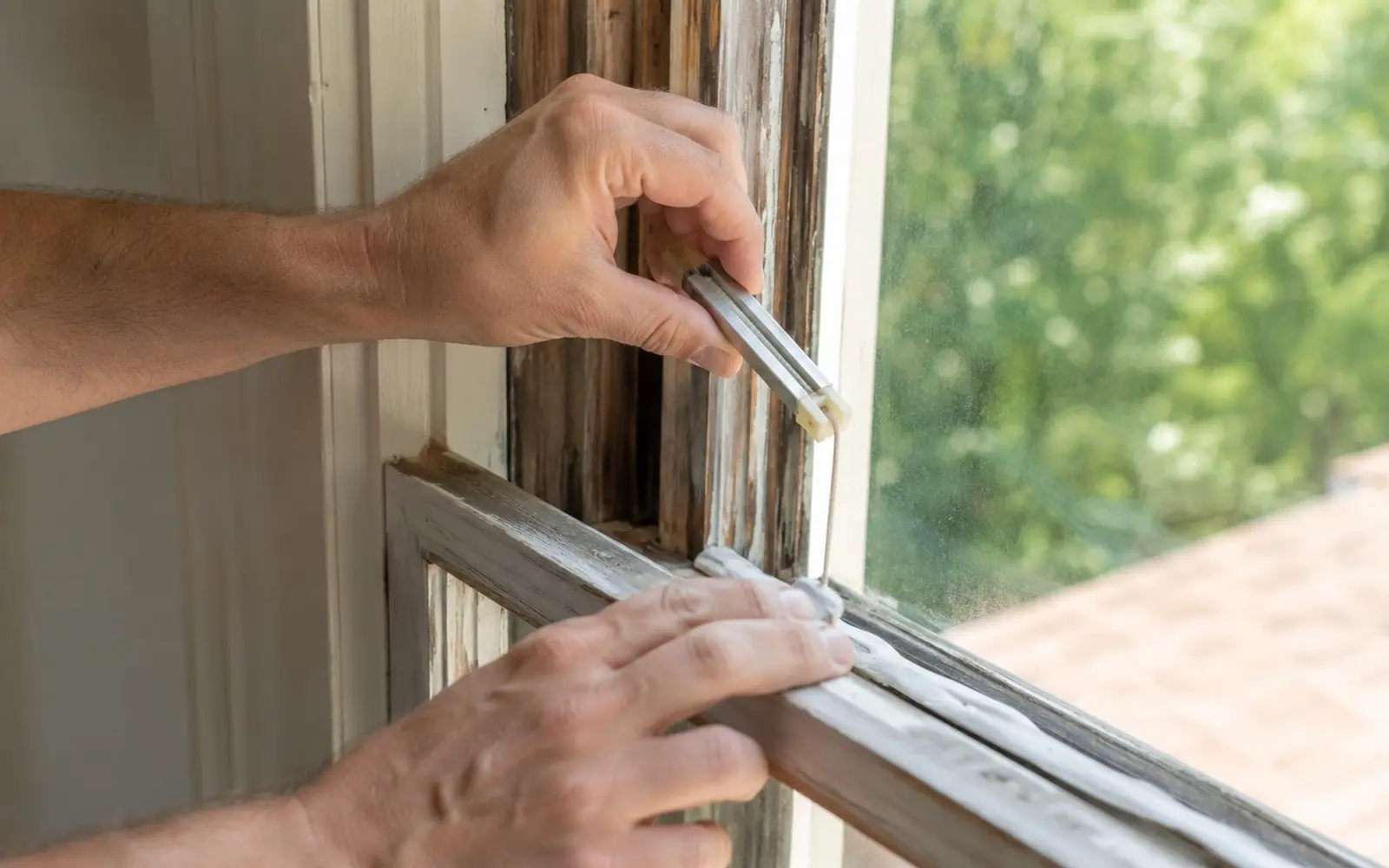
Windows that slam shut or will not stay open have failed balances or cords. Standard parts, quick labor, dramatic improvement.
Cranks, locks and hardware
Casement operators, tilt latches and locks are replaceable catalog parts, matched by photo or brand. Cheap fixes for annoying failures.
Fogged glass units
Condensation between panes means the sealed unit failed, not the window. New IGUs install into existing sashes at a fraction of replacement.
Weatherstripping and glazing
Drafts and rattles yield to new weatherstrip and glazing compound. The highest comfort return per dollar in the category.
Wood rot repair
Sills and sash corners caught early take epoxy consolidation and paint. Historic windows are usually worth this; new builder-grade often is not.
Screens and storm panels
Re-screening and storm window repair are counter services at glass shops and hardware stores, or house calls at modest rates.
What does it cost?
Commonly published ballparks: hardware and balance repairs around $100 to $300 per window, weatherstripping similar, fogged glass unit replacement $200 to $600 per window depending on size and coatings, and wood rot repairs a few hundred per opening when caught early. Most single-visit calls land between $150 and $500.
Batch the work: minimum call-out fees dominate small jobs, so a tech fixing six windows in one visit beats six separate appointments by a wide margin.
Ballparks based on commonly published national averages, stated as assumptions, not measured local pricing. Your competing quotes set the real number for your home and ZIP.
How to hire for window repair work
Who does the work
Dedicated window repair companies, glass shops and handymen cover most of this list; historic window restoration is its own specialty worth seeking out for pre-war homes. Replacement companies rarely repair, so call the right species of pro first.
What pros will ask
Window brand if known, photos of the problem and the hardware, and a count of affected windows. For fogged glass, the sash dimensions; for hardware, a photo of the broken part usually identifies the catalog replacement.
What to check before signing
That the quote is per-window and itemized, that fogged-unit swaps specify glass type and coatings matching the original, and that anyone proposing replacement for a hardware-level problem explains why. Get a repair quote before any replacement meeting; the comparison anchors everything.
Related searches homeowners make
Pulled from the same demand data behind our Windows and Glass category.
Window Repair questions, answered straight
Is it worth repairing old windows instead of replacing?
Often, yes, especially pre-war wood windows built from old-growth lumber that outlasts modern budget frames. Weatherstripping plus storm windows brings them close to replacement-window comfort at far lower cost. Builder-grade units from recent decades are less sentimental math.
My window fogs up between the panes. New window?
No, new glass. Fog between panes means the insulated unit's seal failed; a glass shop builds a matching unit and swaps it into your existing sash for a few hundred dollars. Whole-window replacement for seal failure is the most common oversell in this category.
Why will my double-hung window not stay open?
Broken balances or sash cords, the springs and weights that counterbalance the sash. Parts are standard, labor is under an hour per window, and it is among the most satisfying cheap fixes in the trade.
Can rotted window frames be saved?
Caught early, yes: epoxy consolidants rebuild soft sills and corners, followed by priming and paint. Rot that has traveled through the frame or into the wall framing is past repair, and that window becomes a full-frame replacement candidate.
When does repair stop making sense?
Use the half rule: when repairs on a window approach half the cost of replacing it, or the same units fail repeatedly, replacement wins. Same verdict for widespread seal failure across the house and for single-pane windows in harsh climates.
Get quotes for your window repair project
Free for homeowners. No obligation. Up to four local window and glass pros compete.
Keep planning your window project
More guides from the Windows and Glass hub.
Window Glass Repair and Replacement
Panes, fogged units, safety glass and board-up basics.
Read the guideStorm Windows and Hurricane Shutters
Efficiency storms inland, rated protection on the coast.
Read the guideWindow Shutters
Plantation styles, wood vs composite and per-window pricing.
Read the guide