
Carpet Stain Removal
Do-it-yourself stain removal is one of the biggest how-to searches in this category. Here is the version that does not set the stain.
First aid first, chemistry second
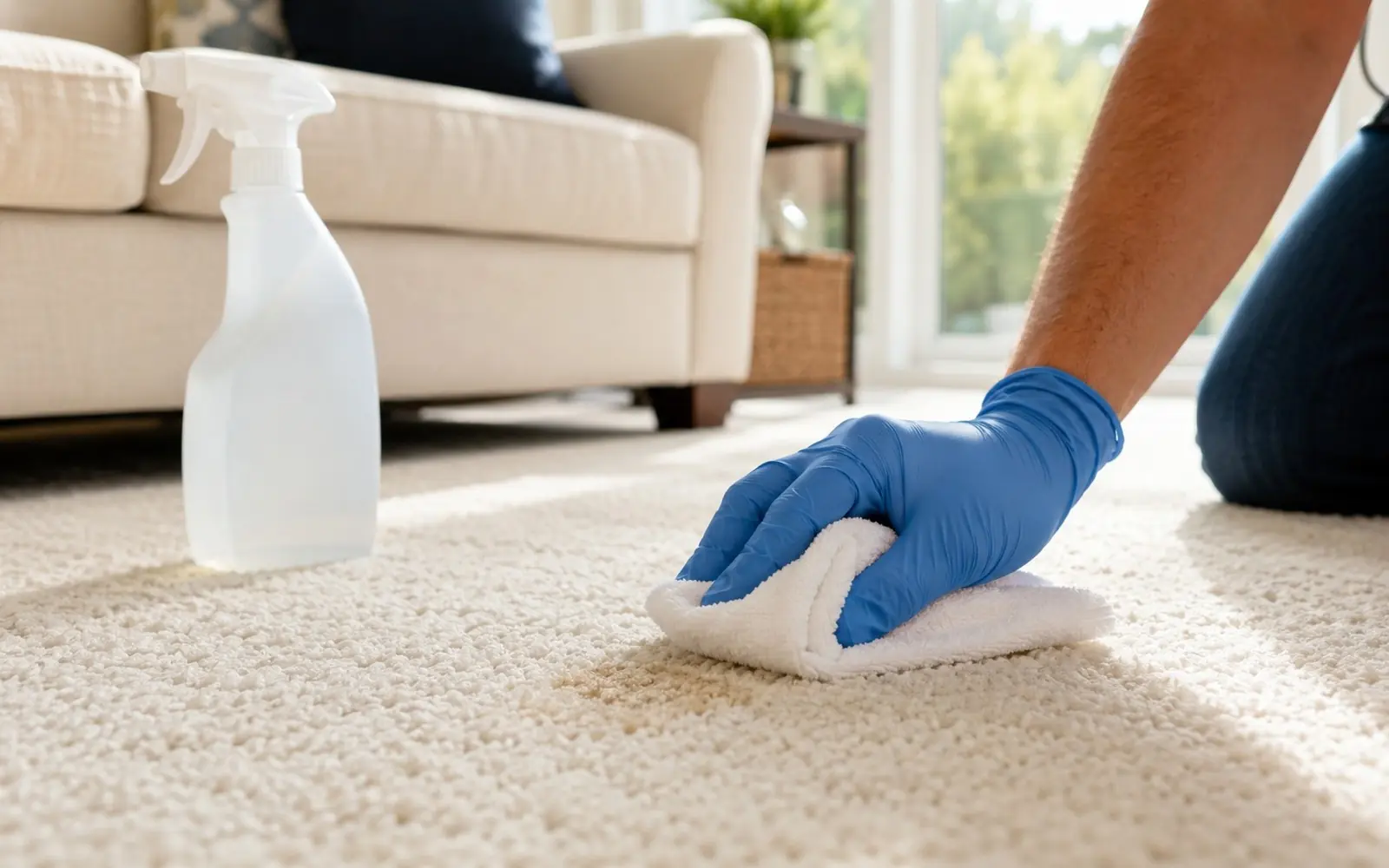
Most carpet stains are won or lost in the first five minutes, before any product enters the picture. The universal first aid: blot, never rub, working from the stain's edge toward the center with white cloth or paper towels, and keep blotting as long as anything transfers. Rubbing grinds the spill into the fiber and blooms the edges; hot water cooks protein stains like blood and dairy into permanence.
After first aid comes matching chemistry to stain family. Water-based spills respond to dish-soap solution; greasy stains want a solvent-type spotter; protein stains want cool water and enzymes; pet accidents specifically need enzyme cleaners that digest the odor compounds, because anything less invites the pet back to the same spot. Test any product on a hidden patch first, since discoloring the carpet is the one mistake chemistry cannot undo.
And know when to stop. Old set-in stains, big spills that reached the pad, bleach spots and anything you have already treated twice are professional territory, where truck-mounted extraction, specialized spotting agents and even dye repair can rescue what home products cannot. A pro spotting visit costs far less than living with a ghost stain in the middle of the room.
Treatments by stain family
Match the family, not the brand. Always blot first and spot-test products.
Water-based spills
Juice, coffee, soda, mud. Blot, then work in a little dish-soap solution, rinse with cool water, blot dry and weight a dry towel over it overnight.
Red wine and dye stains
Blot everything out, dilute with cool water, keep blotting. Skip folk remedies like white wine; stubborn dye stains respond best to professional reducing agents.
Grease and oil
Scrape solids, then a dry solvent spotter or rubbing alcohol on a cloth, blotting inward. Water-first is the classic mistake that spreads it.
Protein stains
Blood, dairy, egg: cool water only, enzyme cleaner if needed. Heat sets them permanently, so no steam and no hot water until fully removed.
Pet accidents
Extract everything, then saturate with enzyme cleaner and let it dwell as directed. If odor returns, the pad is involved and a pro with a UV light and extraction gear is the fix.
Wax, gum and mystery spots
Freeze gum with ice, lift wax with a warm iron over paper towel, and treat unknowns as water-based first, solvent second. Two failed attempts means stop and call.
What does stain rescue cost?
Home spotting costs almost nothing, which is why it is always the right first move on fresh spills. Professional spot and odor treatment is commonly priced per area or folded into a room cleaning, and even standalone visits cost a fraction of patching or replacing carpet.
Pet odor jobs price higher when contamination reaches the pad, since real remediation means treating or replacing what is underneath, not perfuming what is on top.
Ballparks based on commonly published national averages, stated as assumptions, not measured local pricing. Your competing quotes set the real number for your home and ZIP.
How to escalate a stain
Give first aid immediately
Blot to dryness, cool water dilution, blot again. Most fresh spills surrender right here, and nothing about this step can make things worse.
Treat by family, test first
One targeted treatment per the stain type, spot-tested on hidden carpet. If the first product fails, resist the urge to layer chemistry; residues make everything harder.
Call after two attempts
Two failures, any old or returning stain, or any pet odor beyond the surface: book a pro spotting visit and tell them exactly what was spilled and applied.
Related searches homeowners make
Pulled from the same demand data behind our House Cleaning category.
Carpet Stain Removal questions, answered straight
Why do stains reappear after cleaning?
Wicking: residue deep in the pile or pad rides moisture upward as the carpet dries, and soap residue left behind attracts new soil to the same spot. Thorough rinsing, dry-towel weighting overnight and professional extraction all fight it.
Does club soda actually work?
Mildly, on fresh water-based spills, mostly because it is cold dilution plus blotting, which is the part doing the work. It is not magic and does nothing a cool-water blot cannot.
Can bleach spots be fixed?
Not by cleaning, since bleach removes dye rather than adding soil. Repair means spot dyeing or patching in donor carpet, both professional jobs covered in our carpet repair guide.
What removes old set-in stains?
Sometimes repeated enzyme or oxidizer treatments; often only professional gear and spotting agents. Age, fiber type and previous treatments decide it, which is why pros ask what has already been tried.
Are store carpet cleaners safe for pets and kids?
Used as directed, ventilated and rinsed, generally yes, but enzyme and plant-based spotters offer gentler profiles for households that crawl on the floor. Whatever you use, rinse well; residue is the real irritant.
Stain winning the fight?
Free for homeowners. No obligation. Up to four local pros compete.
Keep planning your cleaning
More guides from the House Cleaning hub.
Carpet Cleaning
Steam vs dry methods, per-room pricing and hiring a crew that shows up with a truck.
Read the guideCarpet Cleaner Rental
Rental machines vs pro trucks: the honest comparison.
Read the guideCarpet Repair
Restretching, patching and seam fixes that dodge full replacement.
Read the guide